Skip to content

A lot of people search for a divorce lawyer near humble tx late at night, after a hard conversation, or after weeks of trying to pretend things will settle down on their own. If that’s where you are, you’re not alone. Families in Humble, Atascocita, Kingwood, and Northeast Houston often start this process feeling overwhelmed, unsure what matters first, and worried they’ll make an expensive mistake before the case even begins.
The good news is that divorce in Texas becomes much more manageable when you stop treating it like one giant crisis and start treating it like a series of clear decisions. You need to know what to protect, what to gather, what to say, and when to act. You also need advice that fits Harris County practice, not generic internet guidance written for another state.
Taking the First Step Toward a New Beginning in Humble
A common local scenario goes like this. One spouse stays in the home in Kingwood or Atascocita, the other starts talking about moving out, and both people are worried about the same things: the kids, the house, the bank accounts, and whether filing first matters. The emotions are real, but so are the legal consequences of waiting too long to get reliable advice.

Humble isn’t a place where divorce is always simple. Humble’s significant population growth, median household income of $97,124, and 68.81% homeownership rate mean that divorces here often involve high-value assets, making experienced local legal counsel essential for fair property division (adliftengine.com). In practical terms, that often means the case isn’t just about ending a marriage. It’s about protecting equity, retirement accounts, debt allocation, and parenting time.
What people usually need first
Many people don’t need a dramatic courtroom plan on day one. They need clarity on three points:
- Whether they’re ready to file: Sometimes the right first move is filing. Sometimes it’s organizing records before anyone files.
- Whether they need immediate protection: If there are concerns about finances, access to children, or the home, timing matters.
- Whether suspicion is affecting judgment: If distrust is part of the breakdown, people often look for outside tools before they decide how to proceed. For readers trying to sort out facts before making legal decisions, this guide on detecting infidelity may help frame what information is useful and what can create more conflict than clarity.
A strong first move is learning the filing basics before you do anything impulsive. This overview on how to start a divorce in Humble, Texas gives a practical starting point.
The first advantage in a divorce case often comes from being organized, not from being aggressive.
If you’re in Humble, that matters. Local families often have more to divide, more parenting logistics to manage, and more at stake than a generic checklist suggests.
Where to Find Your Advocate A Guide for Humble Residents
A Humble resident may start this search after a hard night at home, then get overwhelmed by pages of ads, directory profiles, and promises. The goal is simpler than the internet makes it seem. Find a lawyer who handles family law regularly, knows how Harris County divorce cases move, and can spot the issues that make your case different from the next one.
Online directories are a starting point, not a decision. Sites like Avvo and Super Lawyers can help you identify attorneys who actively market divorce services near Humble. That is useful for building a short list. It does not tell you how that lawyer handles temporary orders, difficult custody disputes, hidden debt concerns, or a case involving a child with special needs.
Read profiles with a skeptical eye. Look for facts you can test.
- Family law focus: A lawyer who spends substantial time on divorce, custody, and support matters is usually better positioned than a general practice office that handles everything.
- Local court experience: Harris County practice has its own pace, preferences, and pressure points. A lawyer who regularly appears in these courts should be able to explain local procedure in plain English.
- Case-fit experience: If your divorce involves a special needs child, a blended family, a family business, or one spouse who controls the finances, look for those facts in the lawyer’s published materials or ask about them directly.
- Communication style: Reviews are most useful when they describe real client experience, such as whether the lawyer returned calls, explained filings, and prepared the client for hearings or mediation.
Then verify what you find. The State Bar of Texas lawyer search lets you confirm that an attorney is licensed and in good standing. Compare that information to the law firm’s website and directory listings. If the basics do not match, keep looking.
Local referrals still matter in Humble. Therapists, accountants, estate planning lawyers, and friends who have been through a Harris County family case often know which attorneys stay calm, prepare well, and avoid turning every disagreement into expensive litigation. That kind of referral can be especially helpful in more sensitive situations, including cases where parents are trying to preserve routines, therapies, and school supports for a child with disabilities.
Build your short list with a purpose. Three strong consultations are usually more useful than ten rushed calls.
| What to compare | Why it matters |
|---|---|
| Harris County familiarity | Local procedure affects scheduling, temporary hearings, mediation timing, and settlement expectations |
| Experience with your family structure | A blended family or special needs parenting plan raises different concerns than a short marriage with no children |
| Approach to conflict | Some lawyers prepare for trial early. Others push hard for settlement. The right fit depends on your facts, budget, and goals |
| Clarity in consultation | You should leave with a clearer understanding of the road ahead, not more confusion |
One local option people consider is the Law Office of Bryan Fagan, which offers divorce and family law representation from its Humble office. Whether you speak with that office or another firm, ask for specifics. How would the lawyer approach parenting schedules if a child has therapy several days a week? How do they handle temporary orders when one spouse pays all household bills? What does a realistic first 60 days look like in Harris County?
If you want a practical checklist before you start calling firms, review these questions to ask a divorce lawyer before hiring one.
A good consultation should leave you steadier, informed, and able to make the next decision with confidence.
Questions to Ask Before You Hire a Divorce Lawyer
The consultation isn’t a sales presentation you sit through politely. It’s your interview. You’re hiring someone to guide decisions that affect your children, your finances, and your day-to-day life after the case ends.
The best questions are the ones that reveal how the lawyer thinks, not just how the office markets itself.
Ask about local case handling
Start with practical questions tied to your facts.
Ask how often the attorney handles divorces involving Humble, Atascocita, Kingwood, or Northeast Houston families. Then ask what usually drives conflict in those cases. A lawyer who knows local practice should be able to discuss property concerns, parenting disputes, temporary orders, and mediation without speaking in slogans.
You should also ask who will handle the file. In some offices, the lawyer you meet is not the person doing most of the work.
Ask how they approach financial discovery
This is one of the most important questions in any case involving property, debt, self-employment income, or suspicion that something isn’t being fully disclosed.
In Texas, a community property state, the formal discovery phase requires a complete exchange of financial information. Asking a potential lawyer how they handle this process is highly important, as proactive discovery correlates with 80% favorable property divisions for prepared parties (texasdivorcelawyer.us).
That means you should ask things like:
- How do you handle missing records?
- When do you use interrogatories or requests for production?
- What do you do if a spouse is self-employed or controls the books?
- What documents should I gather before formal discovery even starts?
This related guide on what to ask a divorce lawyer can help you prepare your consultation notes.
Practical rule: If an attorney talks about property division without asking detailed questions about documents, debt, income sources, and account history, the conversation is too shallow.
Ask about communication and fees
Don’t settle for “we’ll keep you updated.” Ask how updates happen.
Some clients want scheduled calls. Others prefer email summaries after major events. Neither is wrong, but you need to know what to expect.
On fees, ask for the structure in plain language. Questions worth asking include:
- Is there a retainer, and how is it used?
- What work is billed separately?
- How do you staff calls, drafting, and court appearances?
- What tends to increase cost in a divorce case?
Ask the question that reveals strategy
If the other side becomes difficult, what do you do first to move the case forward without making it worse?
That answer tells you a lot. A thoughtful lawyer will talk about documentation, temporary orders when necessary, focused discovery, and realistic use of mediation. A poor answer usually sounds like chest-thumping or empty reassurance.
The Texas Divorce Timeline What to Expect in Harris County
On Monday, a spouse files in Harris County. By Friday, there are already arguments about who stays in the house, who pays which bills, and how the children will get to school in Humble. That is why the timeline matters. A divorce case has a legal sequence, but real families feel the pressure long before the final order is signed.
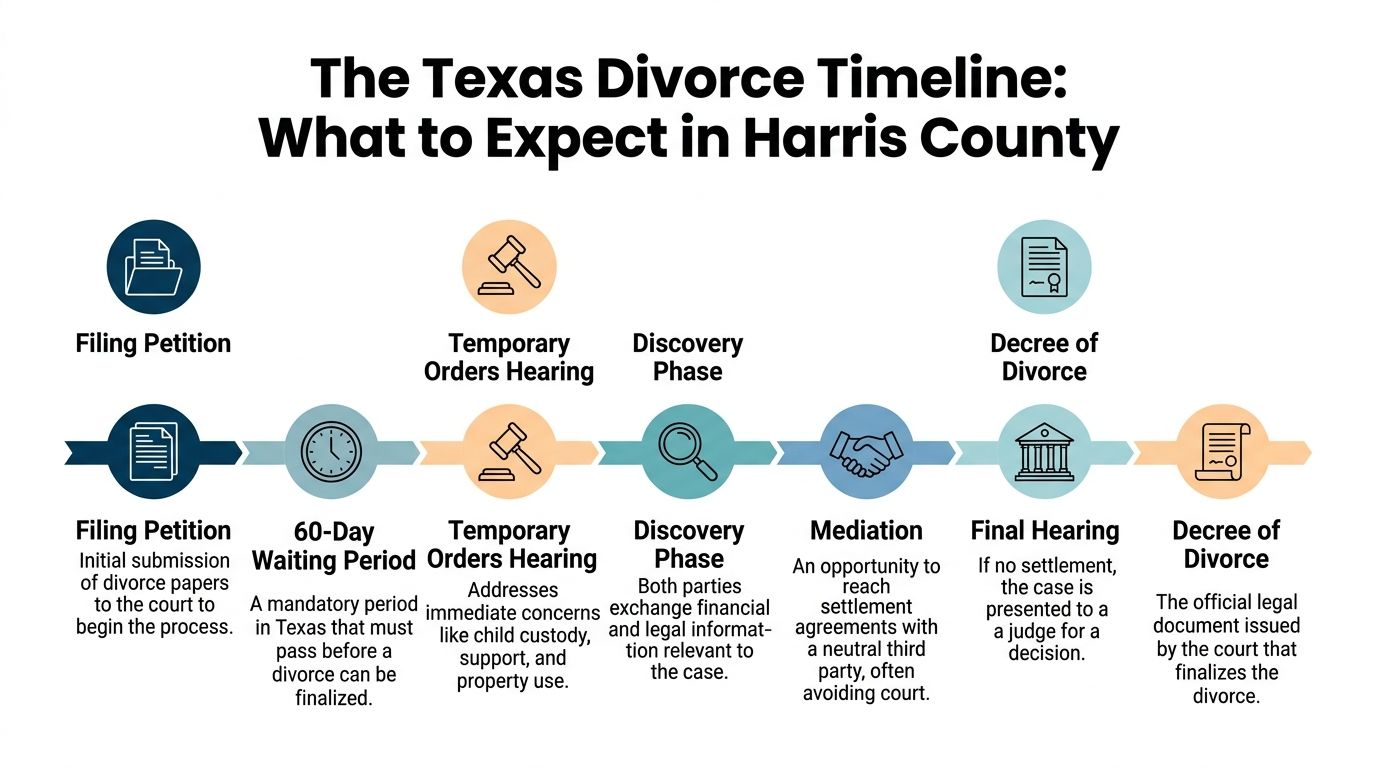
In Harris County, the usual path is filing, service, temporary orders if needed, information exchange, settlement efforts, and final orders. The broad outline is simple. The hard part is knowing which stage deserves attention in your case and which fights will only drain time and money.
Filing and the waiting period
A divorce begins when one spouse files an Original Petition for Divorce. Texas law generally prevents a court from finalizing the divorce until at least 60 days have passed from the filing date (TexasLawHelp explains the waiting period here). That deadline is a floor, not a promise.
Some uncontested cases finish soon after the waiting period ends. Many do not. In Harris County, cases slow down when service is delayed, financial records are incomplete, temporary parenting disputes flare up, or one spouse is hard to pin down on settlement terms.
If you want a more local explanation of timing, this guide on how long divorce takes in Humble breaks down the usual pressure points.
Temporary orders often set the tone
For some families, waiting for final orders is realistic. For others, it is not.
Temporary orders can address possession of the children, support, who uses the home, who covers the mortgage, and whether either spouse can drain accounts or sell property. In practice, these hearings often shape the next several months of the case. A temporary schedule that works well can become the starting point for final negotiations. A poorly thought-out temporary arrangement can create daily stress and expensive motion practice.
That is especially true for Humble-area parents of children with special medical, therapy, or educational needs. If your child has appointments in Kingwood, services through Humble ISD, or a routine that depends on trained caregivers, the temporary plan needs to reflect that reality early. Generic possession language may not fit your family.
Discovery turns suspicion into proof
Once the case is underway, each side needs documents, not assumptions. Discovery is the process used to get the records and sworn answers that make serious negotiation possible.
Common tools include:
- Initial disclosures: Basic information each side must exchange early in the case
- Written discovery: Questions and requests that clarify positions and identify missing facts
- Document requests: Bank statements, tax returns, retirement records, loan documents, deeds, and business records
- Depositions: Sworn testimony used in higher-conflict or more complicated cases
In Harris County, discovery disputes often decide how long a case lasts. If one spouse is self-employed, paid partly in cash, or controls a family business, expect the timeline to stretch. The same is true when a parent claims the children have always followed one routine, but the calendars, school records, or medical records show something different.
Conservatorship, mediation, and local court reality
Texas courts use the term conservatorship to describe parental rights and duties. The legal standard is the child’s best interest, but the details matter. Judges in Harris County want workable schedules, specific exchange terms, and parenting plans that match the child’s real needs, not a template pulled from the internet.
Many family courts in Harris County require mediation before a final trial setting, and the Harris County District Courts list mediation among their common procedures and resources (Harris County District Courts family resources). That matches what I see in practice. A large share of cases resolve in mediation or shortly before trial, once both sides finally have the records and a clearer sense of risk.
Mediation is often where local knowledge helps. A spouse living in Humble may care less about abstract custody labels and more about school pickup routes, commute times down FM 1960 or US 59, therapy schedules, and how exchanges will work without constant conflict. Those details decide whether an agreement holds up after the ink dries.
Mediation works best when both sides show up with records, a realistic view of the case, and a plan that fits the children they have.
Trial is the backup plan
Some cases still need a judge. That usually happens when one side hides information, refuses reasonable settlement efforts, or there is serious conflict about the children’s safety, credibility, or stability.
A good divorce strategy in Harris County prepares for trial from the start but does not chase trial for its own sake. Preparation gives you bargaining power. It also helps you recognize when settlement is smart and when it is too risky to accept.
| Case path | What usually drives it |
|---|---|
| Uncontested divorce | Agreement on property, parenting terms, and final paperwork |
| Negotiated contested case | Disputes exist, but both sides exchange information and work toward settlement or mediation |
| Trial-bound case | Major factual disputes, poor cooperation, hidden assets, or serious conflict over children |
The process feels less overwhelming when you know what stage you are in, what the court is likely to care about, and what problem has to be solved before the case can move.
Preparing for Your First Meeting and Making it Count
The first meeting is more productive when you bring facts instead of just frustration. You do not need a perfectly organized binder. You do need enough information for a lawyer to spot risks, identify priorities, and tell you what should happen next.
Bring the documents that answer real questions
The fastest way to slow down a contested divorce is incomplete paperwork. In contested Texas divorces, which average 12-18 months, up to 30% of delays are caused by poor evidence and incomplete documentation (youtube.com).
Bring what you can find, especially if it covers the recent history of your finances and parenting responsibilities.
- Income records: Pay stubs, tax returns, bonus information, and proof of self-employment income if applicable.
- Property records: Mortgage statements, deeds, vehicle loan documents, and recent appraisals if you have them.
- Account information: Bank statements, retirement account statements, credit card balances, and loan information.
- Family information: A basic calendar of the children’s routine, school schedule, medical needs, and who handles what.
If something is missing, don’t panic. A lawyer can help you plan for getting it.
Write down your goals before the meeting
A lot of people arrive ready to tell the whole story but haven’t identified the decisions that matter most. Before the meeting, write down your top priorities.
For example:
- Do you want to stay in the house, or is selling more realistic?
- Are you most concerned about parenting time, financial support, or protecting retirement assets?
- Do you need immediate orders, or can the case proceed more calmly?
That short list helps your attorney give advice that matches your actual concerns.
A brief video can also help you think through what lawyers need to see early in a divorce case:
Bring enough information to let the lawyer identify problems. You don’t need to solve the case before the consultation.
What a free consultation can and can’t do
A good first meeting should help you understand the likely path of your case, the immediate risks, and the next documents to gather. It probably won’t produce a final custody plan or a full property strategy on the spot.
That’s normal. The consultation is the beginning of a workable plan, not the end of the process.
Complex Divorces Special Needs Children and Blended Families
Some divorces don’t fit the standard script. Families with special needs children, prior marriages, step-parent relationships, or long-term care concerns need planning that goes beyond a basic possession schedule and a generic child support conversation.

When standard custody language isn’t enough
With 35% of marriages being remarriages in Harris County and rising special needs diagnoses, standard divorce advice often falls short. Texas Family Code §153.312 allows for modified custody plans, but few guides explain how to structure them for a child's unique needs (lawofficeofpatriciabillings.com).
That matters in real life. A child may need therapy appointments, school accommodations, medication routines, or transition support between homes. A standard order may not address those details well enough.
In these cases, useful legal planning often includes:
- Specific exchange terms: Not just “pick up at six,” but who handles equipment, medications, therapy materials, and school communication.
- Decision-making detail: Parents may need a tighter framework for medical, educational, or behavioral decisions.
- Financial planning around benefits: Support arrangements and property division should be reviewed carefully when a child may depend on public benefits or long-term care planning.
Blended families create different pressure points
Blended families often bring extra emotional layers. A parent may be balancing children from different relationships, informal step-parent roles, and disagreement over what is “fair” across households.
Those families also run into practical property issues. If the marital home needs to be sold as part of the divorce, people often need a realistic view of timing, possession, and sale logistics. This guide on selling a house during divorce is a useful outside resource for understanding some of those practical concerns.
Families with special needs children usually benefit from more detail, not more conflict.
The legal work should support the child’s daily life. That means building orders that people can follow on an ordinary school week, not just language that looks complete on paper.
Your Next Step Toward Peace of Mind in Humble
If you’re looking for a divorce lawyer near humble tx, you probably don’t need more noise. You need a plan that fits your family, your finances, and the way Harris County cases move.
For some people in Humble, Atascocita, Kingwood, and Northeast Houston, that plan starts with filing. For others, it starts with document gathering, safety planning, or getting clear on custody goals before anything is filed. The right next step depends on the facts, not on what a generic article says should happen.
What works is steady preparation. Good records. Clear priorities. Honest advice. A lawyer who can explain trade-offs without making empty promises. What doesn’t work is delay, guessing, or assuming the court will sort everything out later.
If you’ve been hesitating because the situation feels too emotional, too complicated, or too far gone, that’s exactly when a consultation can help. You don’t have to commit to every step today. You do need reliable answers before important decisions get made for you by momentum, conflict, or lack of information.
The best first move is usually a calm one.
Schedule a free consultation with Law Office of Bryan Fagan if you want clear, local guidance on divorce, custody, property division, or a more complex family situation in Humble, Atascoticta, Kingwood, or Northeast Houston. A focused conversation can help you understand your options, protect what matters, and move forward with a practical plan.