Skip to content
You open an envelope after work and find a notice directing you to a child support hearing downtown. The page names an IV-D court and an associate judge, but it doesn't explain what those terms mean, what papers you need, or what happens if you miss the setting. For parents in Humble, Atascocita, Kingwood, and Northeast Houston, that uncertainty can make an already stressful situation feel impossible.
The Harris County Title IV-D associate judge child support docket is specialized, fast-moving, and organized around child support matters filed by the Texas Attorney General on behalf of the State of Texas. You can make the process more manageable by confirming your cause number, preparing your financial records, arriving at the right courthouse, and treating every post-hearing deadline as urgent.
Understanding the Harris County Title IV-D Associate Judge System
“IV-D” refers to the federal and state child support enforcement framework. Harris County's Title IV-D function is handled through four dedicated IV-D courts at the Family Law Center, 1115 Congress in downtown Houston. The Harris County District Clerk identifies these courts as places where child support matters filed by the Texas Attorney General for the State of Texas are decided and judgments are rendered. You can begin with the Harris County District Clerk's child support and records resources to locate case information and court details.
These aren't ordinary family-law settings placed on a calendar by chance. Texas Family Code Section 201.101 creates a formal system for appointing associate judges to handle Title IV-D cases and requires general-order referral of those matters. In practical terms, your case is routed into an established docket structure rather than assigned informally from hearing to hearing.
Why an associate judge hears your case
An associate judge isn't an elected district judge. Harris County's IV-D courts are presided over by associate judges who hear matters under authority delegated through the referring district court. The Harris County family-court materials explain that these courts were created under Title IV-D of the Social Security Act of 1975 and that Harris County has four IV-D courts.
That distinction matters because the associate judge's ruling has a specific review path. If you disagree with the result, you may have the right to seek a de novo hearing before the referring district judge. That hearing is not an informal appeal. The district judge can rehear the matter from the beginning, which makes prompt legal review essential after the associate judge signs the proposed order or judgment.
Practical rule: Treat the court name, courtroom information, cause number, and judge assignment on your notice as working information to verify, not details to assume.
What the docket means for a Northeast Houston parent
A parent from Humble may be sent downtown because the county uses centralized, specialized IV-D dockets. The same is true for families in Atascocita, Kingwood, and other parts of Northeast Houston. You generally won't walk into a neighborhood court close to home. You'll appear at the Family Law Center, where the docket is organized by IV-D court and case type.
Start by locating your cause number on the paperwork you were served or through the District Clerk's search tools. Confirm the assigned IV-D court and determine whether your setting is before an associate judge. If any detail conflicts between your notice and an online listing, contact the clerk or a lawyer before hearing day. A wrong courtroom assumption can cause a missed appearance or a reset.
Types of Orders and Expedited Timelines on the Docket
The assumption that an IV-D hearing only sets an initial monthly payment is wrong. Under Texas Family Code Chapter 201, a Title IV-D associate judge can hear matters involving establishment, paternity, enforcement, modification, clarification, and postjudgment relief. A parent who already has an order may still receive an IV-D notice because the issue concerns compliance with that order or a requested change.
An establishment hearing may address parentage and the creation of support obligations. A modification setting may concern changed circumstances or a request to adjust an existing order. An enforcement proceeding can focus on missed payments or other failures to follow the order. Depending on the pleadings and evidence, the court may also address contempt-related consequences.
Why the docket moves quickly
Texas law gives Title IV-D cases priority and requires an expedited timetable after successful service. The statute provides that 75% of these cases must be completed within six months and 90% within one year, as described in the Texas Family Code provisions governing expedited Title IV-D proceedings. Those timelines are system requirements, not promises about the exact date of your hearing.
The speed has a human effect. A notice may arrive with limited time to collect income records, obtain payment histories, or respond to allegations. A parent who assumes the case will sit on the calendar for months can lose the chance to present important information. The specialized docket is designed for volume and efficiency, but that design can feel opaque when you don't know what the judge needs.
Match the hearing to the order you need
Read the notice and the underlying pleadings carefully. Ask what the requested order would do, not just what the docket is called.
- Establishment: Creates support obligations and may address paternity.
- Modification: Changes an existing support order when the legal requirements are met. The Humble child support modification resource explains why a parent should seek a court-approved change instead of changing payments independently.
- Enforcement: Seeks compliance with an existing order and may involve payment records, income information, or contempt allegations.
- Clarification or postjudgment relief: Addresses uncertainty or relief connected to an existing judgment.
A parent looking for general information about establishing, modifying, or enforcing support in Harris County can also review Child Support Attorney in Humble, which describes those service areas without changing the need for case-specific legal advice.
Step-by-Step Preparation for Your Court Appearance
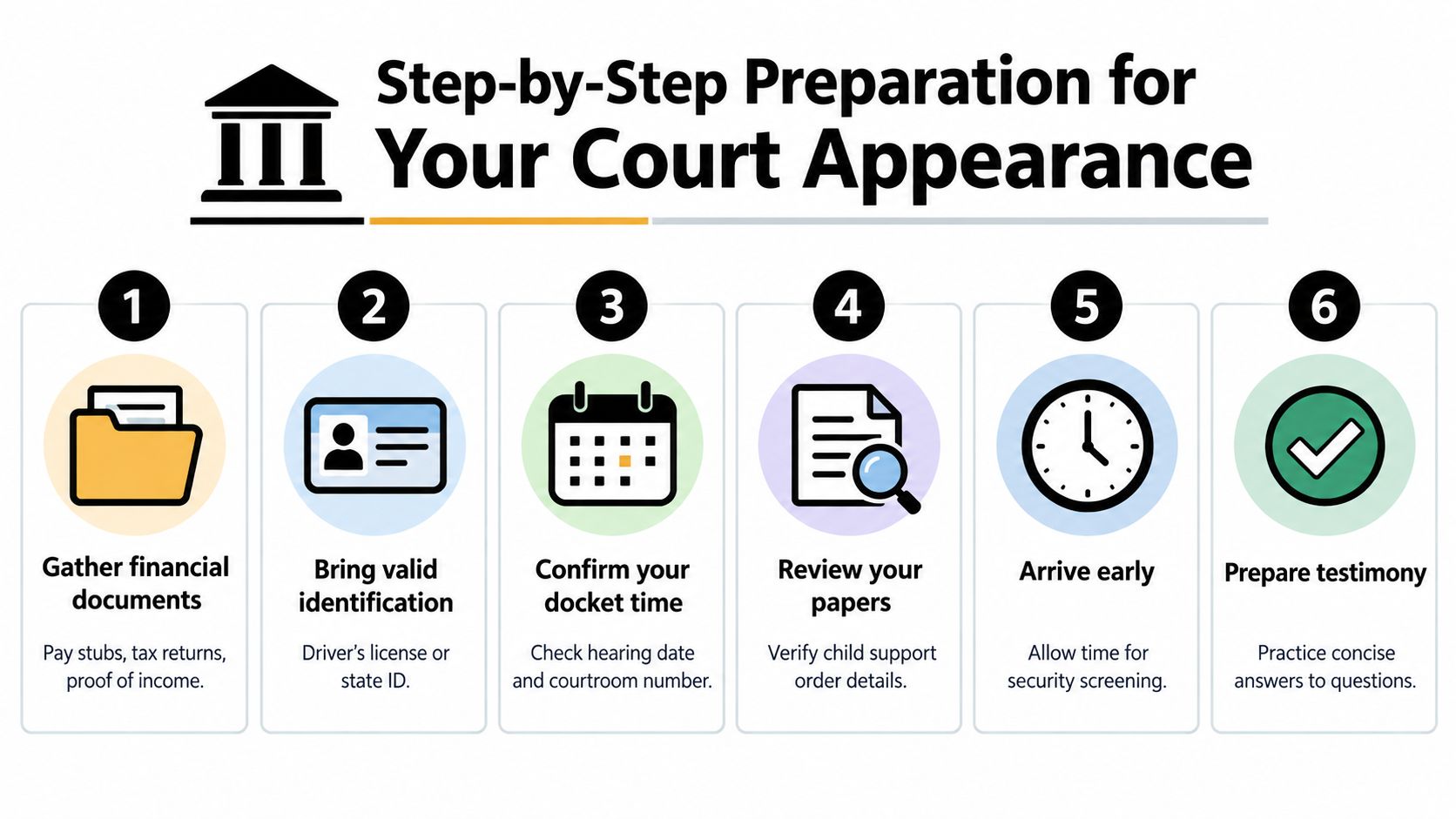
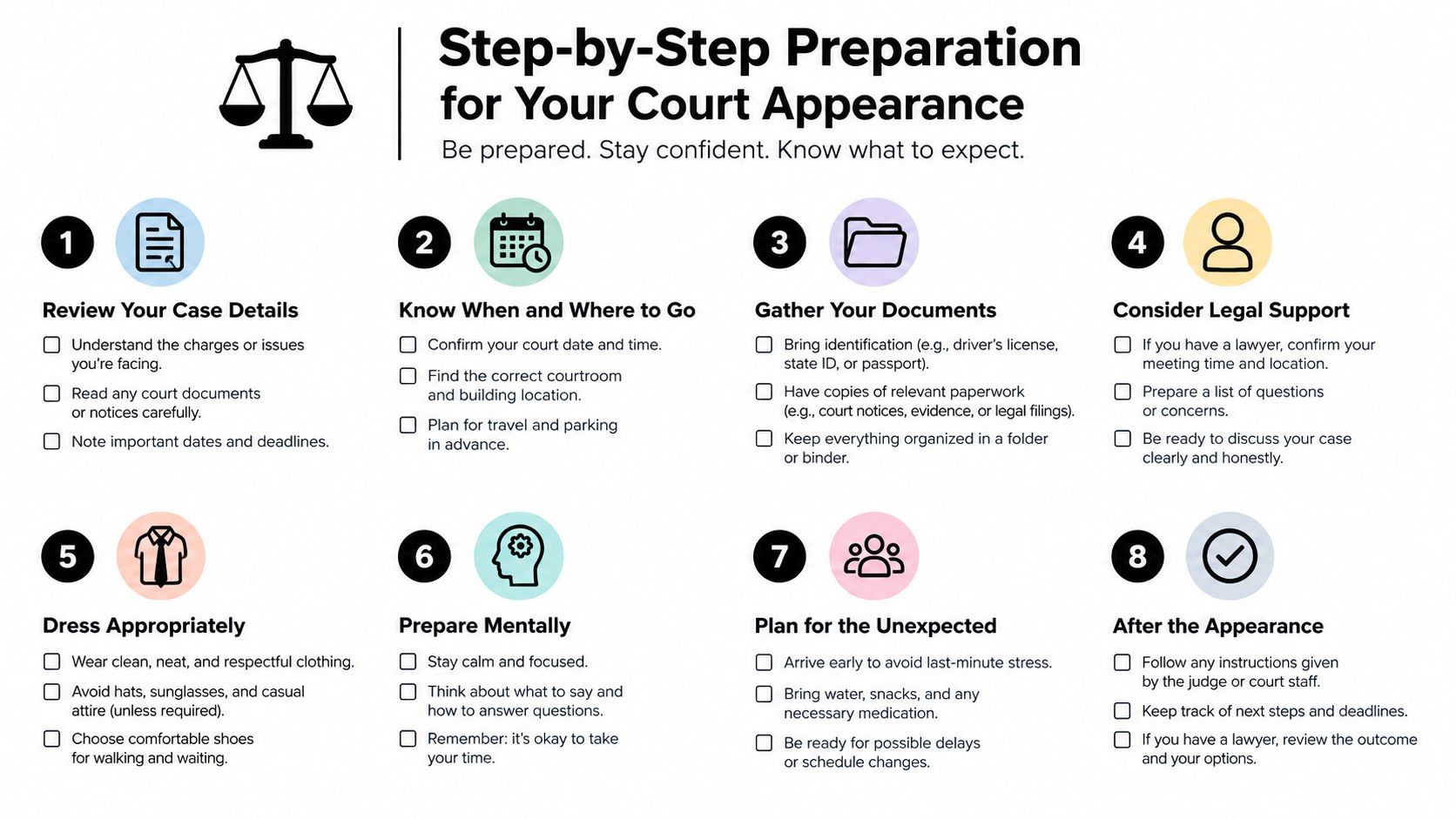
Preparation starts before you drive downtown. First, locate the cause number on your notice, served paperwork, or clerk records. Use that number when confirming the assigned IV-D court, hearing date, time, courtroom, and whether the setting is before an associate judge.
Second, read every document in the packet. Identify the requested relief, the period at issue, and any attachments. If the case involves enforcement, compare the alleged payment history with your bank statements, wage withholding records, receipts, or other proof. If it involves modification, collect records showing the change you want the court to consider.
Build a usable evidence folder
Don't arrive with loose papers in a grocery bag. Create labeled sections so you can find an item while answering a question.
- Current income: Gather pay stubs, tax returns, employer information, benefit records, and other reliable proof of income.
- Payment history: Separate payments by date and amount, then compare them with the official account history if one is available.
- Existing orders: Bring every relevant child support, medical support, paternity, custody, or modification order.
- Changed circumstances: Organize evidence of job changes, reduced hours, new employment, disability, or other facts tied to the requested relief.
- Communication records: Keep messages and written notices that help establish what was requested, paid, received, or disputed.
Submit documents through the method required by the court or the party who requested the hearing. Don't assume that bringing a document to the courthouse automatically places it into evidence. If you're sending documents electronically or by another delivery service, you can browse binding document requirements to understand why authentication, signatures, and reliable delivery records matter.
Watch the following preparation video after you've checked your notice and created your folder:
For broader context about how cases serving Humble proceed in Harris County, review Harris County Family Courts: A Humble Resident's Guide. On hearing day, bring identification, your notice, your organized papers, and a written list of questions. Keep answers concise, truthful, and tied to the order or issue before the court.
Navigating the Family Law Center and Courtroom Etiquette
Your hearing day begins before you enter the courtroom. The Family Law Center at 1115 Congress is in downtown Houston, so plan the trip around traffic, parking, building security, and the possibility that you may need time to locate the correct courtroom. Check the current courthouse information before leaving, because administrative details can change.

At the entrance, expect security screening. Carry only what you need, keep your identification and notice accessible, and allow time for the checkpoint. Once inside, use your cause number and court assignment to find the right area. The Harris County Family Law Center information for 1115 Congress can help you confirm location details before traveling from Humble, Atascocita, Kingwood, or Northeast Houston.
How to conduct yourself in a busy docket
IV-D calendars can move rapidly. Other families may be waiting, and the associate judge may need to address several matters in succession. Your job is to make the relevant facts easy to understand.
- Listen for your case: Stay attentive even if the calendar is delayed or cases are called in an unexpected order.
- Speak to the judge respectfully: Address the associate judge as “Judge” and wait until you're invited to respond.
- Answer the question asked: Give a direct answer first, then explain only what helps resolve the issue.
- Present documents in order: Tell the court what each document is and why it matters before handing it over.
- Stay calm during disagreement: Don't interrupt the other parent, argue from counsel table, or react visibly to every statement.
A parent who arrives flustered can still recover by slowing down, checking the cause number, and asking for clarification respectfully. The court doesn't need a dramatic speech. It needs accurate information, organized records, and a clear understanding of the order you're asking it to enter.
Critical Pitfalls and the Three-Day De Novo Review Deadline
Many parents think the hearing ends when they leave the courtroom. In an IV-D case, that assumption can cost you a review opportunity. The associate judge's ruling may be subject to a de novo hearing before the referring district judge, but the request must be made within a strict period.
In a Texas IV-D case, a party seeking de novo review must file notice with the referring court clerk no later than the third working day after the IV-D associate judge signs the proposed order or judgment, according to the Texas courts' explanation of Title IV-D proceedings. The trigger is tied to the associate judge's signature, so don't wait for a later mailing or rely on memory about when someone mentions the result.
Put the deadline on your calendar immediately
Before leaving the courthouse, ask when the proposed order or judgment was signed, whether it has been entered, and where the notice of de novo hearing must be filed. Then calculate the third working day and confirm the calculation with the clerk or a lawyer. Don't treat a weekend, holiday, or administrative delay as permission to guess.
After the hearing, the order is not paperwork for later. It is a deadline problem that starts immediately.
Other mistakes can damage your position just as quickly. Failing to update your mailing address can cause notices to go to the wrong place. Assuming a payment dispute will be obvious without records can leave the judge with only competing statements. Confusing an associate judge's proposed order with a final district-judge review can also lead you to miss the correct procedural step.
If you want review, contact counsel promptly and provide the complete hearing packet, order, and notes about what happened. A lawyer needs enough time to determine whether de novo review is available, prepare the notice, and identify the issues worth presenting again. A missed deadline may leave you with fewer options than you had immediately after the hearing.
When to Hire a Local Child Support Attorney
Self-representation can work for a straightforward administrative task, but the Harris County Title IV-D associate judge child support docket becomes risky when the hearing involves enforcement, contested income, contempt, parentage, or a requested modification. The court may move quickly, and a parent who doesn't know the evidentiary or procedural requirements can spend the entire hearing reacting instead of presenting a coherent position.
Hire counsel before the hearing when your freedom, income, or ability to comply is at issue. That includes a contempt allegation, disputed arrears, a claim that you intentionally failed to pay, or a proposed order that could affect your finances for a long time. It also includes situations where you're self-employed, paid through irregular income, recently lost work, or believe the other side has presented incomplete financial information.
Situations that justify immediate legal advice
A local attorney can help you distinguish the type of proceeding and choose the right response.
- Contempt or enforcement: You need to understand the allegations, the payment history, and the potential consequences before answering.
- Modification: You must connect changed circumstances to the legal relief requested and support the request with usable records.
- De novo review: The third-working-day deadline makes post-hearing advice time-sensitive.
- Paternity or establishment: The court may need to address parentage and support together.
- Complex finances: Self-employment, multiple income sources, or disputed records require careful preparation.
- Docket confusion: If the notice, court listing, and paperwork don't match, confirm the correct setting before appearing.
A local firm also understands the practical geography of the process. Families in Humble, Atascocita, Kingwood, and Northeast Houston must travel to downtown Houston and manage the hearing alongside work, school, transportation, and childcare. The Humble child support attorney resource provides a starting point for discussing establishment, modification, or enforcement concerns with counsel familiar with Harris County family-law matters.
The Law Office of Bryan Fagan serves Humble and nearby communities in family law, including child support and custody matters. The firm also handles criminal defense and estate planning, but your consultation should focus on the IV-D notice, the order at issue, your records, and the relief you need. Bring the complete paperwork so the attorney can identify deadlines and preparation priorities rather than offering only general information.
If you received an IV-D notice, don't wait until the courthouse steps to figure out what it means. Schedule a free consultation with the Humble office, bring your cause number and court papers, and get a concrete plan for the hearing and any post-hearing deadline.
The Law Office of Bryan Fagan offers practical guidance and representation for parents dealing with establishment, modification, and enforcement on Harris County IV-D dockets. Visit Law Office of Bryan Fagan to schedule a free consultation with the Humble office and discuss the documents, deadlines, and courtroom steps affecting your family.