
A Humble parent may receive a court order for a social study just after a difficult custody dispute, when home life already feels unsettled. The order can raise immediate questions: Who will come to the house? Will the evaluator speak with the children? What records must be provided? How much time does the process take?
For families in Atascocita, Kingwood, Humble, and Northeast Houston, the Harris County Domestic Relations Office social study process is a court-directed investigation designed to give the court reliable information about a child's circumstances. It may arise in a custody matter, an adoption case, or a dispute involving conservatorship, possession, or access. The process can feel personal, but understanding its purpose helps replace uncertainty with practical preparation.
The evaluator doesn't decide your worth as a parent. Instead, the evaluator gathers information from interviews, home observations, records, and other people who know the family. Texas law treats a social study as an evaluative process that provides information and recommendations to the court, the parties, and their attorneys regarding adoption, conservatorship, or possession and access. Texas Family Code Chapter 107 provides the legal foundation for that work.
A parent in Humble may worry that one awkward answer or a messy afternoon will determine the case. In reality, the process considers multiple sources of information. The strongest preparation usually involves reading the order carefully, meeting deadlines, organizing documents, and answering questions truthfully rather than trying to perform for the evaluator.
This guide explains what happens from referral and payment through report filing, what the evaluator may review, how household members and children participate, and how a parent can prepare without creating unnecessary stress. By the end, you'll have a practical framework for understanding the process and identifying when local legal advice may help.
Introduction for Humble Families Facing a Social Study
Consider a parent in Atascocita who opens an order after a temporary custody hearing. The order refers the case to the Harris County Domestic Relations Office. The parent sees words such as “evaluation,” “releases,” and “home visit,” then starts wondering whether the evaluator will inspect every part of the house or question every decision made during the divorce.
Those concerns are understandable. A social study reaches into ordinary family life because the court needs information about the child's living arrangements, relationships, routines, and safety. The evaluator may speak with both parents, interview children when appropriate, visit each home, and gather information from schools, health providers, mental health professionals, and other collateral sources. The process is broader than a single conversation.
Harris County's Family Court Services guidance says Child Custody Evaluations and Contested Adoption Evaluations are completed within 90 days of assignment to the evaluator, while Adoption Evaluations are completed within 60 days of payment. The same guidance explains that evaluations don't begin until all fees are paid and that adult-party interviews can take up to 2 hours. Harris County Domestic Relations Office Family Court Services FAQ
For a Humble family, the timing may depend on more than the date printed on the order. Assignment occurs in the order received after required information has been submitted, so payment and complete intake materials matter. A missing release or incomplete intake response can interfere with the expected sequence.
The process also recognizes that a household includes more than the named parents. Children living full-time or part-time in each household may participate, and stepparents and live-in partners may be interviewed. That can feel intrusive, but it reflects the evaluator's responsibility to understand the environment in which the child spends time.
A calm, organized response is usually more useful than trying to make the process disappear.
Parents in Kingwood, Northeast Houston, and surrounding communities can reduce confusion by separating three questions: what the order requires, what the evaluator will investigate, and what information the court may later consider. Each question has a practical answer.
What a Social Study Is and Why Harris County Orders It
Texas law defines a social study as an evaluative process that provides information and recommendations about a child's adoption, conservatorship, or possession and access. The study may be performed by a private entity, a person appointed by the court, a domestic relations office, or a state agency in certain circumstances. In Harris County, Family Court Services within the Domestic Relations Office may handle the court-directed evaluation.
A useful analogy is a neutral fact-finding report. The judge may hear competing accounts from parents, but the social study adds structured observations and information from other sources. It doesn't replace the judge's decision. It gives the court an organized evidence package that can help the judge evaluate parenting arrangements and the child's needs.
The legal purpose
A social study is an evaluative investigation, not a home visit. The evaluator gathers information, considers the family circumstances, and may make recommendations related to conservatorship, possession, or access. In an adoption matter, the focus may include whether the proposed placement serves the child's interests and whether the home and caregivers satisfy the court's concerns.
A custody evaluation and an adoption evaluation aren't identical. A custody evaluation generally addresses disputed parenting arrangements in a conservatorship or possession and access case. An adoption evaluation addresses the circumstances surrounding an adoption. Harris County's guidance distinguishes between Child Custody Evaluations, Contested Adoption Evaluations, and Adoption Evaluations, including different stated completion periods.
The court's referral creates the framework. The evaluator doesn't act as a private investigator hired by one parent, and a parent shouldn't treat the process as a debate to win through dramatic accusations. The evaluator's role is to gather and assess information within the scope of the order and applicable Texas law.
Local court context
Humble cases proceed in the Harris County family court system serving residents across Northeast Houston. For a plain-language overview of how those cases move through Harris County courts, Harris County Family Courts: A Humble Resident's Guide provides local procedural context.
Some parents also explore negotiation or mediation while a study is pending. A neutral resource on options for family disputes may help explain alternatives to continued courtroom conflict, although mediation doesn't eliminate an existing court order or automatically stop an evaluation.
How the Harris County Domestic Relations Office Process Works
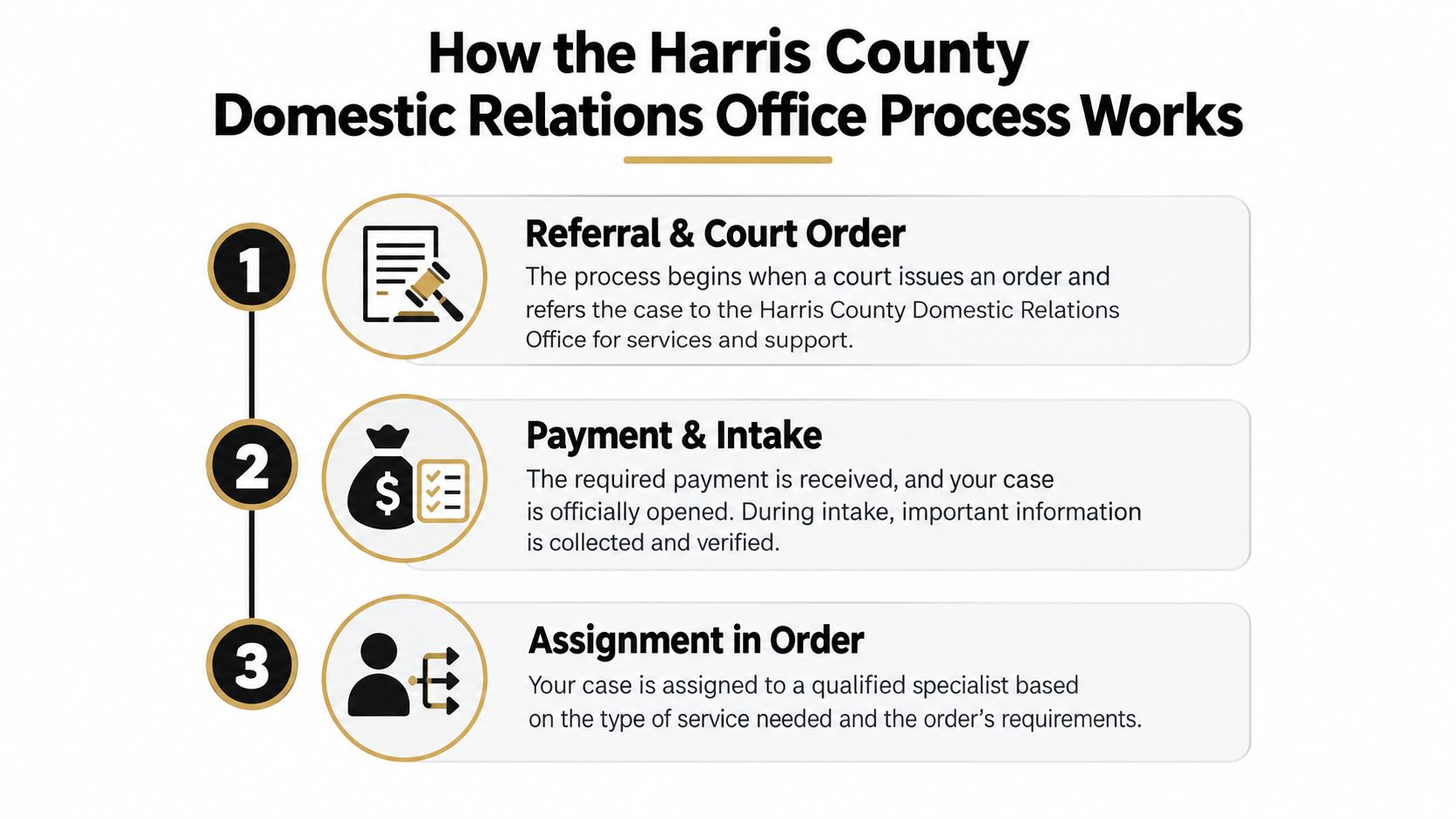
For a Humble parent, the process may begin with a court order that turns a private family dispute into a structured review. The court referral and order define what the evaluator will examine, who must cooperate, and which records may be requested. In an adoption evaluation, the Harris County District Clerk order places the Domestic Relations Office process within Chapter 107, Subchapter E of the Texas Family Code. It also requires signed releases for school, physical health, mental health, and other collateral records.
Referral and payment
Start by reading the order line by line. Mark the payment deadline, intake instructions, release forms, and any required documents. The Harris County District Clerk adoption evaluation order requires a $250 payment within 10 days of the order and states that the report must be filed 60 days from the date of assignment to a Family Court Services evaluator.
Those deadlines measure different stages. The report period begins with assignment, while general Harris County guidance states that evaluations are assigned in the order received after all required information is submitted. A missing payment, unsigned release, or incomplete intake packet can delay assignment before interviews even begin.
Intake and assignment
After payment and required information reach the office, the referral moves through intake. Assignment follows the order received once the submission is complete. Keep the payment confirmation, copies of every form, delivery records, and emails or letters exchanged with the office. A simple folder can prevent uncertainty about what was sent and when.
Interviews, homes, and records
The evaluator may interview each adult party, speak with children in an age-appropriate way, observe each child, and visit each home. Harris County guidance states that all occupants must be present during a home visit. The evaluator may also interview household members, including stepparents and live-in partners, and review records released through signed authorizations.
Collateral information can include school, physical health, mental health, and other records. People outside the home may also provide relevant context. Parents should give accurate contact information and explain the purpose of records without coaching anyone's answers.
Report filing
After gathering and assessing the required information, the evaluator prepares the report. It may include factual observations, interview and record summaries, analysis, and recommendations. The report becomes part of the court process, so parents and attorneys should follow the court's instructions about access, objections, hearings, and deadlines rather than treating the filing as the end of the case.
A dated document folder and clear communication log can support practical documentation tips for family court. A social study may also exist alongside another court-appointed role. If a parent is unsure whether a guardian ad litem is involved, reviewing what a guardian ad litem does can clarify how that appointment differs from the evaluator's assignment.
What Evaluators Look For and Common Report Terminology
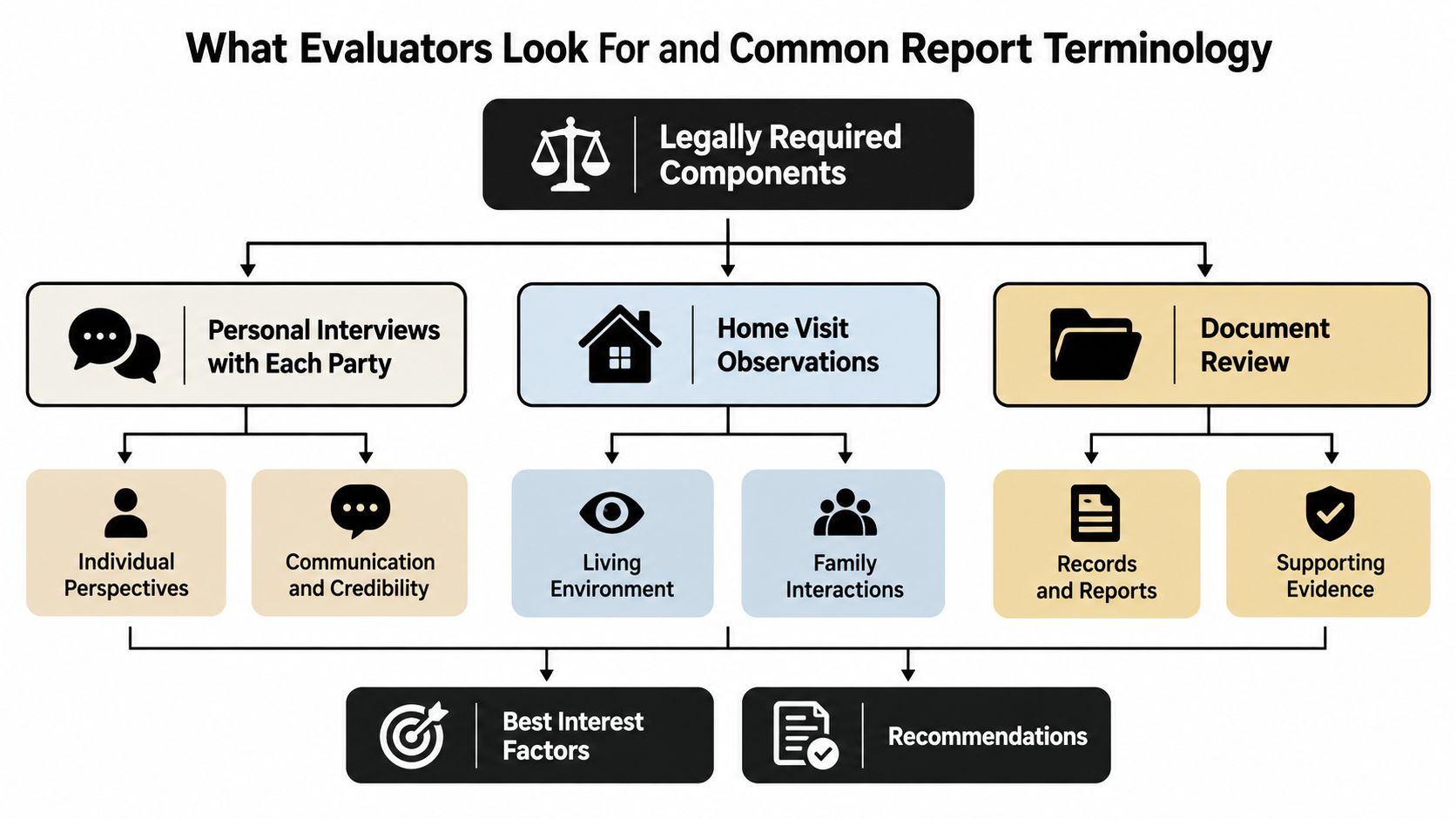
The evaluator's work is structured around several required inputs. Texas social-study rules call for a personal interview with each party, a developmentally appropriate interview with each child age four or older, observation of every child regardless of age, relevant collateral information, and an evaluation of the home environment unless the home isn't in dispute. Texas social-study regulations
That combination prevents the report from resting only on what one parent says. A parent's account may matter, but the evaluator may compare it with the child's behavior, school information, health records, household observations, and statements from other people.
Interviews and observations
An adult interview may cover parenting history, household relationships, routines, discipline, communication, concerns about the other parent, and the requested parenting arrangement. The evaluator may ask follow-up questions when answers conflict with records or observations.
A child interview isn't a miniature trial. The evaluator uses developmentally appropriate communication and also observes children who are younger than the interview threshold. Parents shouldn't coach children, rehearse accusations, or suggest that a child must choose sides. Children often experience pressure when adults frame the evaluation as a test they must pass.
Home observations address the child's living environment. The evaluator may consider sleeping arrangements, household organization, safety concerns, and interactions among family members. A spotless house isn't the legal objective. The evaluator needs an accurate view of the child's ordinary environment.
Terms parents often see
Conservatorship concerns legal rights and responsibilities for making decisions about a child. It doesn't just mean who has the child most often.
Possession and access generally refers to when and how a parent spends time with the child, including schedules and communication arrangements.
Collateral information means relevant information from people or records outside the parent's own account. A teacher, healthcare provider, counselor, relative, or other appropriate source may contribute information within the evaluator's authority and applicable releases.
Recommendations are the evaluator's proposed conclusions about parenting arrangements or other issues within the referral. They're important, but the judge remains responsible for the court's final orders.
The report becomes more useful when the evaluator can compare statements with observable conduct and reliable outside information.
The phrase “best interest” refers to the child-centered legal decision-making framework. Parents may disagree about what serves the child, but the evaluator's task is to examine the facts relevant to the child rather than reward the parent who presents the most forceful narrative.
How to Prepare Documents Home and Interviews
A parent in Humble may receive a referral notice, gather a stack of records, and still wonder what the evaluator needs. Treat preparation like building a clear file for someone who was not present during your family's daily life. Each document, reference, and explanation should help connect the child's needs with the facts in your case.
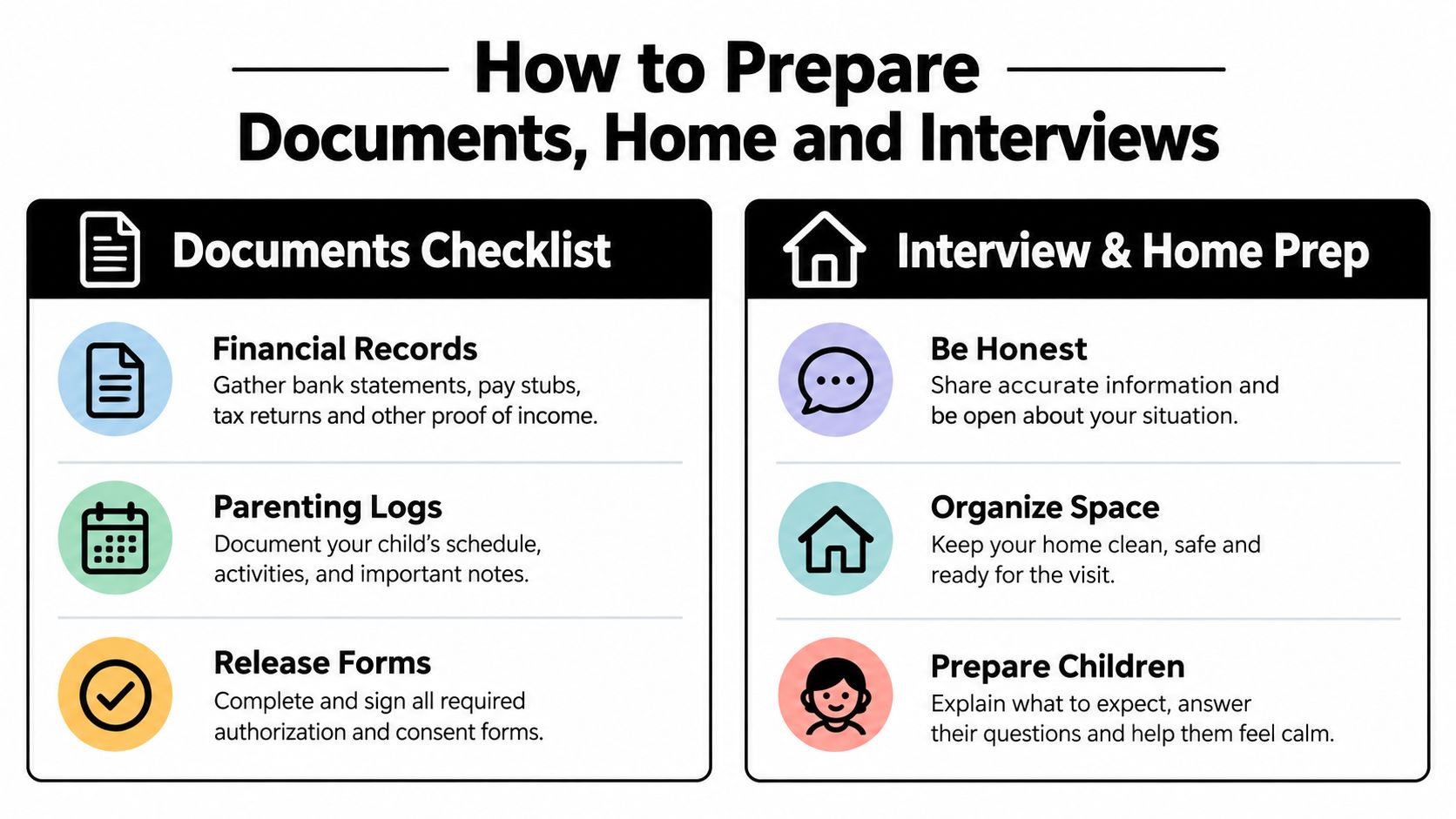
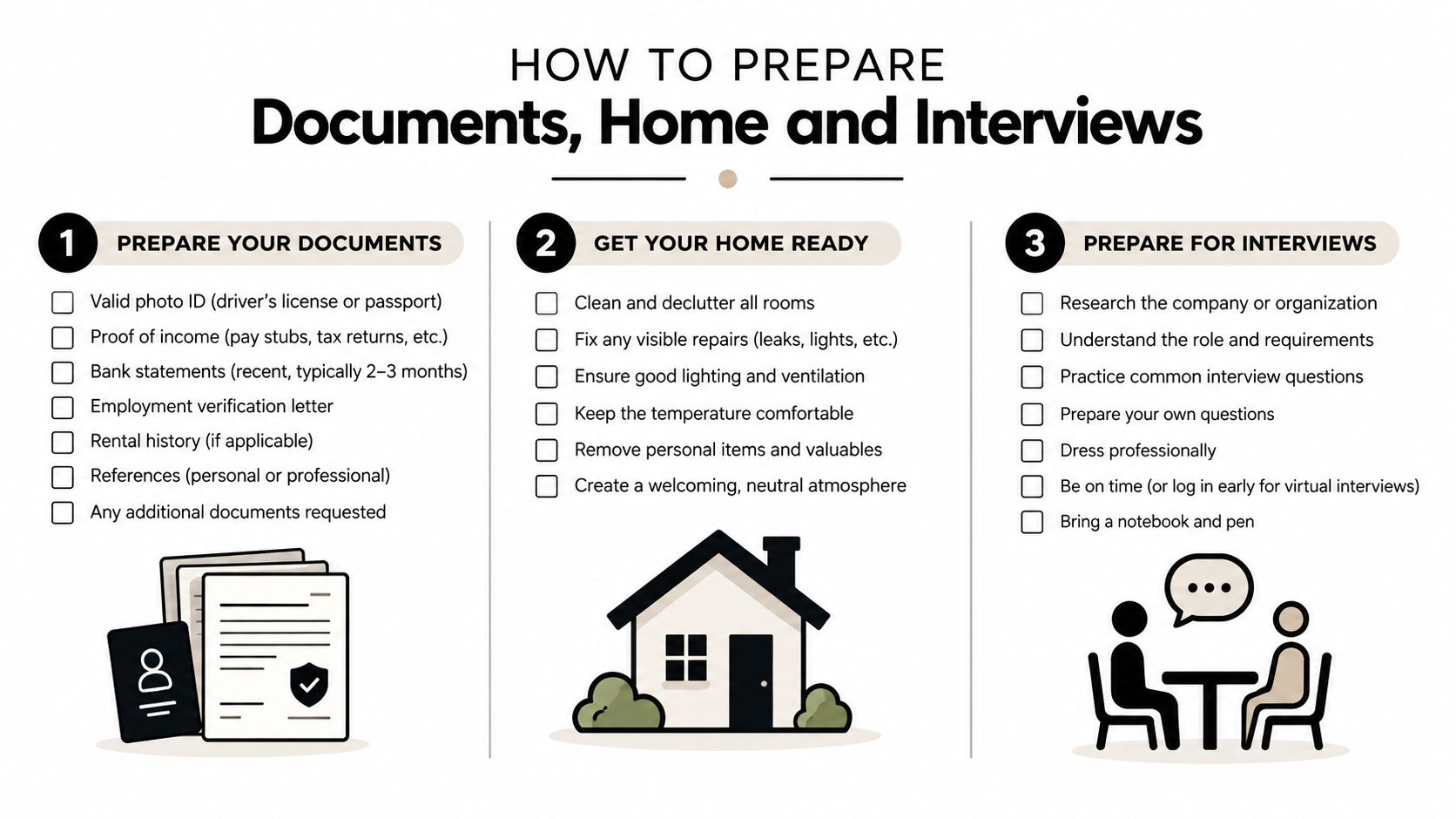
Begin with the court order and create one organized folder. Include payment confirmation, intake materials, pleadings or orders identified by counsel, school information, healthcare records, relevant communications, and documents tied directly to parenting concerns. As noted in the workflow section, observe the page and reference limits when assembling your packet.
A practical preparation checklist
- Read the order: Mark deadlines, payment instructions, release requirements, and directions for contacting the Domestic Relations Office.
- Name files clearly: Use labels such as
2026-03-school-recordsorparenting-communication-march. Keep the same naming system throughout the folder. - Group records by issue: Separate school, health, communication, parenting schedules, and other relevant subjects. Put the most useful documents first.
- Choose references carefully: Select people who have personally observed your parenting and can provide specific, truthful information. A reference who only praises you may be less helpful than one who can describe consistent caregiving.
- Complete releases thoughtfully: Sign required authorizations for school, physical health, mental health, and other collateral records. Raise a concern with your attorney before refusing to sign.
- Brief household members: Tell stepparents and live-in partners that they may be interviewed. Explain the process, but do not script answers or ask anyone to repeat your version of events.
- Prepare accurate history information: Answer screening questions truthfully for household members covered by the request. Missing or concealed information can raise credibility concerns.
- Keep a factual timeline: Record appointments, exchanges, school events, medical care, and significant communications. Use dates and brief descriptions, without editorial comments.
Adult interviews may take substantial time, so avoid scheduling one immediately before work, school pickup, or another appointment. Answer the question asked, correct misunderstandings calmly, and say that you do not remember when guessing would be inaccurate.
Preparing the home and children
The home visit should show the child's ordinary environment in Humble or Northeast Houston. Address routine safety and cleanliness concerns, make sure required occupants are available, and avoid temporary changes that create an unrealistic picture. If a repair, housing transition, or limited space needs context, prepare a short factual explanation.
Children may be interviewed or observed. Tell them they can answer truthfully and do not have to take sides. Rehearsed answers can make a child more anxious and may interfere with the evaluator's ability to understand the child's experience.
For a focused evidence checklist, review evidence needed for a custody case in Harris County. The aim is a relevant, readable packet that helps the evaluator understand the family, not a larger pile of paper.
Your Rights Confidentiality and What Happens After the Report
Cooperation is a central part of the process. The Harris County adoption evaluation order requires cooperation with the Domestic Relations Office and signed releases for school, physical health, mental health, and other collateral records. A parent who refuses participation or withholds required information should understand that the court may address that conduct in the larger case.
Cooperation doesn't mean surrendering every legal concern without advice. If a release appears broader than the order, a record contains sensitive information, or a safety issue affects participation, speak with counsel promptly. Don't ignore a request, miss an appointment, or assume silence protects you.
Confidentiality also has limits. A social study is prepared for the court and the parties or attorneys involved in the case, not for public distribution. The evaluator's work may include information from children, household members, schools, healthcare providers, and other sources. Parents should avoid posting details about the evaluation or the children on social media.
After the report is filed
The report may influence settlement discussions, temporary orders, or a final hearing, but the evaluator doesn't issue the final custody order. The judge decides the case after considering the report and other admissible evidence. A parent who disagrees with a recommendation can discuss objections, additional evidence, cross-examination, clarification, or other procedural options with an attorney.
The next step depends on the court's schedule and the posture of the case. Parents may receive notice of a hearing, participate in negotiations, or need to respond to issues raised in the report. A local overview of how judges decide custody in Harris County can help frame the report within the broader decision-making process.
Your control is practical: meet deadlines, provide accurate information, protect the children from adult conflict, and respond thoughtfully to the report.
How a Humble Attorney Helps You Through the Social Study
A Humble family law attorney can review the referral order, identify payment and intake deadlines, and explain what the evaluator is authorized to investigate. Counsel can also help organize submissions within the applicable page limit, identify appropriate references, prepare you for difficult questions, and address concerns involving household members or collateral records.
For families in Humble, Atascocita, Kingwood, and Northeast Houston, legal support may continue after the interviews and home visits. An attorney can evaluate the filed report, discuss whether its facts accurately reflect the family, prepare responses for a hearing, and present evidence concerning conservatorship, possession, or access. The Law Office of Bryan Fagan handles family law matters alongside divorce, child custody, child support, criminal defense, estate planning, wills, trusts, and probate services.
You don't have to face a court-ordered evaluation without understanding what comes next. Bring the order and any communications from the Harris County Domestic Relations Office to a consultation so the deadlines and preparation steps can be reviewed in context.
The Law Office of Bryan Fagan offers practical guidance for parents facing the Harris County Domestic Relations Office social study process, from reviewing the order to preparing for the report and related hearings. Schedule a free consultation by visiting Law Office of Bryan Fagan or contacting the downtown Humble office to discuss your family's next step.