Skip to content

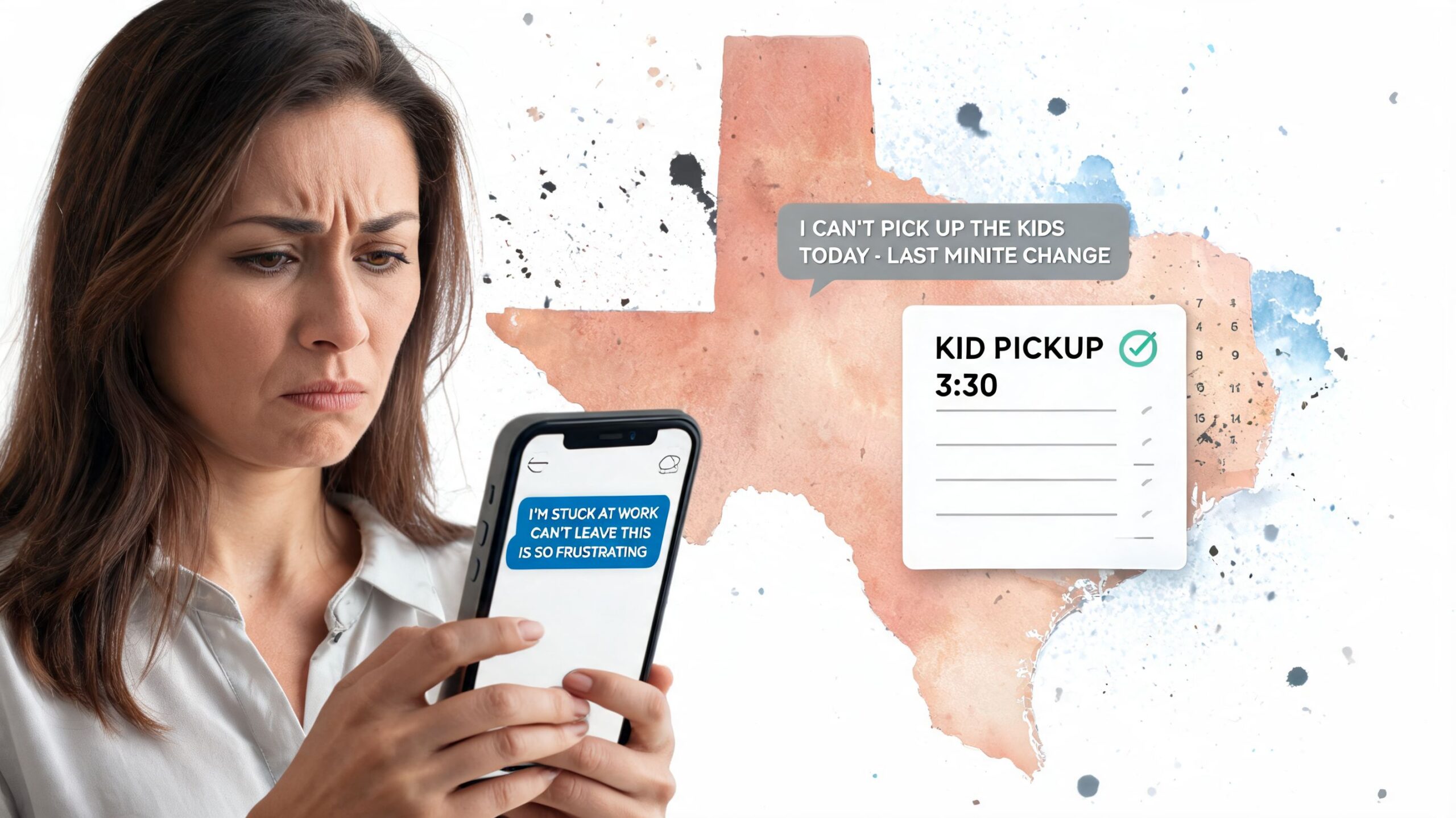
Saturday pickup is at 6:00. At 5:12, your phone lights up with a text saying the other parent is “running late.” By 5:40, the story changes. By 6:15, there's a complaint that you “never said” the exchange was at the usual place. Then screenshots start flying, messages get deleted, and by Monday both sides feel certain the judge would agree with them.
That kind of spiral is common in Humble, Atascocita, Kingwood, and across Northeast Houston. It's also one of the clearest reasons using parenting apps in custody cases texas has become such an important part of family law practice. When communication is scattered across texts, voicemail, email, and social media, the record gets messy fast. When it's organized in one platform with time-stamped records, the court has something much more useful.
For Harris County parents, that difference matters. Judges don't need more conflict. They need reliable proof of what was said, when it was said, and how each parent handled the situation.
The End of 'He Said She Said' in Texas Custody
A missed pickup used to turn into a courtroom argument built on memory. One parent swore notice was given. The other swore it wasn't. Both brought screenshots. Both claimed the other was hiding part of the conversation. The court had to sort through fragments.
That's changing in Texas. As of 2025, Texas family courts have increasingly recognized co-parenting apps as critical evidence in custody proceedings, with OurFamilyWizard and TalkingParents emerging as the most widely used platforms throughout the state. Judges across Texas now regularly order parents to use specific apps as part of custody arrangements, particularly in high-conflict cases, because these digital platforms reduce confusion and provide clarity, according to this discussion of Texas co-parenting app use.
What changes when parents use an app
A parenting app does more than send messages. It creates a record that is easier for a judge to follow. That matters when the court is trying to decide whether a parent is organized, cooperative, and focused on the child.
Instead of searching through dozens of text threads, a court can review:
- Time-stamped messages that show exactly when a request or response was made
- Calendar entries for exchanges, school events, and schedule changes
- Expense logs tied to child-related costs
- Downloadable communication histories that can be reviewed in a more orderly way
Parents in Kingwood and Humble often ask whether this is only for extreme cases. It isn't. Apps are especially useful in high-conflict situations, but they also help in ordinary cases where both parents want fewer misunderstandings.
What judges are really looking for
Most custody disputes aren't won because one parent writes longer messages. They're influenced by patterns. A parent who communicates clearly, confirms details, and stays child-focused usually presents better than a parent who sends emotional late-night texts and then argues about what was meant.
Practical rule: If a message would look unreasonable when printed and handed to a Harris County judge, don't send it.
That doesn't mean an app fixes every co-parenting problem. It does mean the court has a cleaner way to separate facts from emotion. For many families in Northeast Houston, that alone lowers the temperature.
Why Digital Documentation is Crucial in Harris County Courts
Texas custody cases no longer live only in paper files and in-court testimony. They live on phones. They live in message histories, social posts, comments, deleted threads, and the digital trail people leave when they're upset, careless, or trying to prove a point.
That matters because in 2025, Texas family courts experienced a dramatic transformation where digital evidence and emotional health now play primary roles instead of traditional financial factors. Courts now regularly examine an extensive range of digital content, and repeated digital behavior raising concerns about stability or parenting priorities can significantly sway judicial decisions. One San Antonio attorney noted, “we're reconstructing relationships during an era when digital footprints and mental wellness play a huge role”, as reported in this coverage of digital evidence in Texas custody disputes.
Why texts and social media often hurt more than help
Parents often assume their best evidence is already in their phone. Sometimes that's true. More often, it's incomplete and chaotic.
Texting creates problems because:
- Threads get broken up when messages are deleted or phones are replaced
- Tone gets misread and sarcasm never lands well in court
- Screenshots raise questions about context
- Important logistics disappear under a pile of emotional back-and-forth
Social media is even worse. A post made to vent to friends can look immature in a custody case. A joke can be read at face value. A photo may not prove what the other side says it proves, but it can still force you to spend time and money responding to it.
Why a parenting app is the smarter record
A dedicated app gives the court something cleaner than random digital fragments. Instead of asking a judge to assemble your co-parenting story from screenshots and arguments, you present a single documented stream of communication.
That helps in Harris County because the court usually wants practical answers:
| Court concern | Messy evidence problem | App-based solution |
|---|---|---|
| Was notice given? | Competing screenshots | Time-stamped message history |
| Was a schedule change agreed to? | Conflicting text interpretations | Calendar entry plus written confirmation |
| Were expenses shared properly? | Venmo notes and partial receipts | Logged expense requests and attachments |
| Is one parent escalating conflict? | Scattered tone across platforms | One organized record of communication style |
What this looks like in real life
A parent in Atascocita may have strong facts but still present poorly if those facts are buried in angry messages. A parent in Kingwood may have fewer dramatic incidents but a much better record because every request, response, and exchange is documented calmly and consistently.
Courts respond better to a steady record than to a dramatic story.
That's why using a parenting app is often a strategy choice, not just a convenience choice. You're not only communicating with the other parent. You're building a record that may later be reviewed by a judge, an amicus attorney, a mediator, or opposing counsel.
Digital discipline matters outside the app too
Even when you move communication into an app, your broader digital behavior still matters. Keep these boundaries in place:
- Don't argue on social media about your case, your ex, or parenting issues
- Don't post while angry after a missed exchange or heated message
- Don't send long emotional texts outside the app because “it was faster”
- Do assume anything digital may be reviewed later
For families across Northeast Houston, the strongest approach is simple. Use one court-friendly platform for child-related communication, keep everything child-centered, and stop creating side channels that complicate your case.
Choosing the Right Parenting App for Your Texas Case
A parent in Humble may tell me, "I do not care which app we use. I just need something the other parent cannot twist later." That is usually the right starting point.
The best app for a Texas custody case is the one your family will use consistently, the one a Harris County judge can review without confusion, and the one that fits the problem in front of you. Some cases need cleaner message records. Some need better expense tracking. Some need a single place for school updates, medical information, and schedule changes.
In local cases, the three platforms I see most often are OurFamilyWizard, TalkingParents, and AppClose. All three can work. The right choice depends on what you need to prove, how much conflict exists, and whether cost will keep one parent from participating.
Features that matter in a Harris County case
Parents often focus on branding first. Courts care more about function. Look for features that make the record easier to review and harder to dispute:
- Messages that cannot be edited later
- Clear date and time stamps
- A way to export or download records
- A shared calendar for exchanges and activities
- Expense tools for reimbursements
- Document storage for receipts, school forms, and medical records
- An interface simple enough that a reluctant co-parent will still use it
That last point matters more than people expect. An app with ten useful tools does not help much if one parent avoids it, claims confusion, or keeps pulling communication back into text messages.
Parenting App Feature Comparison for Court Evidence
| Feature | OurFamilyWizard | TalkingParents | AppClose |
|---|---|---|---|
| Court familiarity in Texas | Frequently seen in contested custody cases | Frequently seen in contested custody cases | Often used when cost is the main concern |
| Message records | Built to preserve communication and related parenting details | Built around message accountability and record preservation | Messaging included |
| Time-stamped logs | Yes | Yes | Yes |
| Downloadable history | Yes | Yes | Export capability available |
| Shared calendar | Yes | Yes | Yes |
| Expense tracking | Yes | Available | Built-in expense tracking |
| Cost approach | Paid platform | Free version available, with paid options | No-cost option |
| Best fit | Cases with scheduling, expense, and information-sharing problems happening at once | Cases where the main issue is disputed communication | Parents who need basic documentation tools without a subscription |
OurFamilyWizard
OurFamilyWizard often fits cases with a lot of moving parts. If your child has therapy appointments, school events, rotating possession, extracurriculars, and repeated reimbursement requests, having those items in one platform can reduce avoidable disputes.
I tend to look at this option more closely when:
- The parenting schedule changes often
- Medical or school information needs to be shared regularly
- Expense disputes are frequent
- An amicus attorney, mediator, or lawyer may need to review the history efficiently
For a Kingwood or Atascocita parent dealing with a detailed possession schedule, that structure can be worth the cost. The trade-off is simple. Some parents find it more than they need, and a high-conflict co-parent may complain that it feels complicated.
TalkingParents
TalkingParents is often the cleanest choice when the main problem is communication itself. If one parent denies what was said, claims messages were never sent, or creates confusion by switching between text, email, and calls, this platform usually addresses that problem directly.
It often makes sense when:
- You want a straightforward message record
- The case is headed toward enforcement or modification
- Accountability matters more than extra features
- You need a platform many Texas family law attorneys and courts already recognize
If your evidence problem is mostly "I said this, and now they deny it," TalkingParents is usually on the short list.
AppClose
AppClose deserves serious consideration because many families need a lower-cost option that still creates usable records. In Humble-area cases, parents are often balancing rent or mortgage changes, child support issues, legal fees, and daily child expenses all at once. Waiting for the perfect paid platform can mean losing months of documentation.
AppClose can be a practical fit when:
- Budget is tight
- You need to begin documenting right away
- You want messaging, calendar functions, and expense tracking in one place
- Your case does not require as much review by outside professionals
The trade-off is that lower-cost tools can be perfectly fine for day-to-day use but may require more care when exporting and organizing records for court. That is manageable. It just means you should be more deliberate.
A practical way to choose
Use the problem in your case to make the decision.
- If the court orders a specific app, use that app.
- If cost will prevent consistent use, start with AppClose.
- If disputed communication is the core issue, look closely at TalkingParents.
- If your case needs schedules, expenses, and records organized in one place, OurFamilyWizard may be the better fit.
Before asking the court to require a parenting app, it also helps to think about how you will later present missed exchanges, ignored requests, or reimbursement issues. This guide on how to document custody violations in Texas pairs well with app-based records because it focuses on the kinds of detail that hold up under scrutiny.
One more practical point. If your app includes document signing or consent forms, be careful about privacy and record handling. Parents who want to compare signing platforms can review BoloSign on HIPAA e-sign tools, especially when medical or counseling records are part of the broader custody dispute.
Parents also ask whether a lawyer should weigh in before they commit to one platform. Sometimes yes. A family law team can help decide whether your case needs tighter communication rules, a proposed court order requiring app use, or specific language about uploads, reimbursements, and response times. The Law Office of Bryan Fagan in Humble advises clients on documenting custody communication and expenses, which can affect which platform makes the most sense in a Harris County case.
Best Practices for Documenting Communications and Events
Choosing the app is only half the job. The harder part is using it in a way that helps your case instead of hurting it. Judges in Harris County don't just look at whether you used the platform. They look at how you used it.
A strong app record reads almost like a professional log. It's clear. It's calm. It stays centered on the child. If your messages feel like arguments, threats, or scorekeeping, the app becomes evidence against you just as easily as evidence for you.
Write as if the judge may read it
That's the safest working rule. Every entry should answer a practical question, not express your frustration.
Compare these examples:
Poor message: “You're late again and you clearly don't care about our child's schedule.”
Better message: “It's 6:15 p.m. and the exchange was scheduled for 6:00 p.m. Please confirm your arrival time.”
Poor message: “You always refuse to pay your share.”
Better message: “I uploaded the receipt for the school uniform expense. Please review and respond through the expense tool.”
Poor calendar note: “You changed plans like you always do.”
Better calendar note: “Request to swap this weekend for next weekend due to school event. Please confirm by Thursday at 5:00 p.m.”
Keep each category in its lane
The app works better when you use each feature for its intended purpose.
- Messages should handle communication.
- Calendar entries should handle dates, exchanges, and schedule requests.
- Expense tools should handle reimbursement requests.
- Document storage should hold school records, medical information, and notices.
Parents often weaken their record by shoving everything into one angry message. That creates confusion and makes it harder to prove specific facts later.
Use a neutral business tone
You don't have to sound cold. You do need to sound controlled.
A useful formula is:
- State the fact.
- State the child-related issue.
- Ask for a specific response.
- Stop.
Good courtroom language usually sounds boring. That's a compliment.
Document events with enough detail, not too much drama
When something important happens, record it promptly. Include dates, times, locations, and what was observed. Leave out speculation about motives unless your lawyer tells you otherwise.
A clean event note might include:
- Exchange issue with date, location, and actual arrival time
- School issue with the teacher notice or attendance record attached
- Medical issue with the appointment date and discharge paperwork
- Expense issue with the receipt and reimbursement request entered properly
If you need a broader system for preserving these incidents, this guide on how to document custody violations in Texas is a useful companion to app-based records.
Don't turn the app into surveillance
Parents sometimes try to document everything because they're scared of missing something. That can backfire. Logging trivial grievances all day makes you look reactive and combative.
Focus on events that affect parenting time, child welfare, school, medical care, expenses, transportation, and compliance with orders.
A practical line is this:
| Document it | Let it go |
|---|---|
| Missed exchange | Rude tone in one isolated message |
| Unapproved schedule change | Minor annoyance that had no child impact |
| Failure to share school info | Personal jab that doesn't affect parenting |
| Repeated reimbursement refusal | Petty disagreement about style |
Protect records outside the app too
Sometimes a case also involves consent forms, medical releases, school authorizations, or other signed documents. If you're handling those electronically, it helps to understand what secure signature workflows look like. A plain-language overview of BoloSign on HIPAA e-sign tools can help parents think through privacy and document handling when medical or counseling records are involved.
A short video can also help you think about documentation habits and how they play out in custody disputes:
Habits that make your record stronger
- Reply within a reasonable time when the issue concerns the child's immediate needs
- Confirm changes in writing even if discussed verbally first
- Upload receipts promptly instead of batching them months later
- Avoid sarcasm because it reads poorly in transcripts and printouts
- Stay on topic and don't mix property disputes or old relationship arguments into parenting communication
The parent who appears steady usually gains credibility. In Harris County courtrooms, that can matter as much as the underlying disagreement.
Turning App Records into Admissible Evidence in Texas
A parenting app can create a strong record. That doesn't automatically mean the judge will accept every printout you bring to court. Evidence still has to be presented the right way.
Texas family courts use a practical method for evaluating these records. Apps like TalkingParents are valued for unalterable, time-stamped message logs that meet evidentiary standards. Judges look closely at documentation consistency, and records showing reliable cooperation can weigh significantly in a parent's favor. Texas practice also recognizes the value of supplementing digital records with certified mail for critical communications as part of good-faith parenting efforts under Texas Family Code Section 153.002, as discussed in this explanation of documenting co-parenting for Texas custody cases.

What the court usually needs
In plain terms, the court wants to know two things:
- Are these records genuine?
- Can they be considered under the rules of evidence?
That's why lawyers talk about authentication and hearsay. Authentication means showing the records are what you say they are. Hearsay rules limit out-of-court statements unless an exception applies. Parenting app records are often easier to work with than random screenshots because the platform itself preserves the communication in an organized way.
Why business records matter
One common path is the business records affidavit. That's a formal statement used to help establish that certain records were kept in the ordinary course of business by the company maintaining the platform.
You don't need to master evidence law to understand the practical point. If the app offers proper record exports and supporting documentation, your lawyer has a better chance of getting those records in front of the judge with fewer fights over authenticity.
A simple courtroom workflow
Think of the process this way:
Identify the relevant dates and issues
Pull only the records that matter. Don't dump six months of messages into evidence if the dispute is about one exchange weekend.Export the records properly
Use the app's official download or print function rather than screenshots whenever possible.Get supporting authentication documents if available
This may include platform-generated certification materials or a records affidavit process.Organize by issue
Group records into categories like exchange failures, expense disputes, school communication, or medical notice.Layer in supporting proof
If the issue was serious, add certified mail records, school notices, receipts, or medical paperwork.
A judge is more likely to trust records that are organized by event and backed by other documents.
Sample language for a request or motion
Parents in Humble and Kingwood often want to know what this looks like in an actual filing. The wording below is only sample language, not legal advice for your specific case, but it shows the general style used in Texas custody litigation.
Sample Request for Production
“Produce all communications, messages, calendar entries, expense requests, attachments, and downloadable records from any co-parenting application used by you in connection with the child who is the subject of this suit, including but not limited to OurFamilyWizard, TalkingParents, and AppClose, for the period of [date] through [date].”
Sample request for temporary order language
“The parties shall communicate regarding the child only through a mutually accessible co-parenting application that preserves time-stamped records and allows message history to be downloaded for court review, except in emergencies involving the child's immediate health or safety.”
Sample compliance language for an enforcement context
“Respondent failed to use the court-ordered co-parenting platform for child-related communications on the following dates, despite repeated written requests to do so.”
Don't improvise with recordings
Some parents try to fill evidentiary gaps by secretly recording calls or in-person exchanges. That can create new problems. Before doing that, it's wise to understand call recording laws explained by SpeakNotes, then speak with your attorney about what is appropriate in your case.
What helps most in Harris County
In practice, the strongest presentation usually has these features:
- Chronology that tells the court what happened in order
- Consistency in the way one parent communicated and documented events
- Corroboration from receipts, school notices, or certified mail
- Relevance tied directly to conservatorship, possession, or the child's best interest
If you're preparing for hearing or trial, this resource on how to prove best interest of the child fits closely with app-based evidence because documentation only matters when it connects to the issues the court must decide.
Common Pitfalls and Advanced Strategies
A lot of parenting app advice stops at “use the app and be polite.” Real cases are harder than that. The other parent may ignore the platform, weaponize notifications, or create new conflict through tracking tools and side-channel communication.
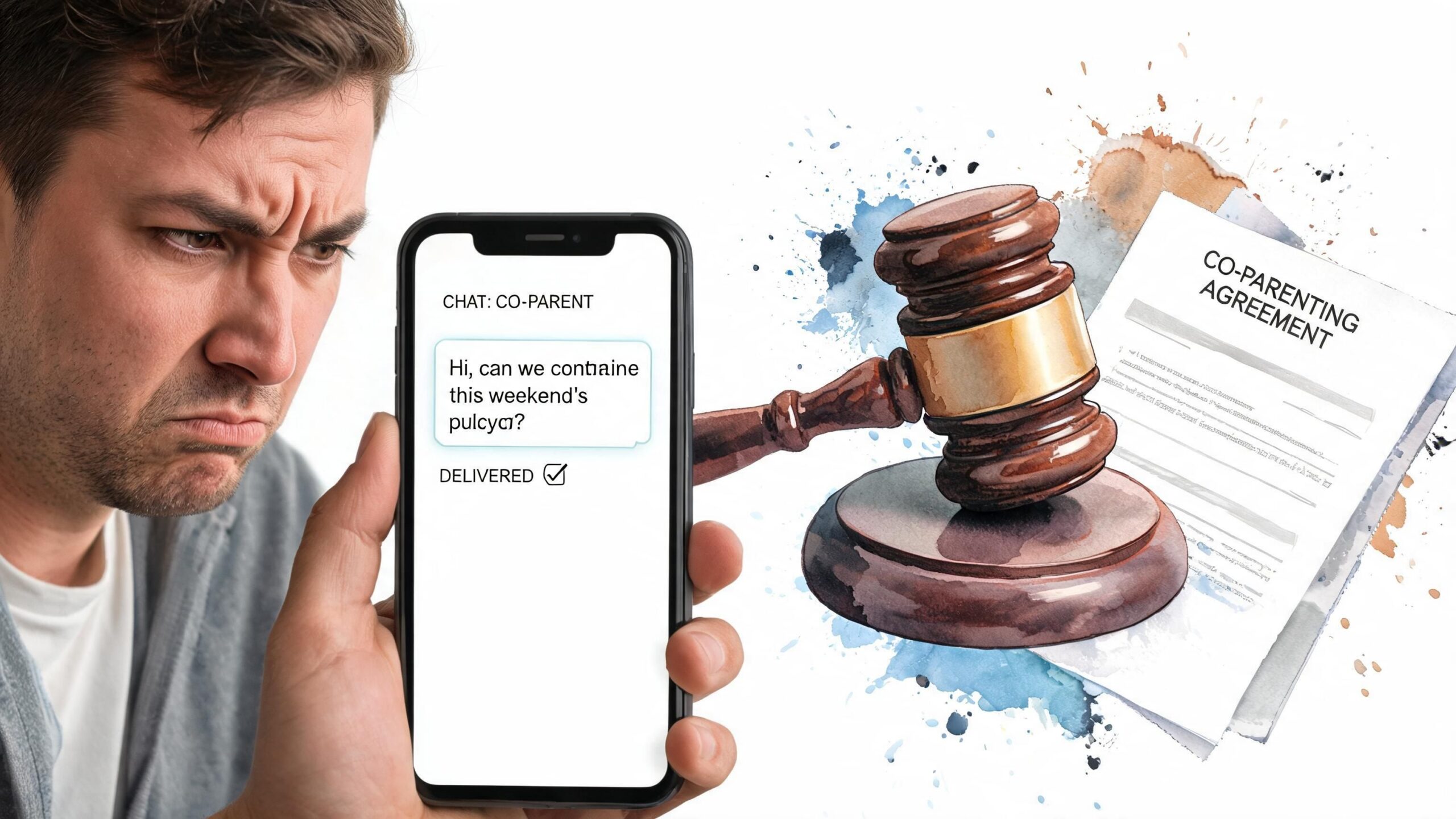
One of the biggest misconceptions is that a court order solves compliance problems automatically. It doesn't. When a co-parent refuses to comply with a court order to use an app, an attorney must file a motion to enforce, costing $1,000-$3,000, or the non-compliant parent risks contempt of court charges. Emerging privacy risks are also becoming more important. Parent-to-parent tracking is prohibited, and a 2025 Houston case resulted in a father being fined $5,000 for app-based spying, according to this discussion of technology problems in Texas custody cases.
When the other parent won't use the app
If there's no court order yet, refusal is frustrating but not automatically punishable. You usually need to request app use in temporary orders, final orders, or a modification. If there is already an order, document every failure carefully.
A practical record includes:
- Your request through the app
- Any off-app response showing refusal
- A short log of dates when child-related issues were pushed outside the platform
- Copies of missed notices or unresolved scheduling problems caused by non-use
Then talk with counsel about enforcement.
What to do instead of chasing
Parents often make the mistake of arguing repeatedly about the refusal itself. That just creates more noise.
A better pattern is:
- Send one clear request through the app.
- If necessary, send one neutral follow-up.
- Preserve any noncompliant response.
- Stop debating and prepare the record for your attorney.
Don't spend weeks trying to persuade a noncompliant parent to act reasonably if the court already ordered the tool. Build the proof instead.
Location tracking is a real danger area
Parents are often surprised to learn that digital monitoring can create serious legal risk. The fact that a child has a device does not mean every form of tracking is safe or wise.
Use caution with:
- Third-party tracking apps
- Shared logins
- Check-in tools used to monitor the other parent
- Location data gathered during the other parent's possession time
If there is a genuine safety concern, handle it through your attorney and the court rather than self-help surveillance. The legal and factual context matters.
Advanced strategy in high-conflict cases
In a difficult Harris County case, the goal is often not “better communication.” It's cleaner evidence and tighter boundaries.
That may mean:
| Problem | Better strategy |
|---|---|
| Parent sends abusive texts outside app | Reply once in app asking that all child-related communication remain there |
| Parent ignores schedule requests | Submit requests in calendar and preserve the nonresponse |
| Parent makes verbal side agreements | Confirm in writing inside the app immediately |
| Parent uses the child as messenger | Redirect all logistics back to the app |
For readers dealing with repeated escalation, this guide to high-conflict custody case strategy in Texas gives a broader framework for boundaries and evidence planning.
The trade-off most parents miss
A parenting app won't make an unreasonable co-parent reasonable. What it can do is expose the pattern clearly. That's the trade-off. If you expect the app to heal the relationship, you'll be disappointed. If you use it to create a disciplined record and reduce avoidable disputes, it can be one of the most effective tools in the case.
Frequently Asked Questions About Parenting Apps
Can a Texas judge make us use a parenting app
Yes. Judges across Texas regularly order specific apps in custody arrangements, especially in high-conflict cases. If there isn't an order yet, a parent can ask for one through temporary orders, mediation language, or final orders.
What if my co-parent keeps texting me instead
If your order requires app use, preserve the texts and speak with your lawyer about enforcement. If there's no order, respond calmly and try to move child-related communication back into the app. Consistency matters.
Which app is best if money is tight
AppClose is the zero-cost option noted in Texas custody discussions. It can be a practical place to start when budget is the main barrier.
Are screenshots enough for court
Sometimes they help, but official app exports are usually better. Courts prefer records that are easier to authenticate and review.
Should I put every complaint in the app
No. Document issues that affect the child, the schedule, expenses, compliance, school, or medical care. Don't turn the app into a running argument log.
Can I use location tracking to prove the other parent lied
Be careful. Tracking issues can create major privacy and litigation problems. Get legal advice before using monitoring tools tied to the child or the other parent's possession time.
What's the biggest mistake parents make
They use the right app with the wrong tone. A hostile message inside a parenting app is still hostile evidence.
If you're dealing with custody conflict in Humble, Atascocita, Kingwood, or anywhere in Northeast Houston, a local strategy matters. The Law Office of Bryan Fagan helps parents build usable records, prepare for Harris County hearings, and make practical decisions about communication tools that fit the facts of the case. Schedule a free consultation with our Humble office to talk through your situation and your next step.