Skip to content

The decree is signed, and life should be calmer. Then a former spouse stops paying, keeps the truck title, or acts like the visitation schedule never existed. For families in Humble, Atascocita, Kingwood, and Northeast Houston, that moment usually means the divorce is over on paper, but the hard part is getting the order followed in real life.
Texas gives families a structured way to respond, but the clock matters. In property cases, the request usually has to be brought within the statutory window, and the court that issued the decree is the one that can enforce it. When someone is ignoring a signed order, enforcing a divorce decree Humble TX is less about re-litigating the divorce and more about making the existing judgment work the way it was written.
When a Humble Family Needs to Enforce a Divorce Decree
A lot of people call after they have already tried to handle things politely. They sent texts, made reminders, and gave “one more week” a few times. Then the car stays in the other spouse's name, the bank transfer never happens, or the exchange for weekend visitation keeps getting cancelled at the last minute.
That is usually when enforcement becomes necessary. Texas law gives you a way to ask the court to carry out the original division of property or require compliance with a specific order, but it is not a do-over of the divorce. The decree is supposed to be the final word on who gets what, and enforcement exists to make the written order real, not to reopen every grievance from the marriage.

What Texas courts can enforce
The order has to be concrete enough for a judge to compare what was ordered with what happened. That is why property division, support obligations, and specific custody or visitation terms are the kinds of issues people usually bring back to court. If the decree says a vehicle must be transferred, a payment must be made by a certain date, or a child exchange must happen at a certain time and place, there is something to enforce.
Practical rule: if you cannot point to the exact paragraph, deadline, or property description, the court will have a harder time helping you.
That distinction matters in Harris County. A vague complaint that “my ex is being unfair” is not the same thing as proving a violation of a signed order. For that reason, families in Humble often need to separate emotional frustration from the actual legal issue before they spend time and money on a filing.
Reviewing Your Final Decree Before You Do Anything Else
The first document to pull is the signed decree itself. If you do not have a copy, get one from your file or from the court records before you do anything else. The What Is a Final Decree of Divorce? page can help you understand why the signed order, not the informal agreement, controls.
A court will usually look for the exact language of the decree, so read it line by line. Find the paragraph covering the problem, whether that is a money payment, a vehicle transfer, a retirement division, or a parenting exchange. Then mark the date the judge signed it and check whether any motion to change or challenge the decree is still pending.
Three things to confirm
- The decree is final. TexasLawHelp notes that a party must usually wait at least 30 days after the judge signs the decree before asking the court to enforce it, and if a motion to change or challenge the decree is filed, enforcement must wait until 30 days after the court rules on that motion.
- The obligation is specific. Texas family-law guidance focuses on exact deadlines, asset identifiers, and payment terms because those details show the court what was ordered and what was missed.
- The filing is still timely. The Texas State Law Library says you generally have two years from the date the final decree is signed to file for enforcement of property division, and Texas Family Code Chapter 9 sets the same basic rule for tangible personal property, requiring suit before the second anniversary of the decree being signed or becoming final after appeal, whichever is later.
That timeline is especially important for Humble and Northeast Houston residents because the deadline does not wait for informal negotiations to fail. If the decree is vague, that is a separate problem, but you still need to know whether you are inside the enforcement window before the rest of your plan makes sense.
If the order is unclear, a local attorney can help you read what the court can enforce and what may need a different legal approach. A Divorce Lawyer in Humble, TX handles divorce representation for clients in Humble and Harris County, which can matter when the decree language itself is the issue.
Documenting the Violation the Way a Judge Wants to See It
Judges do not react to frustration alone. They look for a clean record that shows the order, the missed act, and the date it happened. The best enforcement files I have seen are not fancy. They are organized, dated, and easy to follow.
Start with a running log. Put the decree paragraph number on top, then list each missed payment, failed exchange, refused title transfer, or ignored deadline underneath it. If the issue involves money, bank statements and screenshots of payment histories help. If the issue involves visitation, keep a calendar record, text messages, and emails showing when the exchange was supposed to happen and what occurred.
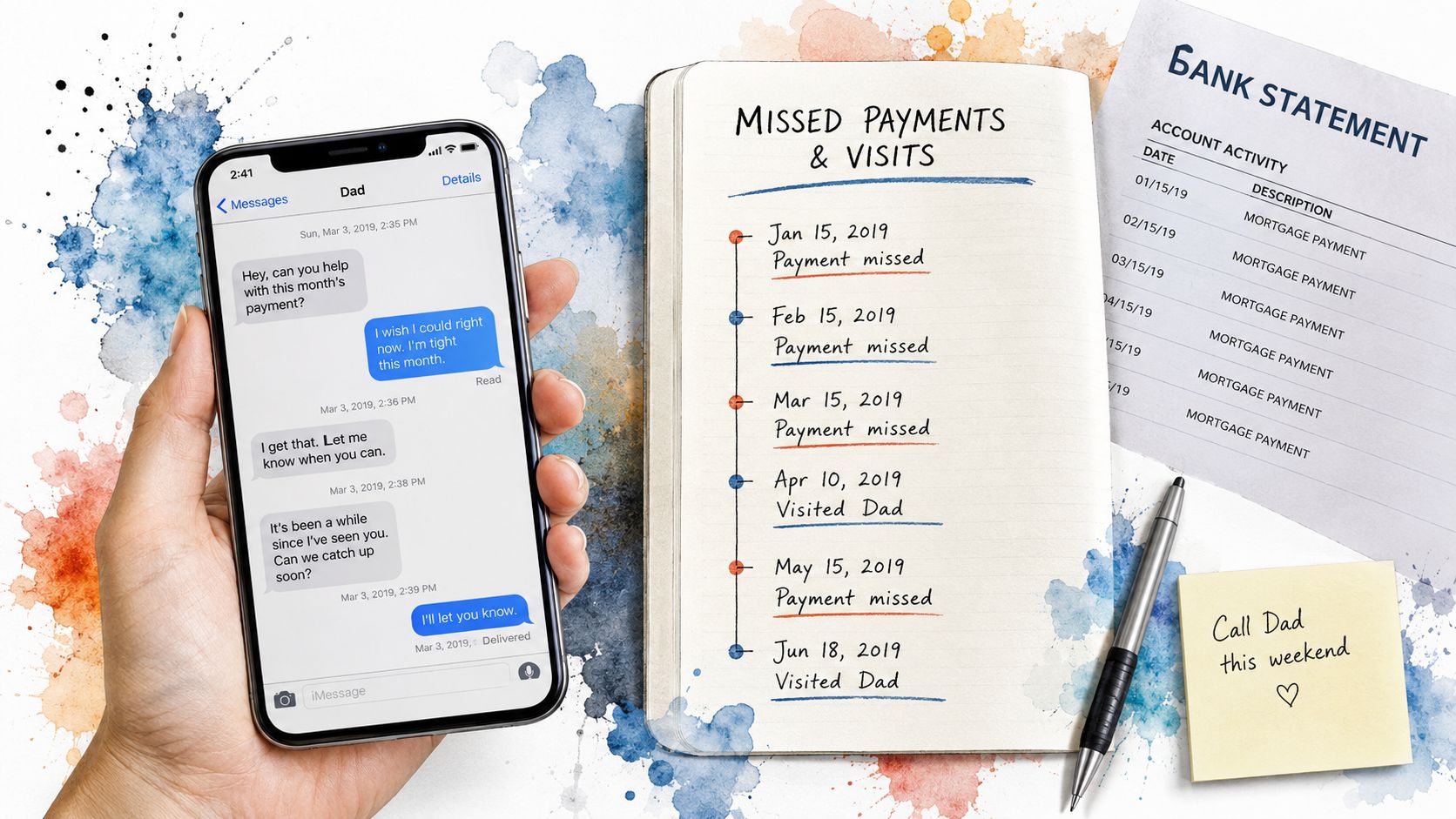
What to record as the problem unfolds
- Missed payments. Save the due date, the amount owed, and proof that nothing arrived.
- Denied exchanges. Note the scheduled time, the place, who was present, and what the other parent said.
- Unreturned property. Write down the item description, the decree language, and every request you made for return or title transfer.
- Support paperwork. Keep anything that shows a refused QDRO, a stalled refinance, or a bank refusal tied to the ex-spouse's noncompliance.
The key is to keep the timeline running. A stack of loose papers is harder to present than a simple chronology that shows the pattern clearly. That is especially true in Harris County, where a judge may not want to spend time sorting through scattered screenshots to figure out what happened.
A judge usually trusts a timeline more than a story told from memory.
For parents in Atascocita, Kingwood, and Northeast Houston, a good record also helps separate one bad weekend from repeated noncompliance. If you need a practical template for visitation problems, the how to document custody violations Texas guide is a useful starting point.
Choosing Between a Motion to Enforce and a Motion for Contempt
These two terms get mixed together all the time, but they are not the same thing. A Motion to Enforce asks the court to make the original decree happen. A Motion for Contempt asks the court to punish a willful violation of the order. The difference matters because the goal, the proof, and the possible outcome are not identical.
| Factor | Motion to Enforce | Motion for Contempt |
|---|---|---|
| Purpose | Carries out the original order | Punishes a willful violation |
| Main focus | Property transfer, payment, or action required by decree | Willful refusal to comply |
| Remedies | Delivery of property, money judgments, ordered payments | Jail time, fines, attorney fees, and other sanctions in appropriate cases |
| Best use | When the decree is clear but ignored | When the violation is repeated or intentional |
A motion to enforce is usually the cleaner route when the decree already says what should happen and the other side will not do it. Contempt is more serious, and the emotional temperature rises fast because it can involve punishment rather than just compliance. That can be helpful when someone keeps ignoring court orders, but it can also make a case harder to resolve if the proof is thin.
TexasLawHelp explains that an enforcement order does not modify or alter the original property division. It carries out or clarifies what was already written. The other party must get notice by citation and file a written answer, or the court can enter a default judgment if they do nothing.
reconnect with relatives guide can be useful when a party has moved and you need a better handle on locating service information before filing.
Sending a Demand Letter and Filing in the Right Court
Before anyone gets served with court papers, a well-written demand letter can help narrow the fight. It should name the exact decree paragraph, say what happened, and give a clear deadline for compliance. Keep it calm and factual. If the other side is dragging their feet, that letter sometimes gets the job done without a hearing.
The filing belongs in the same court that rendered the divorce decree. For Humble-area families, that usually means a Harris County family court. Texas Family Code Chapter 9 puts the enforcement suit in the court that issued the decree, which matters because a different court usually cannot step in and treat it like a fresh case.
Filing and service basics
- Prepare the enforcement petition. Identify the violation and the relief you want.
- File in the original court. That keeps the matter tied to the decree that already exists.
- Serve by citation. TexasLawHelp says the other party must receive notice by citation and then file a written answer.
- Watch for default. If there is no response, the court can move toward default judgment, but only after service rules are satisfied.
The timeline from filing to hearing depends on service, the court's schedule, and whether the other side answers. In practice, it can take weeks or longer before you see a courtroom date, especially if the case needs a reset or service has to be repeated. That is one reason demand letters matter. They show good faith and can make the later hearing cleaner.
When a case is filed correctly, the court has a path to enforce the decree without relitigating the divorce. Texas law favors specificity and procedure, not informal back-and-forth that never ends.
Remedies a Humble Court Can Actually Order
A successful enforcement case should end with a remedy that matches the problem. If the issue is unpaid support, the court can use collection tools tied to the debt. If the issue is property, the court can order delivery, transfer, or a money judgment depending on what the decree requires. If the issue is parenting time, the remedy usually focuses on compliance and, in some cases, make-up visitation.

What relief can look like
- Property delivery. If the decree awarded a vehicle or household item, the court can order the item turned over.
- Money judgments. If a spouse owes an equalization payment or another specific amount, the court can enter judgment for that unpaid sum.
- Specific transfer orders. A court can require actions needed to complete the original division, such as signing documents tied to the decree.
- Support collection. Texas family courts have tools for unpaid support, including wage withholding and bank-account garnishment in appropriate cases.
- Make-up parenting time. When visitation has been wrongfully denied, the judge can order additional time to address the missed access.
The practical question is not just whether the court can order relief, but how soon that relief becomes useful. Some remedies are immediate on paper but slower in practice, especially when money has to move through payroll or a financial institution. Others, like a title transfer or signed document, depend on getting the other side to comply or on the court ordering a substitute process.
TexasLawHelp also notes that the court can impose contempt sanctions in appropriate cases. That pressure can matter when someone keeps refusing to follow a clear order. The local case law and the wording of the decree both shape what the judge will sign.
If child support is part of your issue, the enforce child support Humble page is a practical place to start reviewing the available options. The right remedy depends on whether the order is about payment, property, or parenting time, and those are not interchangeable.
Costs, Common Defenses, and When a Local Attorney Helps
Enforcement costs usually begin with filing fees and service of citation. If the case needs extra steps, the expense grows from there. In some cases, the court can shift attorney fees to the non-complying party, but that is not automatic and it depends on the facts, the pleadings, and the relief the judge grants.
The other side may argue inability to pay, a good-faith disagreement about what the decree means, changed circumstances, or that the decree is too vague to enforce. Some of those defenses have real traction. Others fall apart when the decree language is specific and the records are clean. The strongest response is usually a petition and evidence packet that anticipates those defenses before the hearing even starts.
A local attorney helps most when the decree is old, the wording is messy, or service is likely to be a problem. That is also where a firm that handles divorce, custody, criminal defense, and estate planning in the same community can be useful, because the family's legal issues often overlap. The Law Office of Bryan Fagan is one option for families who need a practical plan based on a decree, a deadline, and a Harris County courtroom.
If you're dealing with a missed transfer, unpaid support, or a visitation order that keeps getting ignored, the Law Office of Bryan Fagan can review your decree, your deadlines, and the documents that support enforcement. Visit Law Office of Bryan Fagan to schedule a free consultation and talk through the next step for your Humble, Atascocita, Kingwood, or Northeast Houston case.