
For a Harris County divorce, the base filing fee is $487.00 for a case without children and $502.00 for a case involving children, before process issuance and service costs. The amount you pay can be higher if the clerk must issue and serve citation or other process.
A Humble resident often reaches this question late at night, trying to separate household bills from legal expenses while worrying about children, housing, and what happens next. A person in Atascocita, Kingwood, or Northeast Houston may find an old online post quoting a completely different number, then wonder whether the Harris County District Clerk will accept the filing.
The safest approach is to use the current Harris County District Clerk divorce filing fee schedule, treat the listed amount as a starting point rather than an all-inclusive price, and ask about a waiver before assuming you must pay every cost upfront. The Harris County divorce filing process also involves decisions about service, paperwork, children, property, and the response from the other spouse.
Understanding Your Initial Divorce Filing Costs
The current baseline
The Harris County District Clerk's official schedule lists a $350.00 family new-suit filing fee when no service is required, along with a $137.00 state-consolidated new-suit fee. Together, those charges create a $487.00 base for a divorce or annulment case without children. The same official schedule lists a $15.00 domestic-relations fee for cases involving children, producing a $502.00 listed base before service-related costs. Read the current Harris County fee schedule
Those figures are the right starting point for a Humble family filing in Harris County. They aren't necessarily the final amount on the receipt because the District Clerk instructs filers to add the applicable filing fee, process-issuance fee, and fee for serving process.
A resident in Kingwood might hear that a friend paid a different amount. That doesn't automatically mean the clerk made an error. The friend's case may have involved children, a different service arrangement, or an older schedule.
Practical rule: Budget from the current official schedule, not from a search result, social media post, or a relative's memory.
What the base fee doesn't answer
The base amount addresses the court's initial filing charges. It doesn't answer whether your spouse must be formally served, whether a citation must issue, or whether you qualify to postpone or avoid upfront payment through a sworn inability-to-pay filing.
That distinction matters for someone separating on a tight budget. The legal filing may be necessary before every financial issue is resolved, but you should identify the likely court costs before submitting documents. A short review with a Humble family lawyer can also prevent a rejected filing caused by an incomplete petition or incorrect fee decision.
The court fee is separate from attorney fees and from other expenses that may arise during a divorce. If your case involves children, property, support, or disagreement about the outcome, the filing charge is only one part of the financial picture.
Harris County Family Fee Schedule Categories
The Harris County schedule uses a structured total, not one universal divorce price. That structure reflects the type of family case, the state-consolidated component, the county family filing component, and any process charges connected to notifying the respondent.
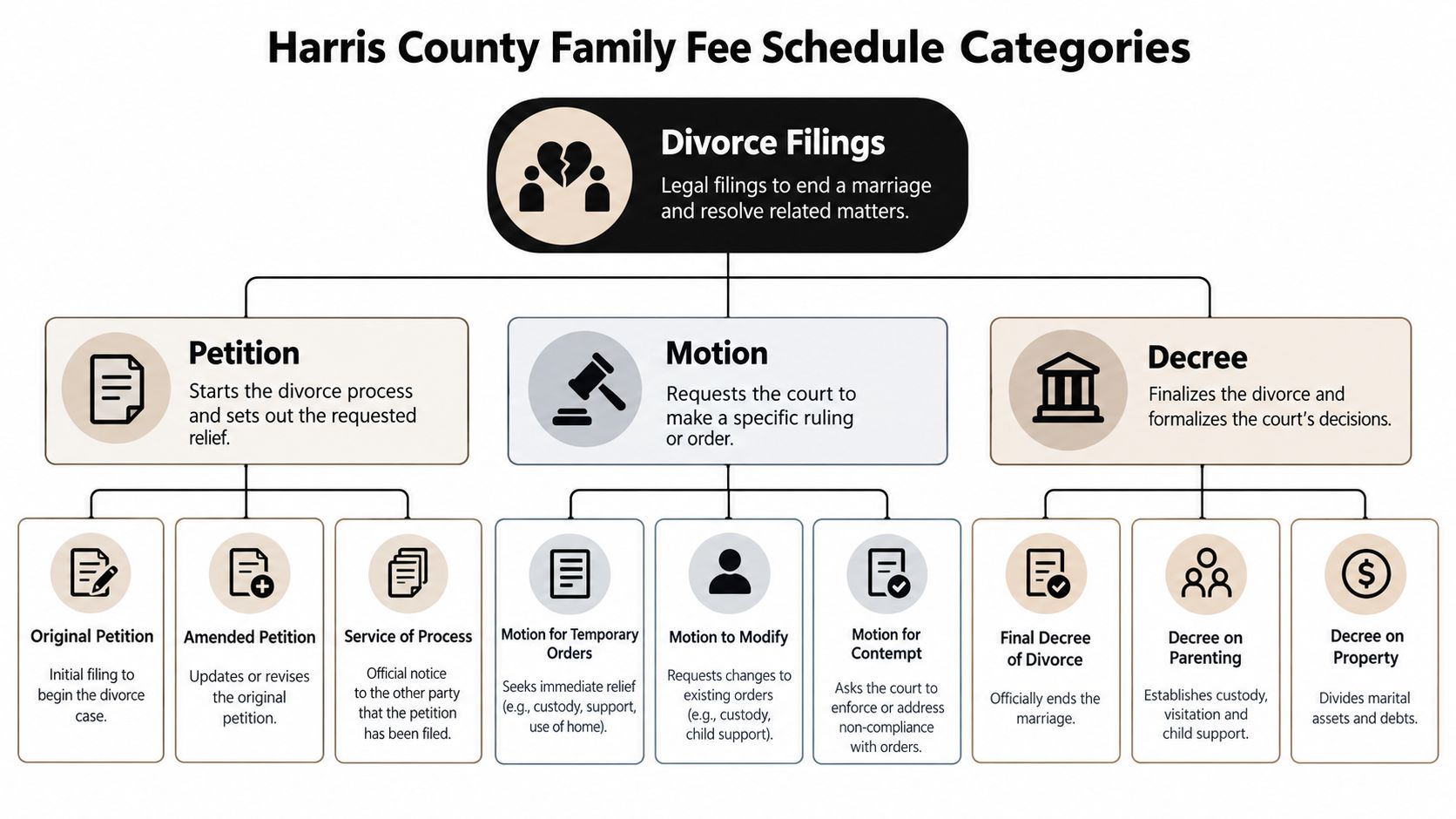
Cases without children
A divorce without children falls into the family new-suit category that includes the $350.00 filing component and the $137.00 state-consolidated component. The listed base is therefore $487.00, before separately assessed process issuance or service.
This is the category that may apply to a Humble or Atascocita couple who has no minor children involved in the case. It doesn't mean the spouses have no property or debt issues. It only identifies the relevant child-related fee category on the schedule.
Cases involving children
A case involving children is treated separately. The schedule adds a $15.00 domestic-relations fee, creating the listed $502.00 base before service-related expenses.
The additional line isn't an optional add-on selected because a filer wants extra services. It reflects the schedule's separate treatment of divorce cases involving children. That distinction is one reason you shouldn't use a friend's receipt to predict your own filing cost.
Why legal categories matter
A motion, decree, or other family filing may have its own schedule entry. A divorce petition is not priced by guessing which document seems similar. The clerk applies the charge associated with the filing and the process requested.
For a client seeking a Divorce Lawyer in Humble, TX, the useful question is not, “What does divorce cost?” It is, “Which family filing category applies, and what process will this case require?” That question produces a more reliable estimate.
Calculating Your Total Expected Court Costs
The District Clerk's calculation is straightforward in principle:
Applicable filing fee + process-issuance fee + fee for serving process = total court costs charged for the filing.
The difficult part is identifying which process charges apply. A spouse who can properly waive formal service may create a different cost picture from a spouse who must be located and served through formal process.
Use this calculation sequence
Identify the case category. Determine whether the divorce involves children. Use the applicable base shown on the current schedule.
Ask whether process must issue. If the respondent needs a citation or another form of process, the clerk may assess an issuance charge.
Determine how service will occur. Formal service requires delivery of the papers through an authorized method. A properly executed waiver of service may avoid a service-related expense, but it doesn't automatically remove the initial filing fee.
Confirm the total before submission. Ask the Harris County District Clerk what charges apply to the particular filing and service request. Don't rely on an informal estimate from a different county.
The term service of process means formal notice that a lawsuit has been filed. A spouse's cooperation can affect the process route, but cooperation doesn't excuse careful paperwork. A defective waiver may fail to accomplish what you intended and can create delay or additional expense.
| Case Type | Base Filing Fee | Estimated Issuance and Service | Total Estimated Court Cost |
|---|---|---|---|
| Divorce without children | $487.00, under the current Harris County schedule | Varies according to the process requested and service method | $487.00 plus applicable issuance and service charges |
| Divorce involving children | $502.00, under the current Harris County schedule | Varies according to the process requested and service method | $502.00 plus applicable issuance and service charges |
The table intentionally doesn't assign a made-up amount to issuance or service. The verified schedule identifies those charges as separate components, and the actual amount depends on what process the case requires. For a broader discussion of legal expenses beyond the clerk's charges, review how much divorce costs in Texas.
Budgeting advice: Don't call the base fee your “total divorce cost.” Call it your initial court-cost baseline until the process and service requirements are confirmed.
Historical Context of Texas Divorce Fees
Old fee information is a serious budgeting trap. Texas court materials show that Harris County divorce costs have historically consisted of multiple statutory components, including a county-level charge tied to cases involving children.
A historical statewide Texas Courts fee worksheet listed a $50.00 clerk's basic filing fee for a new civil suit. It also identified a Harris County child-support department fee authorized at $0.01 to $12.00 for dissolution-of-marriage cases in which the parties were parents of a child. The worksheet reported minimum total filing fees of at least $197.03 under the schedules then in effect. Review the historical Texas Courts fee worksheet
Older versions listed a minimum of at least $187.03. That difference demonstrates that the referenced schedules changed by at least $10.00 across the historical versions. The worksheet also identified a statewide family-protection fee ranging from $0.01 to $15.00 and clarified that the Harris County child-support charge applied only in Harris County.
What the comparison teaches
The historical figures aren't a substitute for today's amount. They show why a forum answer or older law-firm article can be accurate for its publication date and still be wrong for your filing today.
The current District Clerk schedule should control the amount due now. Historical materials are useful for understanding why the fee has several line items, why children can affect the calculation, and why the price can change when statutory or county components change.
A filer in Northeast Houston should therefore check the current official schedule immediately before filing. If a website quotes a lower amount without identifying the current Harris County schedule, treat that figure as unreliable.
Fee Waivers and the Affidavit of Indigency
A published fee doesn't always equal the amount a financially strained petitioner must pay at the courthouse or through the filing system. Texas procedure allows an eligible person who cannot afford court costs to request relief through an Affidavit of Indigency or a Statement of Inability to Afford Payment of Court Costs.
That isn't an informal request for special treatment. It's a sworn procedural filing that asks the court to allow the case to proceed without upfront payment. Texas guidance explains that the applicant should submit the statement with the divorce papers, and the court may review the financial information before allowing the case to proceed. See Texas Law Help's guidance on divorce and court-cost waivers
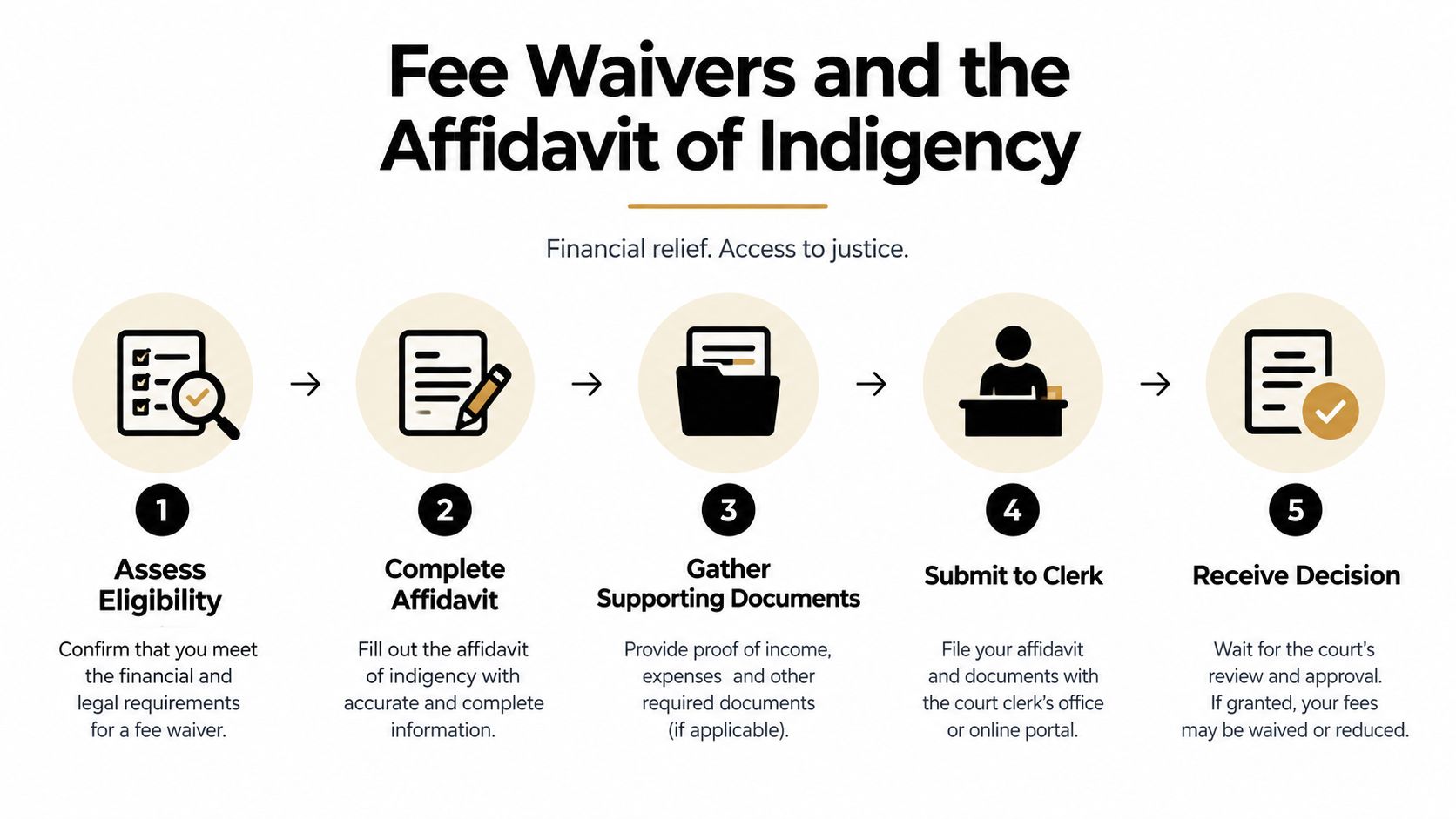
Prepare the financial information carefully
Before choosing the waiver route, gather accurate information about:
- Household income: Include the income the form asks you to report, not an estimate designed to produce a preferred result.
- Benefits and assistance: Identify applicable benefits or support.
- Liquid assets: List accessible funds and other financial resources.
- Recurring expenses: Account for housing, utilities, food, transportation, medical needs, and other regular obligations.
- Expected process costs: Consider whether issuance and service will create expenses in addition to filing.
The court may require evidence of income and expenses. It may approve or deny the request, and an opposing party or the court may question the information. A sworn statement must be complete and truthful.
Texas materials also recognize the Statement of Inability to Afford Payment of Court Costs under Rule 145. The available procedural guidance explains that a properly filed statement can allow the clerk to accept the case and issue citation without payment, subject to the applicable process and any later challenge. Review the Rule 145 waiver procedure
What a successful waiver may cover
Texas Law Help states that a successful waiver can cover filing fees, issuance and service of process, copies, and other charges assessed by the court or a court officer. That makes the waiver more significant than a request to postpone one line on a receipt.
It also doesn't mean every expense in a divorce disappears. Attorney fees, private financial advice, document preparation, and costs outside the court's assessed charges may be treated differently. Ask specifically which cost is covered before assuming the waiver handles it.
The Texas divorce forms materials explain that a court may require proof of income and expenses and may approve or deny an inability-to-pay request. They also distinguish the waiver issue from filing mechanics. E-filing doesn't eliminate standard fees, while a properly submitted affidavit can address the ability-to-pay question. Review the official Texas divorce forms materials
The practical message for a low-income resident in Humble, Atascocita, or Northeast Houston is simple:
Financial hardship shouldn't be hidden until after a filing is rejected. Raise the waiver question while preparing the Original Petition.
The applicant should file the statement with the divorce papers and be ready to provide supporting information if the court sets a hearing or questions the affidavit. If the affidavit is challenged, respond promptly and preserve documents showing income, expenses, assets, and household obligations.
Payment Methods and Filing Locations
The filing process has two separate parts: submitting the legal documents and satisfying or addressing the court costs. Keep those questions separate. A filer who pays the correct amount but submits an incomplete petition still has a problem, and a filer with a complete petition still needs a valid payment or waiver route.
Attorneys must e-file. People representing themselves, often called pro se filers, may use the clerk's designated filing channels. The official Texas materials explain that e-filing itself doesn't eliminate standard court fees, so selecting an electronic method doesn't by itself create a discount or waiver.
A practical filing checklist
Before sending the petition, confirm:
- Correct court destination: Verify that the filing is directed to the Harris County District Clerk rather than another county or court office.
- Complete divorce papers: Make sure the petition and required supporting documents are complete and consistent.
- Children's information: Identify whether the case involves children so the correct schedule category is used.
- Service plan: Decide whether formal service, a valid waiver, or another authorized process applies.
- Payment or waiver: Arrange payment through the currently designated channel, or submit the sworn inability-to-pay statement with the petition.
- Confirmation: Keep the filing confirmation, payment record, and copies of everything submitted.
Humble, Atascocita, and Kingwood residents should confirm current office instructions before traveling downtown. The clerk's designated channels, payment procedures, office locations, and any regional resources can change. Don't assume that a prior visit, a friend's instructions, or an old web page reflects current operations.
For location and office information connected to local family-law assistance, see the Harris County Family Law Center information page. Use the clerk's current instructions for the actual filing destination and accepted submission method.
Avoid an administrative return
A rejected payment or returned filing can delay the case and force you to repeat work. If the payment method fails, first determine whether the clerk rejected the payment, rejected the documents, or needs additional information. Keep the notice and ask the clerk what must be corrected rather than sending a second payment blindly.
If you can't afford the costs, don't submit an incomplete waiver as a substitute for payment. Complete the sworn statement carefully and include it with the divorce papers. A court-cost waiver request is a legal filing, not a checkbox.
Strategic Approaches to Managing Divorce Expenses
The initial clerk charge is only one financial decision. The larger expense often comes from how much disagreement exists over children, property, debts, support, and the final terms of the divorce.
An uncontested divorce may be administratively simpler when both spouses genuinely agree on the outcome and can complete the required documents. A contested case requires a different plan when one spouse disputes custody, support, property division, or another significant issue.
Choose the process that matches the conflict
Don't force an uncontested strategy onto a contested problem. If your spouse won't disclose financial information, threatens to remove a child, refuses to sign necessary papers, or disputes a major asset, paying only attention to the filing fee can create a much larger problem later.
Likewise, don't turn every disagreement into a court fight if the parties can safely and fairly reach a complete agreement. Early organization can reduce duplicated drafting, unnecessary hearings, and avoidable disputes. That doesn't mean surrendering important rights. It means identifying which issues require advocacy.
A useful planning conversation should address:
- Children: Who will make decisions, where will the children live, and how will possession and support be handled?
- Property and debt: Which assets and obligations need valuation, tracing, negotiation, or formal division?
- Safety: Is there family violence, intimidation, substance misuse, or another reason direct negotiation may be unsafe?
- Service: Can the respondent receive notice through a valid waiver, or is formal service necessary?
- Budget: Which work must happen immediately, and which decisions can wait until financial records are collected?
For high-conflict matters in Harris County courts, a Contested Divorce Attorney in Humble can address the case as an advocacy problem rather than treating it like a simple paperwork transaction.
Protect the budget without cutting necessary corners
Start by separating fixed and variable costs. The current base court charge is determined by the applicable family filing category. Issuance and service depend on the process. Legal fees and case expenses depend on the work required.
Keep a written record of every payment, document request, court notice, and agreement. Promptly provide financial records and answer your lawyer's questions. Delays, missing documents, and last-minute changes can increase the work needed even when the original dispute was manageable.
A low-income filer should also evaluate the waiver route before borrowing money or postponing a necessary filing. The waiver may address court-assessed charges, but it doesn't replace a safety plan, accurate legal advice, or careful preparation.
Quick Reference Guide and Common Questions
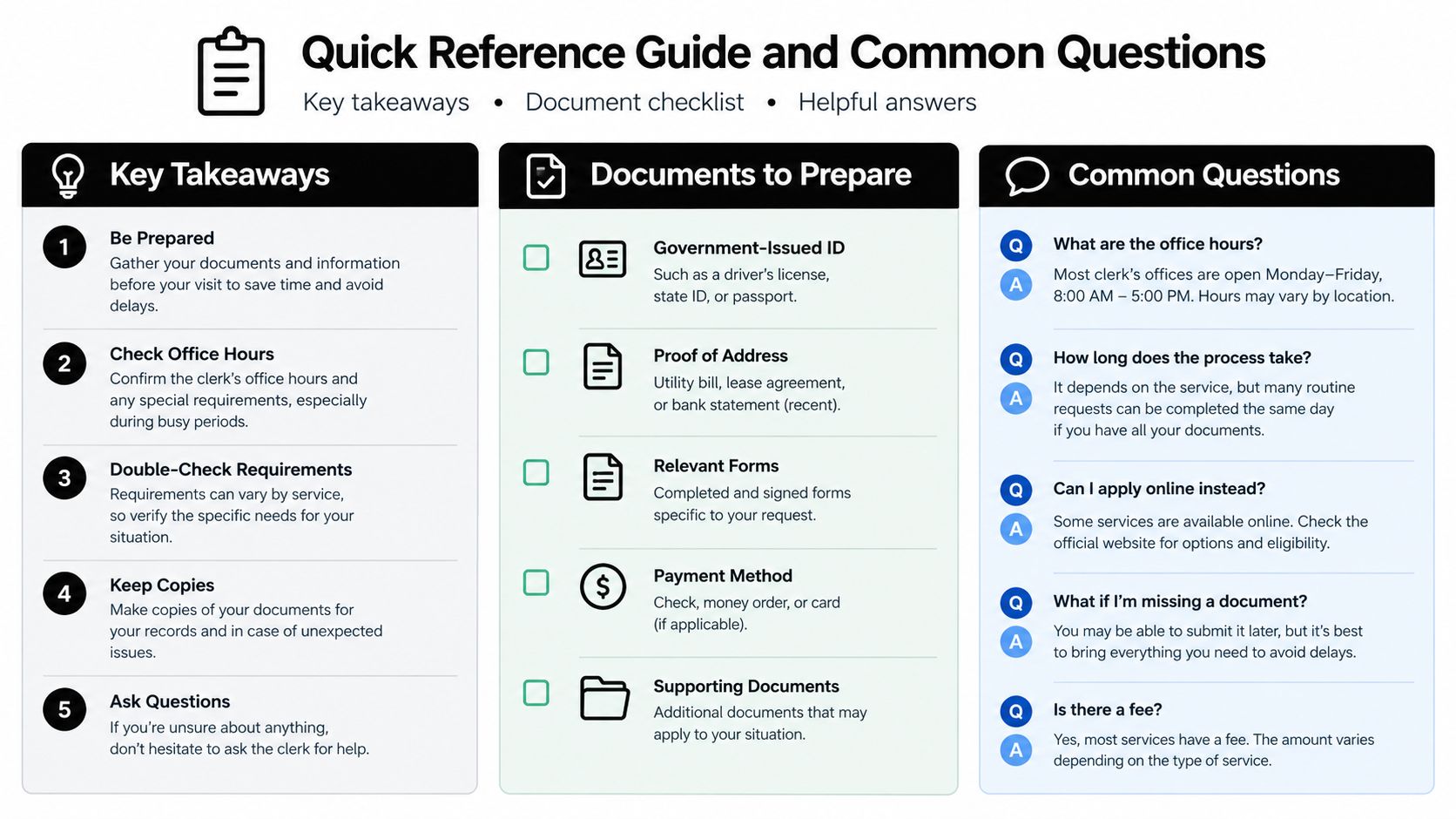
Before you file
Use this checklist:
- Confirm the county: Verify that Harris County is the correct filing location.
- Classify the case: Determine whether children are involved.
- Check the current schedule: Use the District Clerk's current fee table.
- Plan for process: Decide whether issuance and formal service are needed.
- Assess affordability: If payment is a hardship, prepare the sworn inability-to-pay statement.
- Organize records: Keep the petition, supporting documents, payment or waiver filing, and submission confirmation together.
- Ask targeted questions: Confirm what the clerk requires before sending documents or traveling to an office.
Common questions
Does my spouse's signature automatically eliminate service fees?
No. A spouse's signature may support a properly executed waiver of service, but the document must satisfy the legal and filing requirements. A signature alone doesn't automatically eliminate the initial filing fee or guarantee that no process charge applies.
What happens if my indigency affidavit is challenged?
The court may require evidence about income, expenses, benefits, assets, and other financial circumstances. Respond promptly, provide truthful supporting records, and don't assume the waiver remains effective without addressing the challenge.
What if my payment is rejected?
Keep the rejection notice and contact the clerk through its current designated channel. Determine whether the issue concerns the payment method, the amount, or the filing documents. Don't resend documents or payment until you know what correction is required.
Can a waiver cover service costs?
A successful waiver may cover filing fees, issuance and service of process, copies, and other court or court-officer charges. The court decides whether the request is approved, so complete the statement carefully.
Should I rely on an old fee amount found online?
No. Historical Texas materials show that components and totals have changed. Use the current Harris County District Clerk schedule for the amount due now.
The Law Office of Bryan Fagan provides family-law guidance for divorce, custody, support, and property issues, including practical help evaluating filing costs and fee-waiver paperwork. Visit Law Office of Bryan Fagan to schedule a free consultation with the Humble office and discuss the filing path that fits your situation.