Skip to content

A lot of people in Humble call a lawyer at the same moment. It's usually late in the day, the house is quiet, and reality starts settling in. The marriage is ending, but the harder question feels less emotional and more practical. Who keeps the house. What happens to the retirement account. Who pays the credit cards. What about the car loan, the savings account, or the furniture you both picked out years ago.
For families in Humble, Atascocita, Kingwood, and Northeast Houston, this part of divorce can feel heavier than expected. You're not only ending a relationship. You're untangling a shared financial life that may have taken years to build. When people try to handle that part casually, problems tend to follow them long after the divorce is final.
A Property Settlement Agreement gives that uncertainty some structure. It puts decisions in writing, makes responsibilities clear, and gives both spouses a roadmap for moving forward separately. In Texas, that kind of clarity matters because a divorce decree needs specific terms, not vague promises or assumptions.
Starting Your New Chapter in Humble
A couple in Kingwood might have a home with equity, two vehicles, a retirement account through one spouse's employer, a joint checking account, and a stack of monthly bills. On paper, that list looks manageable. In real life, every item carries emotion. One spouse may want to keep the house for the children. The other may be focused on avoiding debt. Both may assume they can “figure out the details later.”
That's where trouble often starts.
A Property Settlement Agreement works like a written roadmap. It takes broad questions and turns them into concrete decisions. Instead of “we'll split the bank accounts fairly,” the agreement says which account goes to whom. Instead of “we'll sell the house,” it states how sale proceeds will be divided and who pays expenses before closing.
Why local families need clarity early
In Harris County divorces, details matter. Judges need clear terms. Lawyers need complete information. Most important, you need a document you can live with after the divorce is over.
People in Atascocita and Northeast Houston often tell me the same thing. They aren't looking for conflict. They want a fair path forward. That's exactly why a careful agreement matters. It can reduce future arguments by addressing the issues people commonly leave out when they're tired, stressed, or trying to rush the process.
The most expensive divorce mistake is often not a courtroom fight. It's a rushed agreement that looked simple at the time.
If you're facing divorce right now, it helps to think of this document as more than paperwork. It's the plan for how your financial life will work after the marriage ends. When it's handled carefully, it gives you something valuable during a difficult season. Predictability.
What Is a Property Settlement Agreement
A Property Settlement Agreement is the written deal that explains, in exact terms, how divorcing spouses will divide property, debts, and sometimes related family matters, as discussed in this overview of settlement and separation agreements.
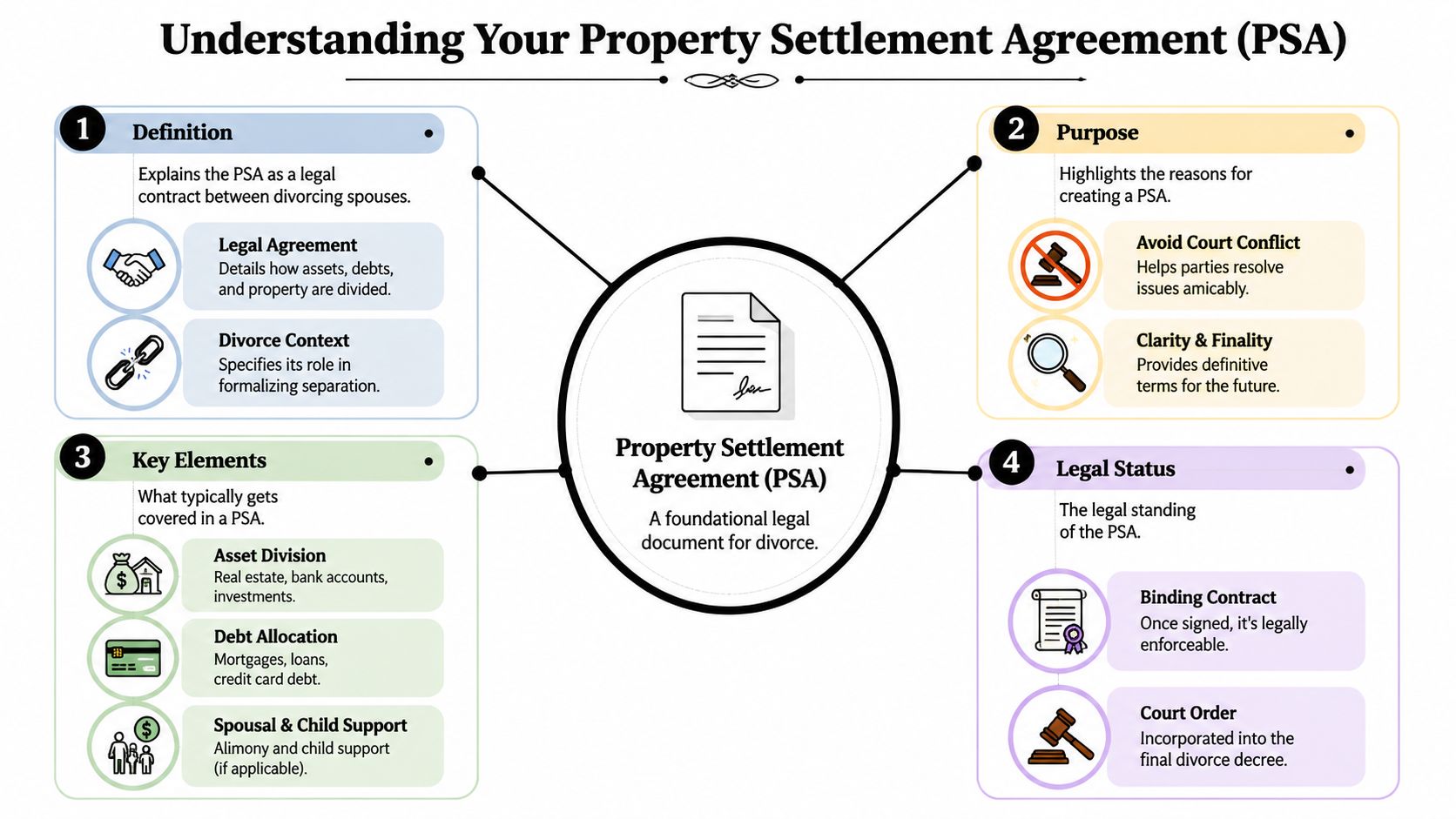
For a family in Humble, that agreement often becomes the set of instructions everyone will live under after the divorce is final. If the wording is clear, life is simpler. If the wording is vague, the trouble usually shows up later, when a house must be refinanced, a retirement account needs to be divided, or one spouse insists the deal meant something different.
A good way to understand it is to compare it to a set of closing papers in a home sale. Verbal understandings are not enough. The written terms control.
What the agreement actually says
In plain English, the agreement answers questions such as who keeps the house, who takes responsibility for the credit cards, who gets a vehicle, and how bank accounts will be divided. If property will be sold, it should also explain who chooses the realtor, who pays carrying costs, and how the net proceeds are split.
That usually includes:
- Real estate, including the marital home, rental property, or land
- Financial accounts, such as checking, savings, and investment funds
- Vehicles and personal items, including cars, furniture, jewelry, tools, or collections
- Debts, such as mortgages, car notes, tax obligations, and credit cards
- Other agreed terms, when the spouses choose to resolve more than property division at the same time
In Texas, details on paper matter. A sentence like “we will divide the retirement fairly” is often too loose to prevent conflict. A sentence that states the account name, the percentage awarded, the deadline, and who prepares the paperwork gives people something a court can enforce.
How it fits into a Texas divorce, especially in Harris County
Texas follows community property rules, so many married couples start with the question of what belongs to the community estate and what may be separate property. If you need that foundation first, this explanation of community property in Texas divorce cases can help.
Once those categories are identified, the Property Settlement Agreement turns broad legal rights into specific instructions. That matters in Harris County because judges reviewing final divorce paperwork want terms that are clear enough to include in the final decree. If an agreement is sloppy, incomplete, or internally inconsistent, it can create delays, extra hearings, or expensive cleanup work before the case is finished.
This is the warning many generic articles miss. After spouses sign a property agreement and the court approves it, changing it is often very hard. Texas courts place a great deal of weight on signed agreements, especially when the terms are definite and both parties had the chance to review them. For that reason, people should read every line with care before signing, not after.
Some estates are simple. Others involve retirement benefits, reimbursement claims, family businesses, stock options, or questions about whether an asset is separate or community property. In those situations, a Property Division Lawyer in Humble can help identify what is being divided, draft terms that match Harris County practice, and reduce the risk of signing an agreement that is difficult to fix later.
A Property Settlement Agreement is more than a summary of who said what during negotiations. It is the written set of rules that can shape your finances for years after the divorce is over.
Essential Elements of a Strong Agreement
A strong agreement reads less like a rough summary and more like a clear set of instructions. In Harris County, that distinction matters. If the wording leaves room for argument, the trouble often shows up at the finish line, when the decree is being prepared, or later, when one spouse says the document means something different than the other spouse thought it meant.
Once a settlement is signed and approved by the court, its terms are often folded into the final divorce decree and can be enforced as part of that court order. That is why careful drafting matters so much. In plain terms, you are not just writing down a deal. You are setting rules that may be very hard to change later.
The core categories to identify
Start with a full inventory, then turn each item into a clear instruction. Every asset and every debt should be named, assigned, and connected to a next step. If an item is missing, vague, or mislabeled, it can create the kind of conflict people thought they had already settled.
Here's a practical checklist:
| Category | Examples | Key Decisions to Make |
|---|---|---|
| Real estate | Marital home, rental property, land | Who keeps it, whether it will be sold, how proceeds and expenses are handled |
| Financial accounts | Checking, savings, brokerage accounts | Who receives each account, whether balances are divided, when transfers happen |
| Retirement assets | 401(k), IRA, pension interests | What portion is divided, how division is handled, what paperwork is needed |
| Vehicles | Cars, trucks, motorcycles, boats | Who gets title, who pays the note, who handles insurance |
| Personal property | Furniture, jewelry, tools, electronics | Who keeps specific items, whether items are sold, how disagreements are resolved |
| Debts | Mortgage, credit cards, personal loans, car loans | Which spouse pays each debt, whether accounts will be closed or refinanced |
| Support and child-related terms | Spousal support, child support, custody-related provisions | What is agreed, how payments work, what terms belong in the decree |
What readers often miss
Listing the item is only the first half of the job. The agreement also needs the mechanics.
A house is a good example. It should say who stays in the home, whether the other spouse signs a deed, who pays the mortgage, taxes, insurance, and repairs during the transition, and what happens if the refinance or sale does not happen on time. Without those details, one sentence about "keeping the house" can turn into months of argument.
The same problem comes up with vehicles, bank accounts, and retirement plans. A vehicle provision should cover title, loan responsibility, insurance, and the deadline for transfer. Bank accounts should be identified clearly enough that there is no confusion about which account is being divided. Retirement language should be precise enough to match the later paperwork required to divide the benefit.
A simple test helps. If a neutral reader could not tell who gets what, who pays what, and when each step must happen, the agreement needs more work.
Why classification matters
Before you can divide property fairly, you have to identify what kind of property it is. Texas law treats community and separate property differently, and disputes often begin there. If you need a plain-English explanation of that difference, this guide on community property in Texas is a helpful place to start.
That issue becomes even more important when one spouse brought property into the marriage, received an inheritance, owned a business interest before marriage, or mixed separate funds with marital funds. Those facts can change how an item should be described in the agreement. A sentence that sounds harmless can cause real damage if it accidentally treats separate property as property to be divided.
If you are dealing with those questions, a Divorce Lawyer in Humble, TX can help review the wording before anything is signed. That kind of review is often less expensive than trying to fix a bad agreement after it reaches the court file.
A strong agreement usually answers five practical questions:
- What exists
- Who receives it
- How it is transferred
- Who pays related costs or debt
- What happens if a transfer, refinance, or sale is delayed
In Harris County, judges and court staff work best with settlement terms that are specific and workable. Clear language helps the final decree match the deal the parties made. It also reduces the risk of post-divorce enforcement fights, which can be stressful, expensive, and difficult to undo once the agreement has been signed.
The Path to a Final Agreement in Harris County
Getting from “we think we agree” to a final enforceable document usually takes more structure than people expect. In Harris County, the process tends to move best when both spouses gather information early, negotiate from actual records, and review the final language with care.
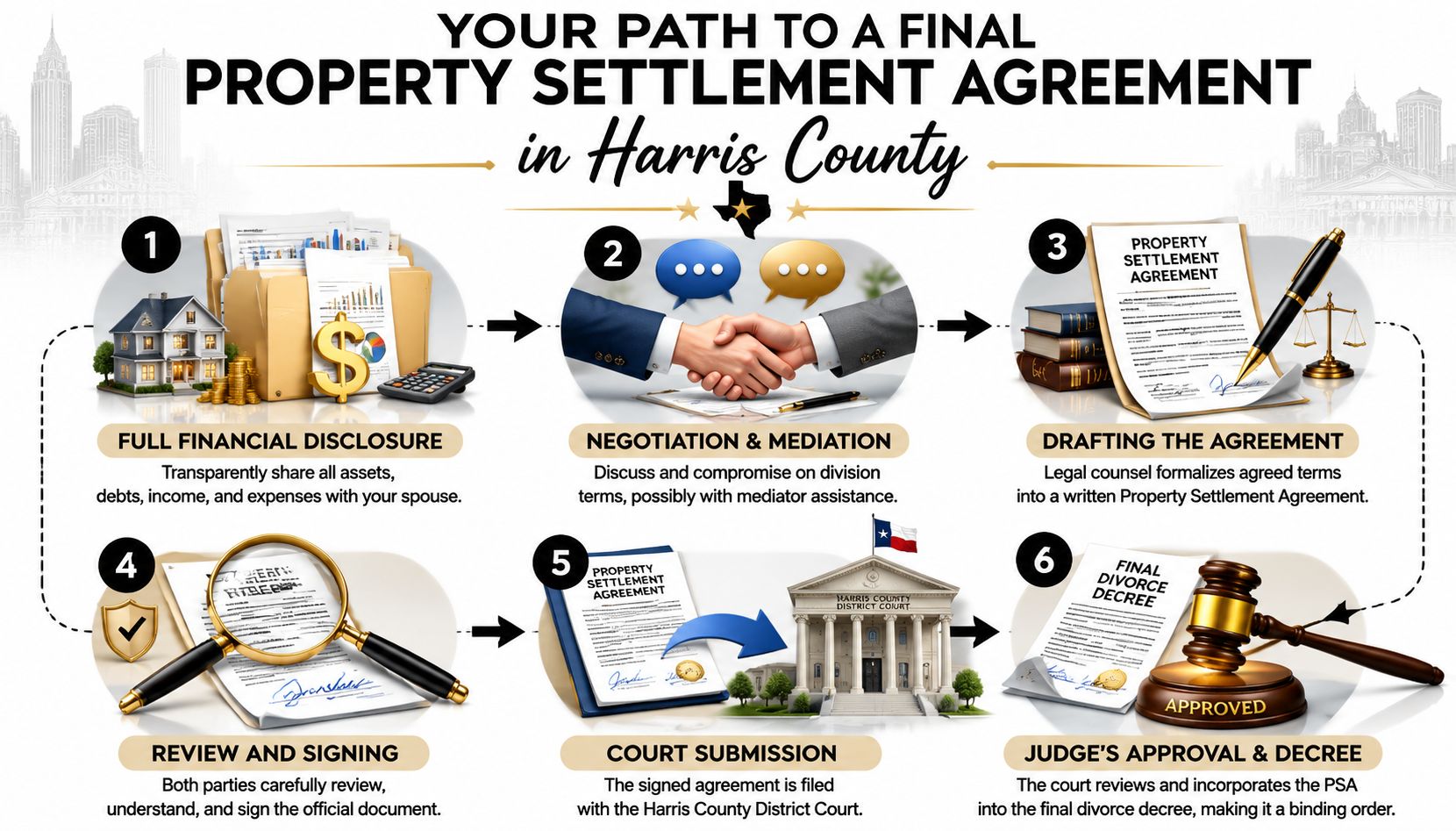
A practical sequence most families follow
Full financial disclosure
Both spouses identify assets, debts, income, and major expenses. This is the foundation. If the inventory is incomplete, the agreement will be incomplete too.Negotiation or mediation
Some couples work through attorneys. Others attend mediation. The format can differ, but the goal is the same. Reach terms that both parties understand and can accept.Drafting the written agreement
During this stage, general ideas become legal language. A vague verbal understanding has to become specific instructions.Careful review and signing
Each spouse should read every provision slowly. This is not the moment to skim.Submission to the court
Settlement agreements are routinely submitted to family or divorce court as a complete settlement of the spouses' claims, and once accepted, they become incorporated into the divorce judgment, as described in this marital settlement agreement discussion.
Why local procedure matters
In Harris County district courts, family cases move through a real process with filing requirements, local practices, and final prove-up steps. Residents in Humble, Kingwood, and Atascocita often benefit from knowing early that the judge won't rewrite unclear terms for them. The court expects the paperwork to be ready for entry.
The agreement can also define valuation methodology and distribution mechanics with precision, including classifying assets and setting out how unequal asset mixes will be balanced. That matters because a final allocation can change the economic outcome depending on each spouse's circumstances, as explained in this property settlement agreement analysis.
One place where people rush too fast
Many spouses feel relief once mediation ends or a rough deal is reached. That relief can lead to mistakes. The draft still needs to match the actual agreement.
Before anything is signed, compare the written terms against your notes and records. If you're looking at the broader legal framework around this issue, this page on Texas divorce property division provides a useful local reference.
In Harris County, the signature moment is not the time to assume “we'll fix that later.” The written language is the deal.
Common Pitfalls That Can Jeopardize Your Future
The most dangerous mistake is thinking a Property Settlement Agreement is simple because the concept sounds simple. Divide the property. Assign the debt. Move on. In practice, the hidden details can affect your finances for years.
Overlooked items that create real problems
Parties often overlook items like retirement survivor benefits, life insurance ownership, dependency exemptions, and whether payments are intended as support and therefore potentially nondischargeable in bankruptcy. Some court forms also state that equitable division payments are not deductible or taxable for income tax purposes, as noted in this marital settlement addendum material.
That may sound technical, but the effect is very personal. A spouse may think retirement was “handled” because the account itself was mentioned, while the survivor benefit was never addressed. Another may assume life insurance will stay in place for a child-related obligation, even though ownership and beneficiary terms were never spelled out.
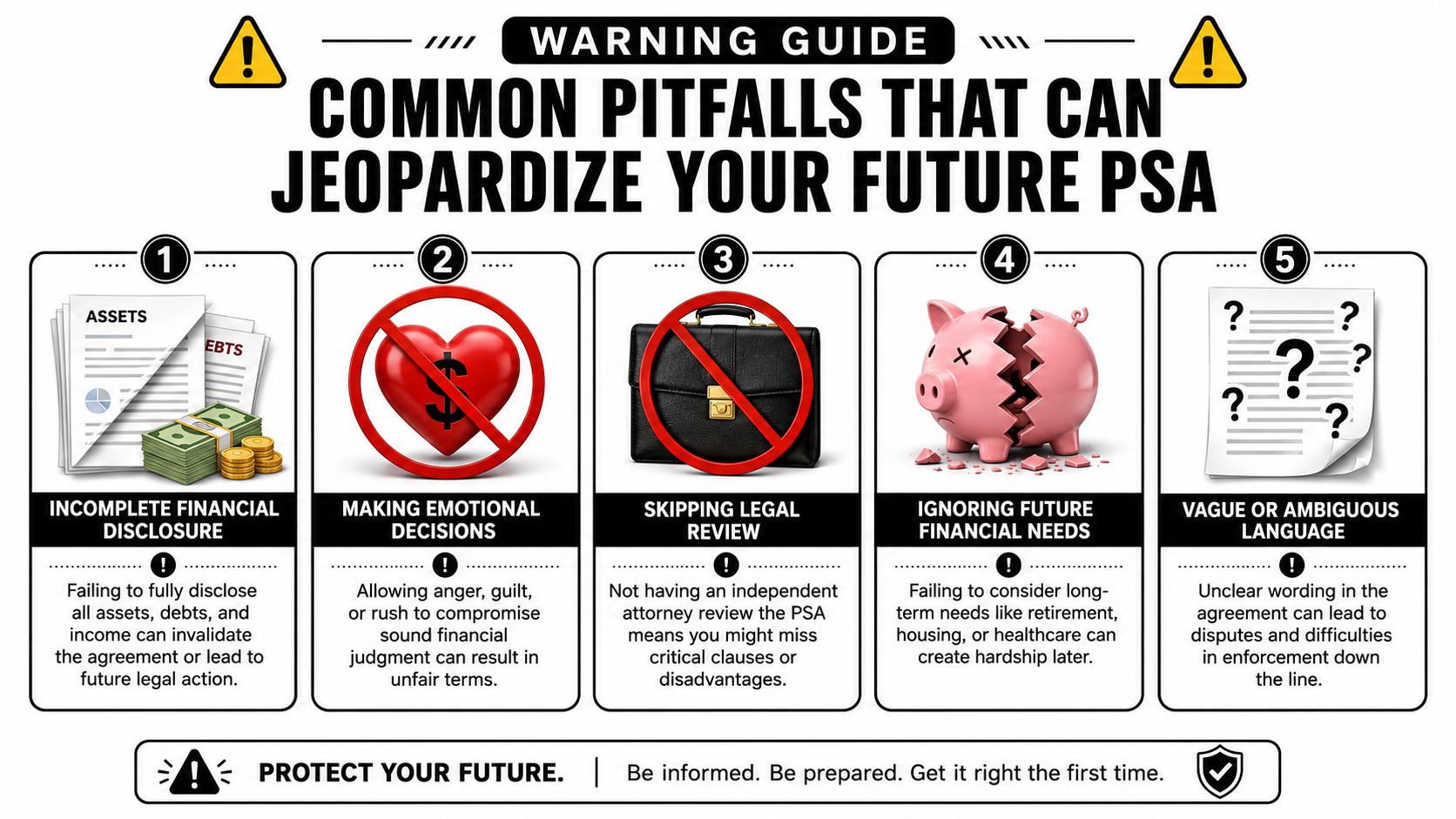
Five traps I see people underestimate
Incomplete disclosure
If one account, debt, or source of property is left out, the entire negotiation may rest on faulty assumptions.Debt confusion
Saying “you take the car” is not the same as saying who pays the note, when refinancing happens, and what happens if it doesn't.Retirement shortcuts
Retirement language often needs precision. General wording can lead to confusion later when transfer paperwork is prepared.Insurance assumptions
If life insurance plays a role in support or security planning, the details should be explicit. This life insurance after divorce guide is a useful plain-English resource for thinking through those issues.Hidden money concerns
If you suspect your spouse isn't being transparent, don't ignore that instinct. This local article on what happens if a spouse hides money in a Texas divorce explains the issue in more detail.
Emotional decision-making is still a legal risk
Some people give away too much because they want peace fast. Others fight over one asset and miss a bigger long-term issue. Both reactions can lead to an agreement that doesn't reflect careful judgment.
A rushed “good enough” agreement can become an expensive problem once the house is sold, the retirement transfer is due, or a debt collector calls.
If you're reviewing a draft, slow down whenever a term affects taxes, retirement, insurance, or debt liability. Those are the places where small wording problems often turn into large disputes.
Enforcing and Modifying Your Signed Agreement
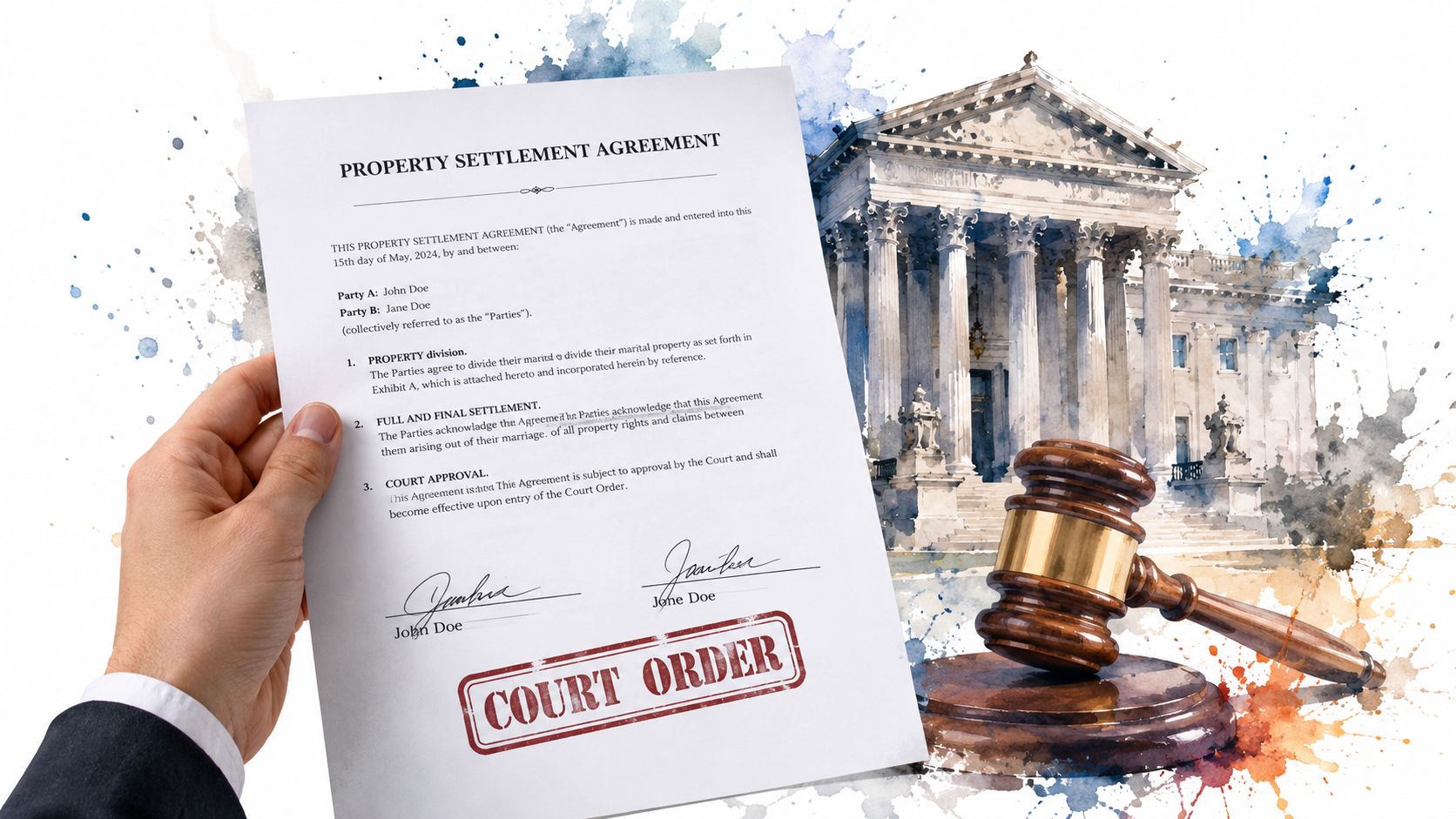
Once a signed agreement is accepted by the court and built into the divorce decree, it isn't just a private promise anymore. It carries the force of a court order. That means a spouse who refuses to transfer property, sign documents, or comply with the written terms may face enforcement proceedings.
What enforcement can look like
If one spouse won't cooperate, the other may ask the court to enforce the decree. That can involve disputes over selling a home, turning over property, or completing account transfers required by the final order.
The exact remedy depends on the language in the decree and the surrounding facts. That's one more reason precision matters on the front end. Enforcement is easier when the agreement leaves little room for argument.
Why changing it later is so hard
This is the warning many generic guides leave out. Courts often treat these agreements as strongly favored and enforce them unless illegality is clear, with the challenging spouse typically needing to prove invalidity by clear and convincing evidence. Some courts also look for a grossly unfair division combined with overreaching or oppressive influence, according to this discussion of getting out of an unfair property settlement agreement.
In plain language, regret usually isn't enough.
If you signed because you were tired, emotional, or eager to be done, that alone may not be enough to undo the agreement later. Courts tend to expect adults to read what they sign and understand that settlement papers are meant to end disputes, not reopen them.
The practical takeaway
Before you sign, ask yourself:
- Do I understand every asset and debt listed
- Do I know what I am giving up
- Do I know what actions must happen after divorce
- Could someone else enforce this language if my spouse refuses to cooperate
If any answer is no, stop and get clarity before signing. It is far easier to revise a draft than to attack a final signed agreement in court.
Your Questions Answered by a Humble Attorney
Can my spouse and I write our own agreement
You can try, but many couples discover that agreeing in conversation is much easier than drafting enforceable language. The problem usually isn't the big idea. It's the missing details about transfers, deadlines, debts, retirement issues, and what happens if one person doesn't follow through.
What if I think my spouse is hiding property or debt
Don't sign first and investigate later. Pause the process and gather records. Hidden or omitted financial information can distort the entire settlement. If something feels inconsistent, treat that as a legal issue, not just a relationship issue.
Does everything have to be divided equally in Texas
Not necessarily. Texas courts look at a just and right division of community property. That's one reason a careful written agreement matters. The wording and structure of the deal can shape the outcome in ways people don't always see at first.
How long will this take in Harris County
That depends on how quickly financial information is exchanged, whether the parties cooperate, and how much negotiation is needed. Some cases move steadily. Others slow down because documents are missing or the written draft doesn't match what one party thought was agreed.
If you live in Humble, Atascocita, Kingwood, or Northeast Houston and you're trying to make sense of property division, it helps to sit down with someone who can explain the process clearly and spot problems before they're signed into a decree.
If you need guidance on a Property Settlement Agreement, Law Office of Bryan Fagan offers free consultations through the Humble office. It's a chance to talk through your divorce, understand how Harris County procedure may affect your case, and get clear next steps for protecting your property, your finances, and your future.