 Skip to content
A police officer stops you after a tense night in Humble. Maybe the charge is DWI, assault, drug possession, or something that spun out of an argument at home. You know what happened on the surface. What the officer, prosecutor, and judge may not know is what came before it. The sleepless nights, the hypervigilance, the headaches after a blast injury, the drinking that started as a way to quiet your mind, or the long struggle to adjust after leaving the service.
For many veterans in Humble, Atascocita, Kingwood, and Northeast Houston, that's the hardest part. You aren't just facing a criminal accusation. You're also carrying a service history that shaped how you react under stress. A criminal case can feel isolating fast, especially when people see the charge but not the story.
That story matters. A veteran's military background isn't something to hide. In many cases, it's one of the most important parts of the defense. A lawyer who understands how service-related trauma, discharge status, VA treatment, and local court options fit together can present your case in a way the system can use.
A Guide for Humble Veterans Facing Criminal Charges
A veteran in Kingwood gets arrested after a bar fight. Another in Atascocita is charged after driving home while struggling with anxiety, alcohol use, and untreated trauma. A former service member in Humble gets accused of conduct that grew out of anger, panic, or confusion they haven't been able to explain well. These aren't unusual situations. They're local ones.
When you're in that position, it's easy to think the case is only about one bad night. But for veterans, the court often needs a fuller picture. Service records, deployment history, medical treatment, and changes in behavior after discharge can all shape how a prosecutor evaluates the case and how a judge thinks about punishment, treatment, or diversion.
A lot of people also worry that asking for help will make them look weak. It won't. It shows judgment. It shows you're taking the charge seriously and trying to address the root problem, not just the paperwork in the criminal case.
If you've also been wrongly accused or the facts don't line up with what police wrote in the report, it can help to review practical guidance on what to do if you're falsely accused. That kind of early action matters in Harris County, where deadlines, bond conditions, and first court settings can affect your case quickly.
A criminal charge doesn't erase your service. It gives your lawyer another reason to tell the full truth about who you are.
Texas courts don't automatically "give veterans a break." That's not how this works. What they can do is consider context, treatment needs, accountability, and rehabilitation when the defense presents those facts clearly. That's why the right approach isn't just denial or damage control. It's a structured defense that connects your military history to the legal issues in front of the court.
Why Your Service Record Is a Powerful Defense Tool
A standard defense usually starts with the police report, witness statements, and the elements of the offense. A veteran-centered defense goes further. It asks what your service history shows about character, stress exposure, training, and the events that may have contributed to the allegation.
According to the Bureau of Justice Statistics, approximately 8% of the total inmate population in U.S. jails and prisons are military veterans, despite veterans comprising only about 6% of the overall U.S. adult population, which highlights the need for focused legal advocacy for veterans facing charges (BJS statistic summarized here). That gap matters because it tells us veterans are showing up in the criminal system often enough that a one-size-fits-all defense misses important realities.
What a service record can show
Your military file may contain much more than dates of service. It can help document:
- Training and discipline: Courts often respond differently when they see a long record of structure, responsibility, and public service.
- Deployment exposure: Combat zones, high-stress assignments, and repeated deployments can give context to later mental health symptoms.
- Awards and commendations: These can support mitigation by showing prior character and service to others.
- Job duties: Infantry, law enforcement, medical, intelligence, and other roles can affect how trauma or stress presents in civilian life.
- Changes after separation: A lawyer can compare functioning before and after a deployment, injury, or discharge.
Why discharge status may affect strategy
Sometimes the issue isn't only the criminal charge. It's also whether a veteran lost access to benefits, treatment pathways, or other protections after discharge. In those cases, discharge status becomes part of the legal strategy, not just a background detail.
For veterans trying to understand whether a past discharge can be corrected, a practical outside resource is this guide to upgrading your military discharge. It can help you see how military records issues may overlap with your criminal defense planning.
Practical rule: Bring your DD-214 and any service documents to your first meeting. Even if you don't think they matter, they often change how a defense gets built.
How this plays out in court
In Texas, mitigation isn't about making excuses. It's about giving the judge and prosecutor reliable facts. If your attorney can show that your record reflects years of honorable conduct, followed by service-related struggles that were untreated or misunderstood, that can support a request for treatment-based resolutions, reduced charges, or a sentence focused on rehabilitation.
That approach matters in Humble-area cases because Harris County courts are busy, and the details don't speak for themselves. Your lawyer has to organize them, prove them, and connect them to a legal outcome the court can approve.
Common Defenses and Mitigation Strategies for Veterans
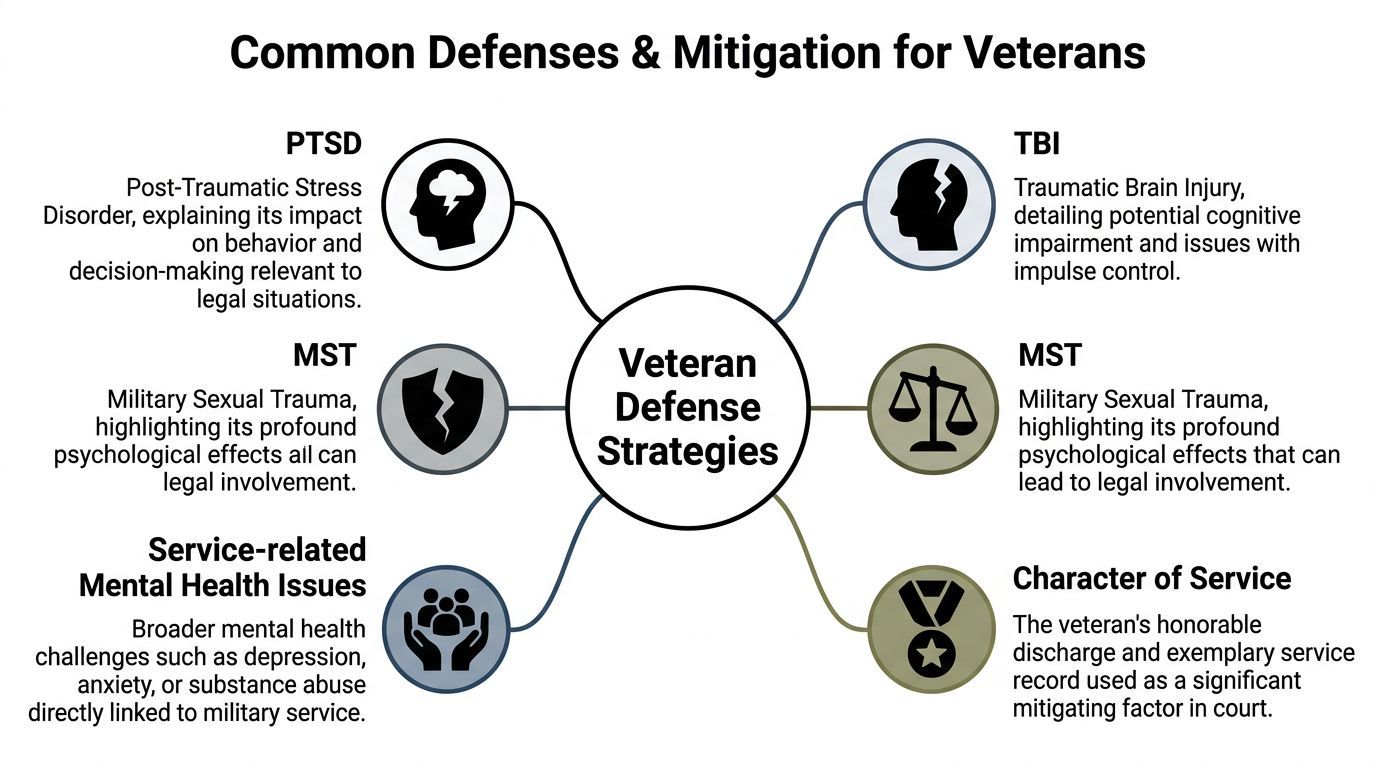
Some defenses attack the charge directly. Others reduce the level of blame by explaining what was happening medically and psychologically at the time. For veterans, both tracks may matter at once.
PTSD and TBI in plain language
Post-Traumatic Stress Disorder, or PTSD, can affect sleep, alertness, emotional control, and threat perception. A person may react to ordinary conflict as if danger is immediate. In a criminal case, that can matter if the allegation involved panic, overreaction, avoidance, or substance use tied to trauma symptoms.
Traumatic Brain Injury, or TBI, can affect memory, impulse control, concentration, and judgment. The brain functions as a system that's still running, but the signals don't process as smoothly or as quickly as they once did. In some cases, that helps explain conduct that seems irrational on paper.
Military Sexual Trauma and other service-related mental health conditions can also shape behavior in ways that matter legally. The point isn't to label every veteran with a diagnosis. The point is to identify real medical facts and connect them carefully to the incident in question.
How lawyers use these issues without turning them into excuses
Courts are more receptive when these conditions are documented, specific, and tied to treatment. That usually means gathering medical records, VA records when available, counseling history, prescriptions, and statements from people who saw changes in your behavior.
A defense lawyer may use this information in several ways:
- To challenge intent: Some charges require proof that you acted knowingly, intentionally, or recklessly.
- To support mitigation: Even if the state can prove the offense, your condition may justify a treatment-focused resolution.
- To argue for diversion: In some Texas cases, mental health treatment can be part of a negotiated outcome.
- To explain bond conditions or compliance problems: Missed appointments, confusion, or relapse can have context the court should understand.
If you're trying to compare outcomes in Texas criminal cases, it also helps to understand what deferred adjudication means in Texas. In the right case, that kind of result can be part of a broader plan that combines accountability with treatment.
The strongest mitigation doesn't rely on sympathy alone. It uses records, timelines, treatment history, and a clear explanation of how service-related conditions affected the case.
Why coordinated care matters
One of the biggest problems veterans face is that legal help and treatment often stay in separate lanes. Data shows that 70% of veterans with criminal convictions have untreated PTSD, while only 12% receive integrated mental health and legal support, which shows a serious gap that a veteran-focused defense can try to bridge (veteran support discussion here).
That gap matters in real life. A person may be eligible for treatment, but no one has explained how to start while criminal charges are pending. Or they may assume they're ineligible because of discharge concerns. A careful attorney looks at both sides together. The criminal allegation and the treatment path.
What this can look like in a Humble case
A veteran charged after a confrontation may need more than a courtroom argument. They may need a documented PTSD evaluation, proof of prior service stability, letters from family, and a treatment plan that addresses alcohol use. Another veteran facing drug possession may need records showing chronic pain, TBI symptoms, and barriers to consistent care after separation.
Those details can change how a Harris County prosecutor views the case. They can also help the court see a path forward that protects the public while addressing the reason the arrest happened in the first place.
The Harris County Veterans Treatment Court Explained
For some veterans in Humble, Atascocita, Kingwood, and Northeast Houston, the most important question isn't just "How do I fight this charge?" It's "Is there a local program built for veterans?" In some cases, the answer is yes.
What the court is designed to do
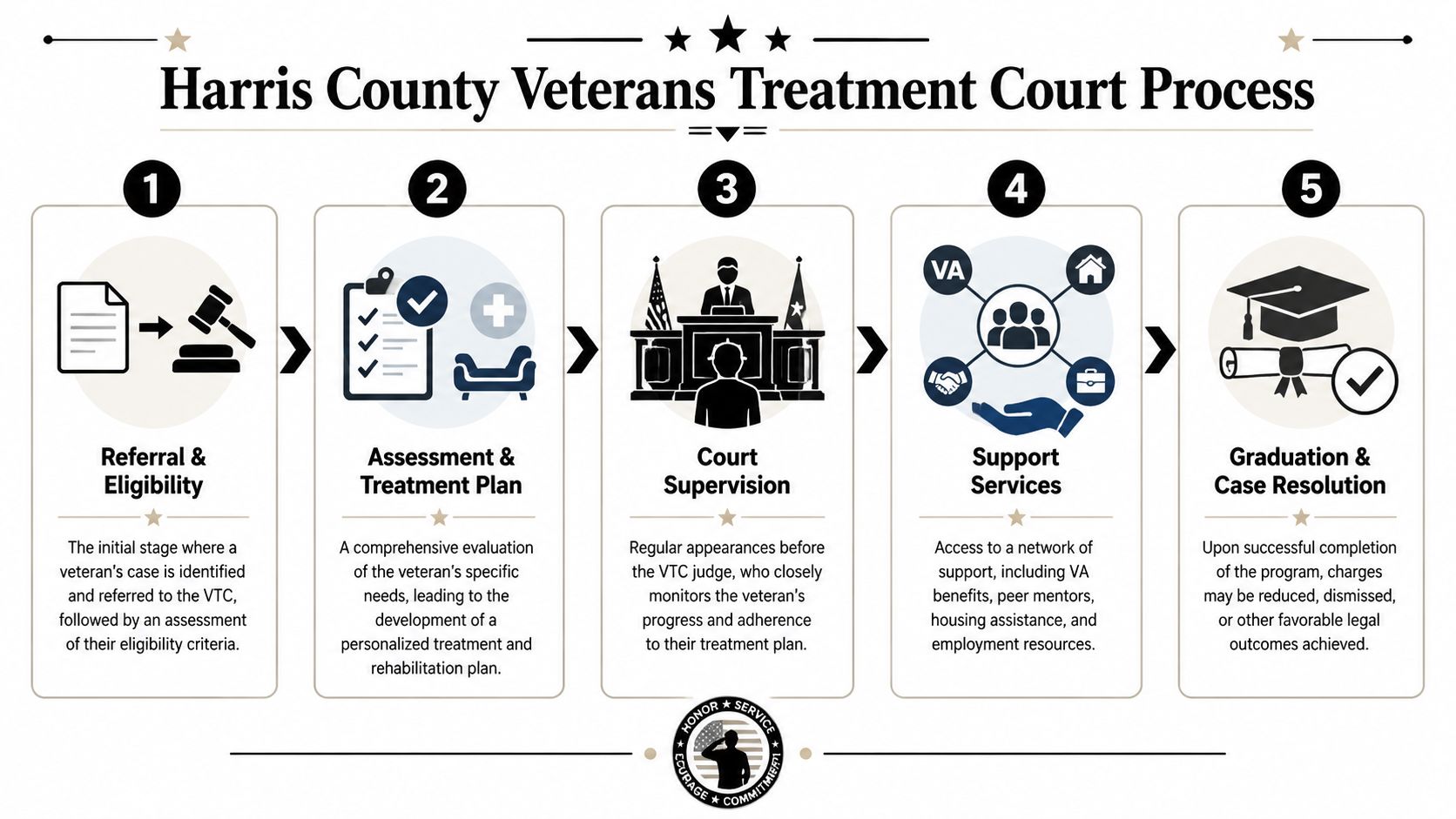
A Veterans Treatment Court is a specialized program that focuses on treatment, supervision, and rehabilitation instead of handling the case through the usual criminal track alone. The goal is accountability with structure. That can include counseling, substance abuse treatment, regular court check-ins, and support services tied to veteran needs.
A standard docket often moves quickly and focuses on punishment. A treatment court, however, asks a different question. What does this person need to stop coming back into the system?
Basic eligibility and local fit
In Texas, Veterans Treatment Courts, including the one in Harris County, generally require an honorable discharge or a general discharge under honorable conditions, though some options may still exist for veterans with an Other Than Honorable discharge through community partners (VA legal services guidance). Eligibility also depends on the charge, the person's history, and the court's screening process.
If your criminal case is tied to a family dispute, custody concern, or pending divorce, it can help to understand how related matters move through the county system. Harris County Family Courts: A Humble Resident's Guide provides a factual overview of how family law cases proceed in the Harris County courts serving Humble.
Some veterans assume they don't qualify and never ask. That's a mistake. Screening issues are often more nuanced than people expect.
What the process usually involves
The path into a Veterans Treatment Court often looks like this:
- Referral: Your case is identified as one that may fit the program.
- Screening: The court or program staff reviews military history, charge type, treatment needs, and eligibility.
- Assessment: You may be evaluated for mental health, substance use, or other service-related needs.
- Program participation: This can include treatment, testing, mentoring, compliance reviews, and regular appearances.
- Resolution: Successful completion may improve the final outcome of the case.
No attorney can promise admission or a particular result. But a lawyer who understands local practice can tell you whether this route is realistic and what documents or treatment records may help.
Why local guidance matters
Harris County procedure can feel confusing because there are criminal court deadlines, bond conditions, possible treatment referrals, and separate issues like VA eligibility or discharge concerns. For a veteran in Northeast Houston, the challenge isn't just finding a defense. It's finding a roadmap.
A good local approach keeps the facts organized, communicates with the court early, and looks beyond the arrest report. That's especially important when a charge grew out of symptoms that can be treated, managed, and documented.
How to Prepare for a Consultation with Our Humble Office
A Humble veteran gets home on bond, sets the court papers on the kitchen table, and wonders what matters most. The arrest report feels urgent. The DD-214 feels important too. Then a hard question shows up. What do I bring to a lawyer, and what can wait?
Start with this. Your first consultation is a working meeting, not an interview you have to pass. A good lawyer is trying to sort the facts into categories, much like laying out tools before a repair. Some documents explain the charge. Others show who you are, what your service involved, and whether PTSD, TBI, substance use, chronic pain, or other service-related issues may shape the defense or mitigation plan.
What to gather before you come in
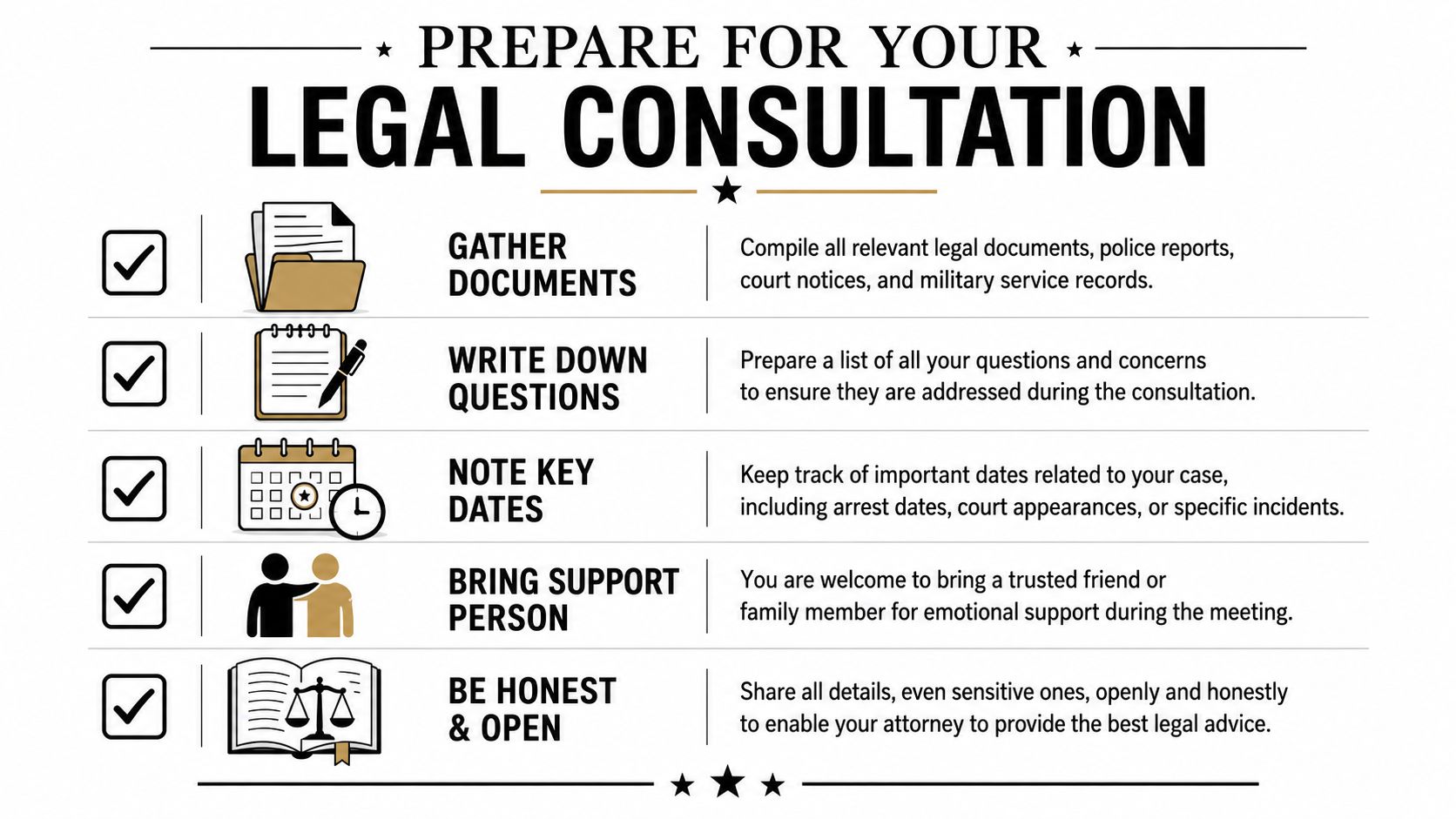
Bring what you already have. If some papers are missing, call anyway. In Harris County cases, early advice often matters more than having a perfect file.
- Court papers and bond paperwork: Complaints, citations, magistrate forms, release conditions, and court notices.
- Police information: Arrest sheets, property receipts, probable cause statements, or anything given to your family after booking.
- Military records: DD-214, discharge paperwork, deployment history, awards, and related service documents.
- Medical and treatment records: VA records, private counseling notes, prescriptions, diagnoses, and discharge summaries, if you can access them.
- A short timeline: Write down what happened before, during, and after the arrest while the details are still fresh.
If your case may involve service-connected trauma, this paperwork does more than fill a folder. It helps your lawyer connect the charge to the full story. In some cases, that connection matters when discussing mitigation, treatment-based options, or whether a veteran-focused path in Harris County should be explored.
Questions worth writing down
Stress makes memory unreliable. A written list helps keep the meeting clear and productive.
You might ask:
- What do I need to do before the next court date?
- How could my military history affect charging decisions, bond issues, or sentencing arguments?
- Which treatment records are useful, and which ones need careful review before they are shared?
- Are there signs that PTSD, TBI, addiction, or medication issues may matter legally in this case?
- Is a veteran-specific court option or another diversion path realistic?
- What should I avoid saying to police, friends, family members, or on social media?
If you want a broader framework before the meeting, this article on choosing a civilian military attorney offers useful questions to bring with you.
What the consultation is like
The meeting usually focuses on four things. What the state says happened. What deadlines or bond rules apply right now. What facts may help the defense. What service-related information may change how the case should be presented.
That last point matters for veterans in the Humble area. A charge that looks simple on paper may involve combat exposure, sleep disruption, pain treatment, alcohol use, panic symptoms, or a head injury history. Those details do not excuse every case, but they can change how a lawyer investigates, what records to request, and whether local resources such as Harris County treatment options or nearby VA care should be part of the strategy.
You may also want to review this local guide on how to choose a criminal defense attorney before your appointment. It can help you compare communication style, courtroom experience, and whether a lawyer pays close attention to the facts that often matter in a veteran's case.
Bring this mindset: You do not need a polished explanation on day one. You need honesty, the documents you can find, and a willingness to talk through what happened.
A consultation at a local firm, such as the Law Office of Bryan Fagan, is where a lawyer can review the charge, explain the Harris County process, and assess whether military background, treatment history, or discharge issues should be part of the defense plan.
Local Support Resources for Veterans in Northeast Houston
A criminal case can affect work, housing, family relationships, and health all at once. That's why legal help alone often isn't enough. Veterans in Humble and Northeast Houston usually need a support network that covers more than the courtroom.
The kinds of support that matter most
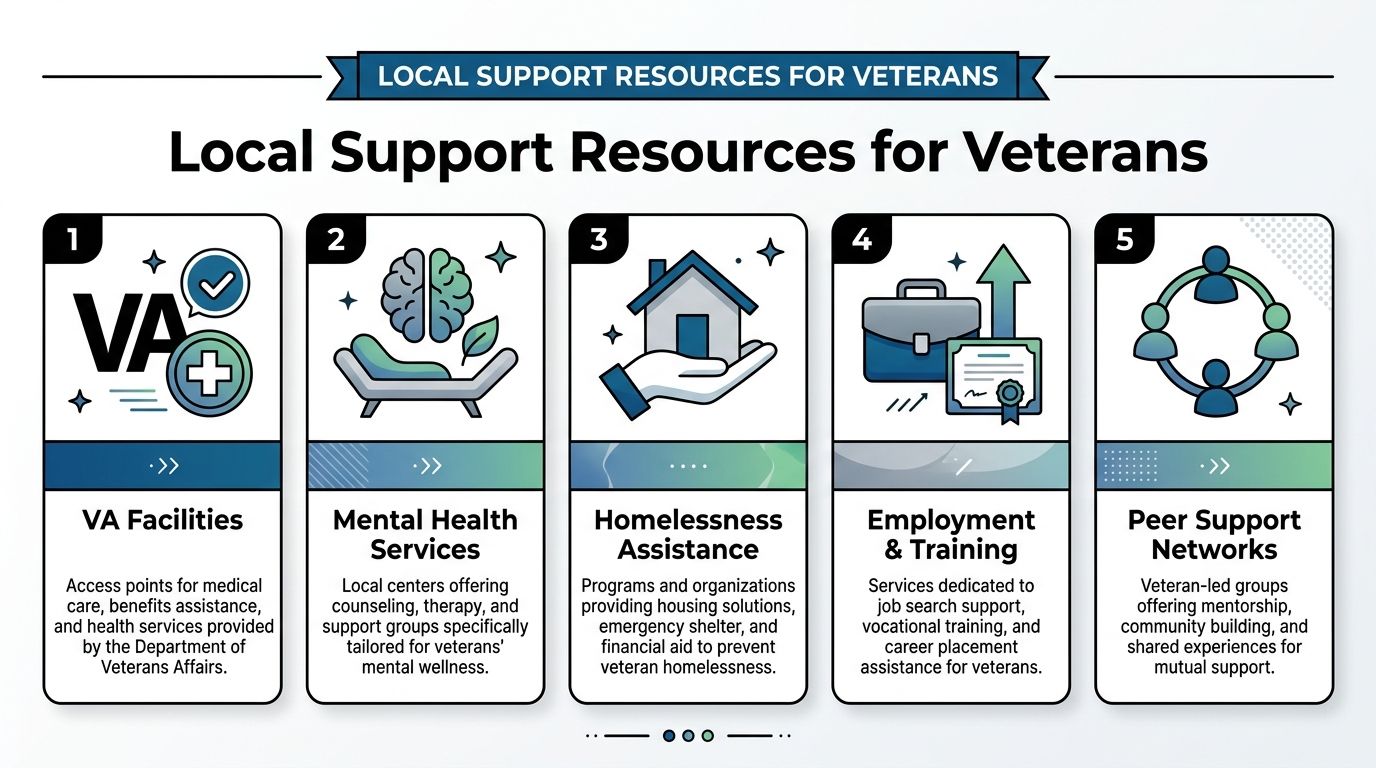
Start by thinking in categories instead of agencies. Most veterans need help in one or more of these areas:
- Medical care and benefits access: VA facilities and outpatient clinics can be central if PTSD, substance use, chronic pain, or TBI symptoms are part of the picture.
- Mental health counseling: Individual therapy, peer counseling, and trauma-informed treatment can support both recovery and mitigation.
- Housing stability: If you're dealing with homelessness risk, unstable living arrangements, or shelter needs, that issue can affect bond compliance and court outcomes.
- Employment support: Job training, placement help, and resume support can become part of a court-approved stability plan.
- Peer networks: Veteran-led groups can provide accountability and practical guidance in ways formal programs sometimes can't.
Why a broader network matters legally too
A 2021 study found that 76% of low-income veteran households reported at least one civil legal problem, and 84% of those issues went without adequate legal help, which shows how often veterans face overlapping legal and life problems at the same time (Department of Justice fact sheet). A criminal charge may sit alongside eviction risk, child support conflict, debt, license problems, or benefits issues.
That overlap matters in Harris County. If a veteran misses court because transportation failed, loses housing while on bond, or struggles to comply with treatment because benefits are unresolved, the criminal case gets harder fast. Support systems aren't a side issue. They're often part of the defense picture.
Building a local plan in Humble and nearby communities
For readers in Humble, Atascocita, Kingwood, and Northeast Houston, a strong first step is to identify one contact in each category above. One medical point of contact. One family member or mentor. One lawyer. One treatment provider if needed. One practical support source for transportation, housing, or work.
You don't need to solve everything in a week. You do need to avoid isolation. Veterans often carry problems unspoken for too long because they're used to pushing through on their own. That instinct can work against you in a criminal case.
The veterans who stabilize fastest are often the ones who stop treating the case as a private burden and start treating it as a team problem.
If your family is under strain because of the case, that matters too. Criminal charges can trigger custody concerns, protective orders, or court conflicts at home. Getting legal and personal support lined up early can reduce the chance that one crisis spreads into three.
Your Next Steps Toward a Strong Defense
The first question many veterans ask is whether getting treatment makes them look guilty. Usually, no. Treatment can show the court that you're taking the situation seriously and trying to address the causes behind the charge. That can matter in negotiations, bond conditions, and sentencing discussions.
Another common question is what happens if the discharge wasn't honorable. That issue can affect eligibility for some programs and benefits. It can also affect how a defense is structured. Department of Justice data indicates that veterans with service-related medical discharges can be more likely to face mandatory felony charges because of lost federal protections, which is one reason discharge status deserves careful legal attention (discussion of that issue appears here).
Some veterans also ask whether a criminal charge means every other legal issue has to wait. Not always. In fact, practical issues like housing, taxes, and family stability may need attention right away. For example, if you're also sorting out home ownership or disability-related benefits, this overview of how INTELLI helps with veteran property tax exemptions may be useful as part of your broader planning.
A final question comes up often in Humble-area cases. "Can my military service really help my defense?" Yes, if it's documented and presented correctly. Service history can support mitigation, treatment-based options, and a fuller account of who you are. But the court won't build that story for you. Your lawyer has to do it with records, timing, and clear strategy.
If you're facing charges in Humble, Atascocita, Kingwood, or Northeast Houston, don't wait for the case to define you before you respond. The earlier you get advice, the more options you usually have.
If you're a veteran facing criminal charges, schedule a free consultation with the Law Office of Bryan Fagan. Our Humble office works with local individuals and families who need clear guidance on Texas criminal procedure, Harris County court expectations, and practical next steps. You'll have a confidential conversation about your case, your service history, and the defense options that may be available to you.


