Skip to content

In Texas, a child under 18 can't legally refuse a court-ordered visitation schedule, regardless of age. That's the hard legal answer, but for many parents in Humble, Atascocita, Kingwood, and Northeast Houston, the actual problem starts after that answer, when a child is standing in the doorway saying they're not going.
If you're in that spot right now, you're not alone. A lot of parents feel trapped between a court order on one side and a hurting, angry, or anxious child on the other. The law expects compliance, but family life isn't mechanical. The safest path is usually not to panic, not to force a showdown that makes things worse, and not to give up and say, “They refused.”
Your Child Is Refusing Visitation Now What
A common scene looks like this. It's exchange day in Humble. Your child has already packed, but when it's time to leave, they shut down. Maybe they cry. Maybe they say they hate going. Maybe they flatly refuse to get in the car. You know the schedule is in your order, and you also know this isn't a simple discipline issue.
Texas law is clear about the legal side. A child doesn't get to cancel court-ordered visitation on their own. But that doesn't mean your only option is to escalate the moment.
What works first is slowing the temperature in the room. You need to hear the reason for the refusal, keep your own tone calm, and avoid saying anything that sounds like you agree the order can be ignored. If your family is dealing with separation stress, these age-specific divorce conversation scripts can help you use language that supports your child without feeding the conflict.
What parents often get wrong
Parents often make one of two mistakes.
- They surrender too quickly: They say, “I can't make a teenager go,” and stop trying.
- They turn it into a battle: They argue with the child, criticize the other parent, and create a bigger emotional blowup.
Neither approach protects you well.
Practical rule: If your child resists visitation, your first job is to show that you are encouraging compliance, not accepting refusal.
That means you should keep a careful record of what happened, what your child said, and what you did in response. If you need a simple place to start, use this guide on how to document custody violations in Texas. Good notes can matter later if the other parent files an enforcement action or if you need to ask the court for changes.
Understanding the Power of a Texas Court Order
A Texas possession order isn't a suggestion. It's a legally binding set of rules signed by a judge. In practical terms, it works a lot like a binding contract backed by the court. The family may not like every part of it, but everyone still has to follow it unless the judge changes it.
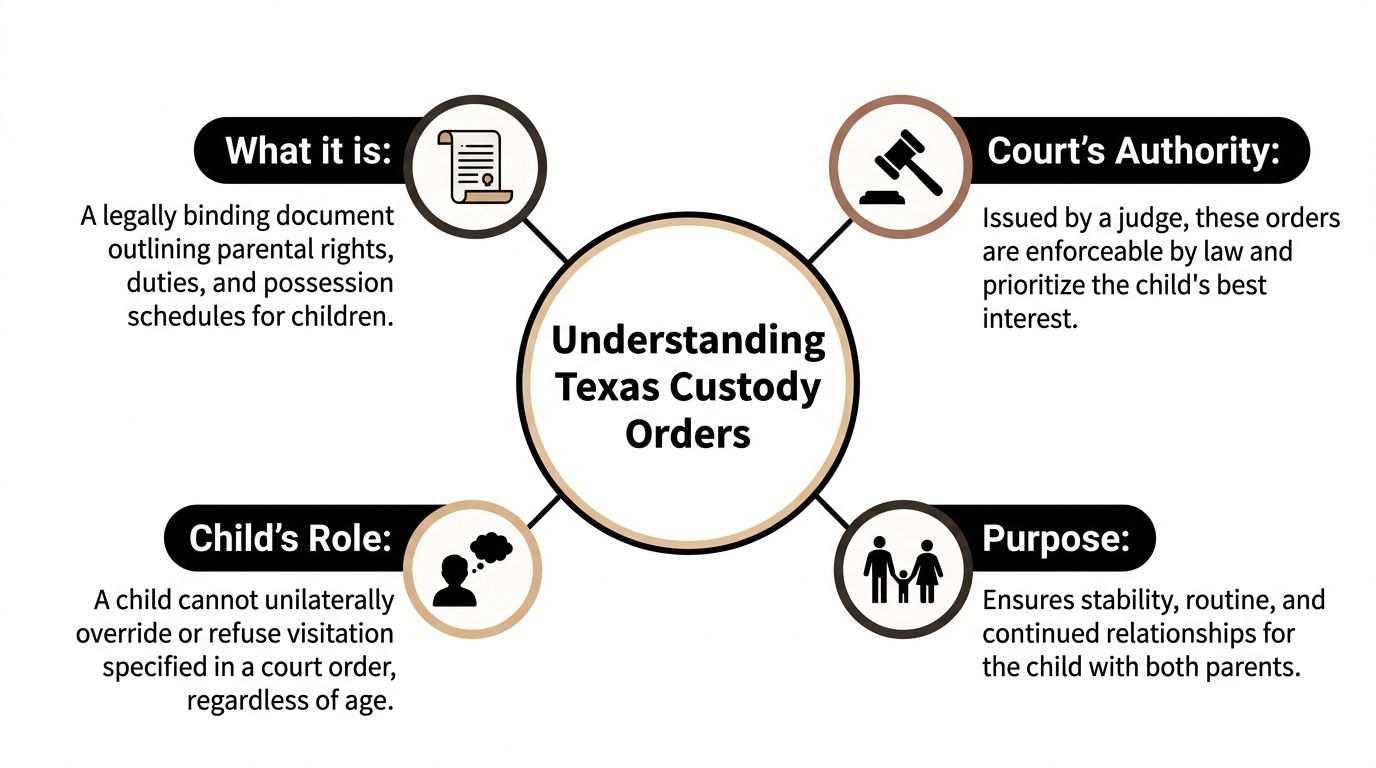
Under Texas law, there is no specific age at which a child can legally refuse court-ordered visitation, and children under 18 have no legal right to violate custody or visitation orders. The order remains binding until a judge changes it, and once a child reaches 18, they are no longer compelled to comply with prior custody agreements, as explained in this discussion of Texas visitation rules and age limits.
Why judges treat the order seriously
Texas courts make custody and visitation decisions based on the best interest of the child. That standard is the backbone of these cases. The court's schedule is supposed to create stability, preserve the parent-child relationship, and reduce chaos.
That's why informal changes can create problems fast. If one parent starts treating the schedule as optional because the child objects, the court may see that as undermining the order rather than protecting the child.
Here's a simple breakdown:
| Issue | What it means in real life |
|---|---|
| Court order exists | Parents are expected to follow the written possession schedule |
| Child resists | Resistance alone doesn't cancel the order |
| Parent wants a change | The parent must seek a formal modification through the court |
| Child turns 18 | Prior custody and visitation obligations no longer control the child |
What Humble families should keep in mind
Many families in Humble and Northeast Houston live under a standard possession order in Texas. If your schedule follows that framework, don't assume a difficult exchange means the schedule has changed.
In more contested situations, Child Custody Lawyer in Humble, TX handles custody and conservatorship representation for Humble families. That kind of representation becomes relevant when parents need court guidance instead of making risky judgment calls on their own.
Does My Child's Preference Matter to the Court
Many Harris County parents have heard some version of this rule: “Once the child turns 12, they get to decide.” That isn't how Texas law works.

A child's view can matter. It just doesn't become the final word.
Under Texas Family Code § 153.009, a child who is 12 or older must be given the opportunity to be interviewed by the judge if requested by a parent or ordered by the court. But the child's preference is never controlling, and the judge still decides based on the child's best interest, as outlined in this explanation of how Texas judges hear a child's wishes.
What the judge is actually listening for
A judge isn't taking a vote. The judge is gathering information.
That distinction matters because the court usually looks beyond the sentence, “I don't want to go.” The more important question is why. A mature concern about safety, school pressure, or severe conflict lands differently than a complaint about house rules, bedtime, or a parent limiting screen time.
A child's preference is input. It is not a veto.
Judges also pay attention to whether the child's opinion seems independent or influenced. If one parent has been nudging the child to reject the other parent, that can hurt the case badly.
What parents should expect in Harris County
For families around Humble, Kingwood, and Atascocita, this often means resetting expectations before going to court. If your child is older, the court may want to hear from them. But that doesn't mean the court will rubber-stamp the child's request.
If you're trying to understand the larger picture, this page on how judges decide custody in Harris County gives useful local context.
This video also gives a helpful overview of how Texas custody decisions are approached in practice:
A better question to ask
Instead of asking, “Can my child decide?” ask this:
- Is the child old enough for the court to listen?
- Are the reasons serious and well-grounded?
- Has the situation changed enough that a modification should be considered?
- Have I handled this in a way that shows I respect the order?
Those questions usually lead to smarter decisions than relying on the age-12 myth.
Your Legal Duty as the Custodial Parent
Many parents often get blindsided. They know the child can't legally refuse visitation, but they don't realize the court may focus just as much on the custodial parent's behavior.
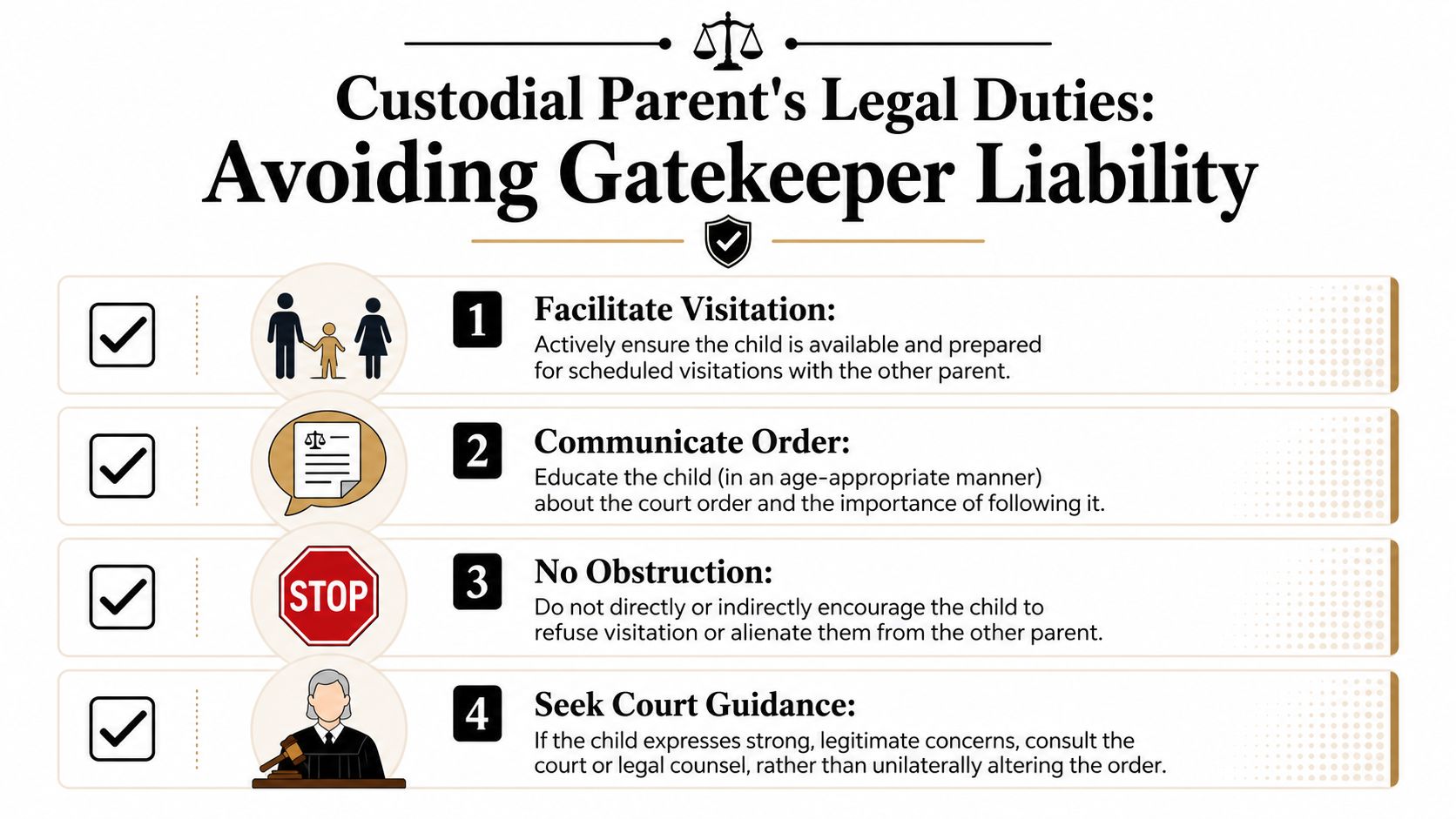
Under Texas law, a custodial parent can be held in contempt of court not only for openly ignoring a visitation order, but also for failing to make a “sincere effort” to facilitate the relationship. Courts are scrutinizing why the refusal happened, and a parent who passively accepts the child's refusal can be treated as engaging in gatekeeping, as discussed in this analysis of gatekeeping risk in Texas visitation disputes.
What sincere effort looks like
“Sincere effort” isn't fancy legal language in day-to-day practice. It usually comes down to conduct.
A parent who is making a real effort tends to do things like these:
- Gets the child ready on time: Clothes packed, medication ready, school items accounted for, and no manufactured delay.
- Uses neutral or supportive language: The parent doesn't insult the other parent or signal that skipping visitation is acceptable.
- Encourages compliance directly: The parent tells the child, in age-appropriate terms, that the court order must be followed.
- Shows up for the exchange: Even if the child may resist, the parent doesn't cancel in advance just because the child said they don't want to go.
- Keeps records: The parent documents the refusal, the efforts made, and any communication with the other parent.
What gatekeeping can look like
Gatekeeping isn't always dramatic. Sometimes it looks passive.
A parent says, “I offered, but he didn't want to go.” A parent lets a teenager stay home because forcing the issue feels impossible. A parent avoids conflict and decides it's easier to tell the other side, “She's old enough to choose.” In court, those choices can look less like helplessness and more like noncompliance.
If a judge believes you allowed the refusal instead of addressing it, the fact that the child resisted may not protect you.
That's why words matter. Timing matters. Your actions before, during, and after the exchange matter.
What usually helps and what usually hurts
A quick comparison can make this clearer:
| Approach | Likely court view |
|---|---|
| Encouraging the child to attend | Shows respect for the order |
| Speaking badly about the other parent | Suggests interference |
| Driving to the exchange point anyway | Evidence of compliance effort |
| Cancelling because the child complained | May look like passive denial |
| Seeking legal advice when the problem continues | Responsible response |
| Making your own permanent change | Risky and often avoidable |
This hidden issue is one reason families sometimes need outside help. The Law Office of Bryan Fagan handles family law matters for people in Humble and surrounding communities when visitation disputes start turning into enforcement or modification problems.
A Practical Plan for Humble and Atascocita Parents
When a child refuses visitation, your goal is twofold. Protect your child's well-being, and protect your legal position.
Start with the reason, not the argument
Ask calm questions. Is the child scared, angry, embarrassed, or just frustrated by different household rules? The answer shapes what you do next. A safety concern should be treated differently from a complaint about chores or bedtime.
Keep the conversation brief and steady. You're gathering information, not cross-examining your child.
Communicate with the other parent carefully
If the refusal is happening in real time, tell the other parent what is going on without turning the message into a blame exchange. Stay factual. If possible, present a united front by confirming that both parents expect the order to be followed.
“I understand you're upset, but this is the schedule we have, and both parents expect you to follow it.”
That kind of message often works better than threats or emotional speeches.
Build a clean record
If this keeps happening, documentation becomes part of your protection. Write down:
- What your child said: Use their actual words if you can remember them.
- What you did: Include reminders, preparation, transportation efforts, and communication.
- What happened at exchange time: Note whether you appeared, whether the other parent appeared, and how the refusal unfolded.
If you're headed toward court, local procedure matters too. Families in this area often benefit from reviewing Harris County Family Courts A Humble Resident's Guide so they understand how cases move through the courts serving Humble.
Try solutions before asking for a new order
Some cases improve with better communication, family counseling, or mediation. Those options can lower the pressure and uncover the underlying problem without making the child feel like the case revolves around them.
Still, not every schedule remains workable forever. If the child's needs, schooling, maturity, or family circumstances have changed in a meaningful way, it may be time to seek a formal modification instead of living in repeated conflict. That's when talking with a lawyer about whether the order still fits your family can save a lot of damage later.
You Don't Have to Handle This Alone
The question “can a child refuse visitation in Texas” sounds simple, but the practical answer rarely feels simple inside a family. The order still matters. The child's feelings still matter. Your response matters too.
For parents in Humble, Kingwood, Atascocita, and Northeast Houston, the biggest risk is often assuming the child's refusal ends the issue. It doesn't. If the current schedule has become unsafe, unrealistic, or significantly unstable, the answer is usually not to stop following it on your own. The better move is to get clear legal advice and decide whether enforcement defense, documentation, negotiation, or modification makes the most sense.
You should stop guessing and get help if any of these are true:
- The other parent is threatening court: Enforcement cases can move quickly, and your documentation needs to be organized.
- Your child is raising serious concerns: Safety issues, severe emotional distress, or escalating conflict need careful handling.
- The order no longer fits reality: Informal workarounds often create bigger problems than they solve.
- You feel stuck between compliance and compassion: That tension is common, and it's exactly where legal guidance helps most.
Families dealing with custody disputes are often also carrying stress from divorce, financial pressure, or even related concerns involving criminal defense or estate planning. A local legal team can help you sort out the issue in front of you without losing sight of the bigger picture for your family.
If your child is refusing visitation and you need clear next steps, contact Law Office of Bryan Fagan to schedule a free consultation with our Humble office. We help families in Humble, Atascocita, Kingwood, and Northeast Houston understand their options, protect their rights, and move forward with a practical plan.